Online Reporter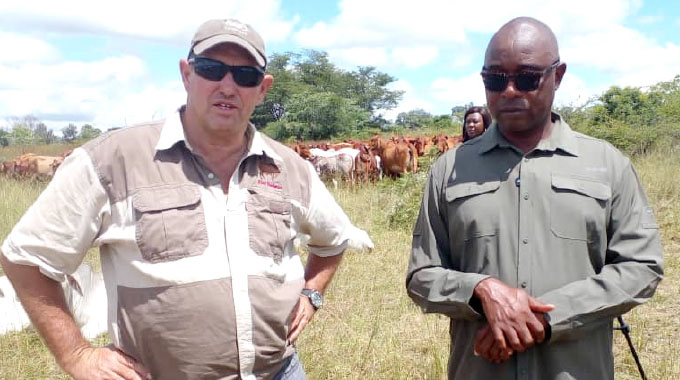
Patrick Chitumba, [email protected]
THE Government and its development partners have joined forces to create a comprehensive plan aimed at boosting livestock production and improving the overall quality of beef in the country.
This initiative is part of the Second Republic’s broader efforts to revitalise the agricultural sector, which has already led to the establishment of business units equipped with boreholes and cattle drinking pens.
Government launched the Livestock Recovery and Growth Plan two years ago, with a target to grow the national herd from 5,5 million in 2019 to six million by 2025.
Addressing farmers and Government officials attending a Zimbabwe Beef Producers Society (ZBPS) field day at Phillip Reeds Farm in Gweru on Wednesday, Deputy Minister of Lands, Agriculture, Fisheries, Water and Rural Development Davis Marapira said the Government is aware of the challenges affecting the livestock sector with plans underway to look into some of the proposals tabled to ease the bottlenecks affecting returns in the industry.
ZBPS Midlands Field Day 2025 ran under the theme, “Sustainable Beef Farming: Addressing Challenges, Embracing Opportunities.”
“The beef industry is a cornerstone of Zimbabwe’s agricultural sector, contributing significantly to our national economy, rural livelihoods and food security. It employs thousands, supports rural development and plays a critical role in ensuring that our nation remains self-sufficient in meat production,” said Deputy Minister Marapira.
He noted that the industry is facing several challenges, including climate change, disease outbreaks and market access barriers.
Deputy Minister Marapira said these challenges require innovative solutions, collaboration and sustained investment.
He said the Government remains fully committed to supporting the beef industry.
“Through the Ministry of Lands, Agriculture, Fisheries, Water and Rural Development, we are implementing policies and programmes aimed at promoting sustainable farming practices, improving animal health and increasing access to quality feed and water, strengthening veterinary services to combat diseases like January disease and ensuring widespread vaccination campaigns,” he said.
The deputy minister said the Government is also facilitating both domestic and international market access for beef products, including ongoing efforts to remove value added tax on beef as well as providing technical assistance, training and financial support to farmers across all scales of production.
“I would like to commend the ZBPS for its tireless efforts in advocating for the interests of beef producers. Your collaboration with Government departments, such as the Department of Livestock and Veterinary Services and the Department of Livestock Production and Development, has been instrumental in addressing critical issues affecting the industry,” he said.
“Your successful lobbying for the removal of 15 percent VAT on live animal sales in 2024 is a significant achievement, and I assure you of the Government’s support as you push for the removal of VAT on beef in 2025.”
Deputy Minister Marapira said the Government is impressed by the ZBPS efforts in capacity building among farmers and bringing farmers together.
“This field day is a testament to their commitment, and I am aware that they will be holding more field days of this nature this year in June in the Matabeleland region, in Mashonaland West in August and Manicaland in November,” he said.
Deputy Minister Marapira urged all stakeholders, including farmers, private sector players, and Government agencies to continue working together to overcome challenges and seize opportunities.
“Let us embrace innovation, adopt best practices and invest in sustainable solutions that will ensure the long-term viability of our beef industry,” he said.
Renowned Gweru cattle breeder Mr Phillip Reed, emphasised the importance of investing time and effort in animal care, saying beef production is a long-term investment.
“I want to encourage farmers to try and put as much as they can into their animals. It is a long-term gain. These animals are a result of 15 years of heavy selection, which hasn’t been easy. If you use good genetics and you look after them, you get good cattle,” he said.