Online Reporter
Daimon Phiri
Since November 2017, the Second Republic under President Mnangagwa has moved Zimbabwe from policy papers to concrete, steel, and water in the tap.
The Government’s Delivery Tracker and the National Development Policy Review Reports from 2018 to 2025 record thousands of projects completed or at advanced stages across all 10 provinces.
They are grouped under what has come to be known as the 8 Foundation Bricks of development: Water, Food, Jobs, Power, Ward, World, Roads, and Women, with Work Ethic as the mortar holding them together.
From Gwayi to Beitbridge, from Hwange to Mvuma, the message from communities in 2026 is consistent and direct. Let the President continue. Projects cannot be left half-built.
The first question people ask is about numbers. Government does not measure success by a single headline figure. It measures by impact on the ground. In the 2025 review, the record shows more than 1 200 kilometres of rural roads rehabilitated, 584 kilometres of the Harare-Beitbridge highway dualised and lit, over 200 clinics built or upgraded, more than 300 schools constructed or refurbished, and over 4 000 boreholes drilled.
In energy, 600 megawatts were added through Hwange Units 7 and 8, with more than 20 solar mini-grids commissioned. In water, one major dam is at 70 percent completion, one has been completed, and more than 20 mini-dams have been delivered.
In agriculture, the Pfumvudza programme reached 2,2 million households, and three strategic grain silo depots were upgraded. In industry, an integrated steel plant was established and more than 50 value-addition projects were supported. Under devolution, 92 local authorities have received quarterly funding for eight years running. Citizens have their own way of counting. From a borehole in a village to a steel plant in Mvuma, they say the total runs into thousands of touchable projects. Their instruction is simple. Count the clinics, not the papers.
Five projects in particular have changed how Zimbabweans live and work. The first is Gwayi-Shangani Dam. As of June 2026 it stands at 70 percent complete. When finished it will supply
Bulawayo for 50 years and irrigate 10 000 hectares in Bubi and Umguza. Together with Marovanyati and the network of mini-dams, more than 3,2 million rural people now have water within 500 metres of their homes. Ten governments promised it. This administration built it.
The second is the Harare-Masvingo-Beitbridge Highway. 584 kilometres have been dualised, lit, and fitted with overpasses. Travel time from Harare to Beitbridge has dropped from nine hours to about four and a half. Zimbabwe Republic Police statistics show road deaths have fallen by 62 percent. At Beitbridge Border Post, truck clearance has moved from three days to four hours. This is not just a road. It is a trade spine that moves food, steel, and tourists, and it saves lives.
The third is Hwange Thermal Power Station Units 7 and 8. The 600 megawatts commissioned in 2023 pulled the country back from darkness. Load-shedding that once stretched to 18 hours now averages around two hours. In Bulawayo, factories like Ascot have moved from one shift to three. Mines are milling 24 hours. Zimbabwe is now exporting 150 megawatts to the Southern African
Power Pool. No industry runs without power, and power is the first brick toward Vision 2030.
The fourth is Manhize Iron and Steel. The $1,5-billion plant became operational in 2024. It directly employs 7 000 young people and supports another 15 000 downstream. In 2025 Zimbabwe stopped importing steel and began exporting to Zambia and the Democratic Republic of Congo. This is the story of jobs created at home, of young people moving from border jumps to factory paydays, of a country moving from import dependence to export capacity.
The fifth is Pfumvudza/Intwasa. Between 2020 and 2026, 2,2 million households were reached. A plot measuring 39 metres by 16 metres can yield 12 to 15 bags of maize. Silos in Mvurwi, Kadoma, and Gwanda were full in 2026. The point here is dignity. No Zimbabwean should have to beg for food. Hunger is a policy failure, and the programme has put food within reach of the kitchen door.
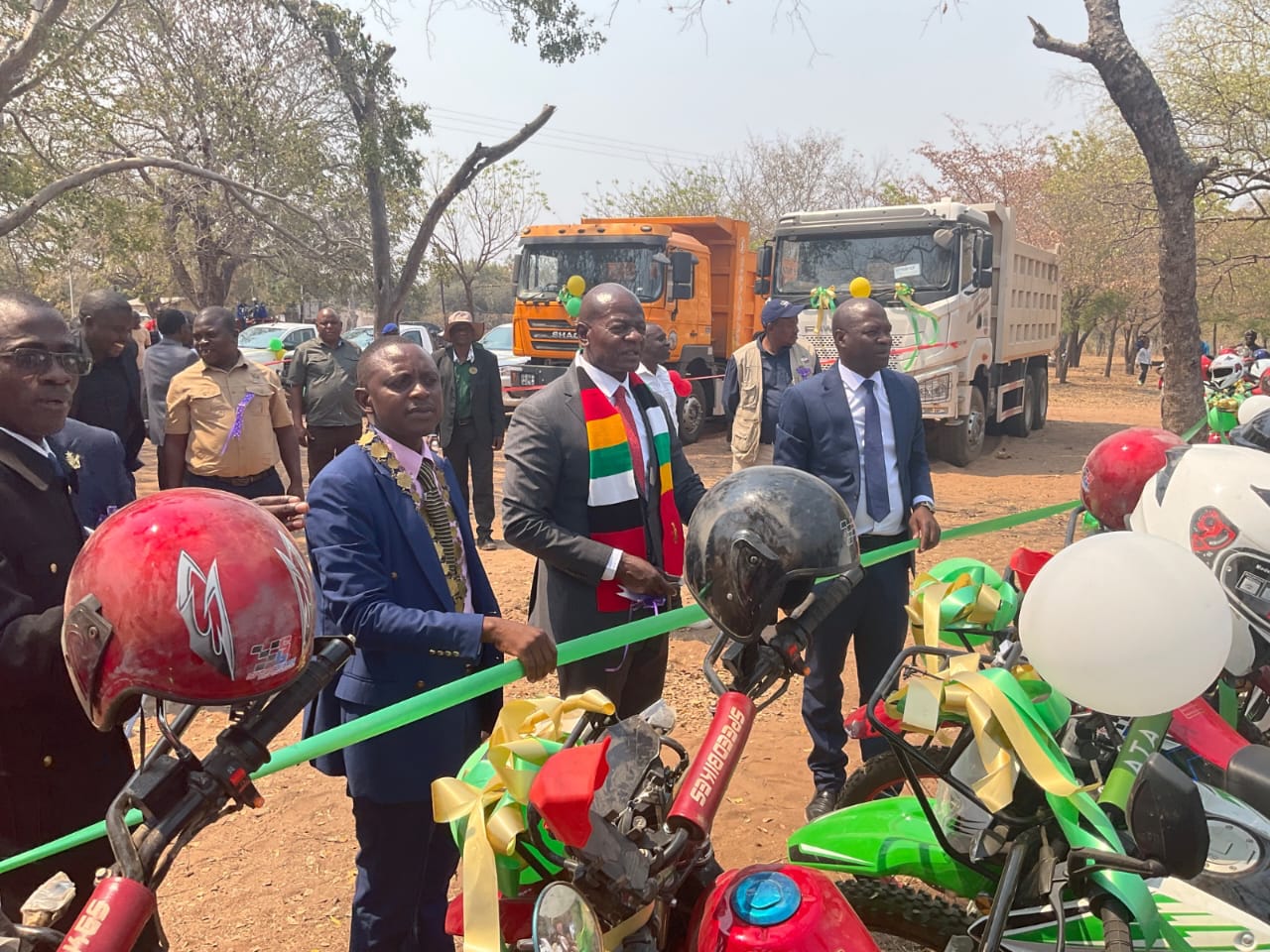
Beyond the statistics, it is the voices in the wards that explain why millions are calling for continuity. In Beitbridge, a trader said the road is finished and Gwayi water is coming, and asked who will finish Bulawayo’s tap if the builder is stopped now. In Bulawayo, a metalworks owner said Hwange gave him power and Manhize gave him steel orders, allowing him to hire 18 youth, and warned that half-built projects mean half paydays.
In Bulilima, a community leader pointed to a maternity shelter delivered through devolution and to three more clinics on the plan, and said the people’s resolution is to continue to 2030 so that every ward has a clinic within five kilometres. A diaspora returnee who came home in 2023 and now runs a solar company employing 34 people said millions in the diaspora are investing because projects are moving, and pleaded not to stop now. The thread running through all of this is clear. A half-built dam gives no water. A half-built road still kills. A half-built plant gives no jobs.
The governing philosophy has been “Nyika inovakwa nevene vayo”, a nation built by its owners. Government provides policy, resources, and discipline. The people provide the sweat. That is ownership. You do not change the builder when the foundation is set and the walls are up. You let the builder finish the house to roof level. The next bricks to 2030 are already outlined. Complete
Gwayi and the Bulawayo pipeline. Add 1 000 megawatts of solar at Hwange to end load-shedding. Roll out Phase 2 at Manhize for 10 000 more jobs. Extend devolution to every village. Expand value-addition for farmers and women under AfCFTA.
My perspective is also shaped by 20 years in ZRP Press and Public Relations. One lesson stands out. Where there is stability there is cement. Where there is chaos there is dust. Between 2017 and 2026 Zimbabwe got cement. Clinics, steel, power, and roads. Citizens are asking that the momentum be protected, that the builder be allowed to finish.
At Tepp Publishers we are documenting this period in Emmerson Mnangagwa: The People’s Leader – A Journey of Vision, Leadership and Legacy by Edwin Muketiwa Msipa. The reason is simple. Future generations must read that in eight years’ thousands of projects were started, and millions asked that they be finished.
From 2017 to 2026 President Mnangagwa gave Zimbabwe a foundation of thousands of projects in water, food, jobs, power, ward, world, roads, and women, all held together by work. Ilizwe lakhiwa ngabanikazi balo. A nation is built by its owners. And today the owners are speaking with one voice. Continue. Finish the projects. Take Zimbabwe to 2030 and beyond.
Daimon Phiri is a former Assistant Inspector, ZRP Press and Public Relations. He served in the force for 20 years and is now Managing Editor at Tepp Publishers