admin
adminthem are either working, have sponsors, belong to a Braille library or to a university.
“The technology for socialising has gone through a revolution,” Khanda told a workshop during the Book Fair. “There were basic talking calculators, liquid measures and devices which made telling time and pouring drinks easier.
“Then in the sighted world cellphones started to dominate. Visually impaired people were limited to making calls and having text messages read to them.
“This changed five years ago when talking cell-phones were introduced. The first blind Zimbabwean got a cell-phone. I sometimes wonder how I managed without this technology.” Noziphor Khanda, who has been in association with Dorothy Duncan Braille Library in Harare from her childhood, took her degree from a university in Australia.
A computer literacy expert for blind people, Khanda did her secondary education at the Dominican Convent in the capital. She can speak six languages. “I’ve recently been to a conference where there was a technology expo for the blind,” said Khanda. “Personally, I’ve a love-hate relationship with these expos.
“It’s wonderful to be exposed to what’s out there. There are some amazing things that I’d love to have.
“But when I ask the price of a colour sensor, for instance, all I get is: ‘It’s $700, ma’am!’ My heart sinks.”
That sensor tells the colour of a surface when it is placed on it. Access to a lot of technology that has come into the country is very limited. It is possible for more people to get access to that technology now that the world has become a global village provided one can get money.
“We hope and pray that technology for the blind will consider the plight of the Third World,” said Khanda.
“They throw away their old technologies instead of giving them to people who need them most. Maybe one day they will find a way of making we, Zimbabweans, access that technology. They say money is the root of all evil, but to be blind is expensive. To have the necessary money for buying the basic enabling technology can be a very liberating experience.
“Please, remember the word ‘handicapped’ next time you read a simple public notice.”
Dorothy Duncan Braille Library director Sister Catherine Jackson described how they keep pace with IT for schools in Zimbabwe. The nun said that literacy is a basic right for everybody in a world where everything is in print. Without sight one would have to depend entirely on sighted friends to get the information that one needs. The blind children in Zimbabwe would be lucky to attend schools with alternative formats of books and the machinery they need for writing.
“When the sense of sight has been denied,” said Sister Catherine, “the tactile and audio senses need to take over. “But this is not an automatic reaction either from the point of view of the blind person or of the people who are spending their lives transforming the printed word into an alternative format.
“Braille books and Braille libraries are a dream. However, the advent of the computer together with software has made the translation of documents easier.
“Everything happens much quicker, although it also depends very much on the skill of the initial typists.”
The real problem is the cost of the software and hardware required. Because the global market is relatively small, their price is very high.
Work is at a fairly advanced stage to produce graphics and Mathematics on Braille computers. But these two areas remain a great problem in Zimbabwe. Dorothy Duncan Centre has successfully developed a Braille library which has most of the textbooks used in this country in Braille format.
All the books that were recently given out to primary schools in the country are now available to children who don’t have print vision. Traditionally, audio tapes have been used to make audio books to utilise the sense of hearing. The technology has gone further for the old student and for adults who have lost sight.
“A book can be read onto a computer and formatted in such a way that, with the specialised CD player, a student can find any chapter or page on the CD with simple clicks of a button,” said Sister Catherine.
“Book marks can be put on the CD and later removed, making the CD almost as easy to use as a print book is used by a sighted reader. Again, the technology is expensive, but not as much as for the production of Braille. However, where the typist is the key worker for the Braille, the reader is the equivalent for the audio.
“It is very difficult to find people who have the necessary skills and time to read complete books onto computers. The reader can only continue a session for as long as his or her voice lasts. It is a long and tedious process and, therefore, current production in Zimbabwe and other developing countries is small.” The audio CD, called the DAISY reader, has brought a number of teachers into their classrooms to teach sighted children, after the teacher has lost vision.
The teacher has the CD playing through an earphone and knows exactly what the pupils have in their printed texts. “This is a new development in this country,” said Sister Catherine. The centre runs courses over three months on computer literacy and Braille free of charge. The centre provides accommodation to students who do not live in Harare. The courses benefit those who are already working and want to switch from using typewriters to using computers. But admission is open. This columnist is a graduate of the centre.


Online Reporter
- Chronicle , SundayNews
- July 28, 2026
- 8 views
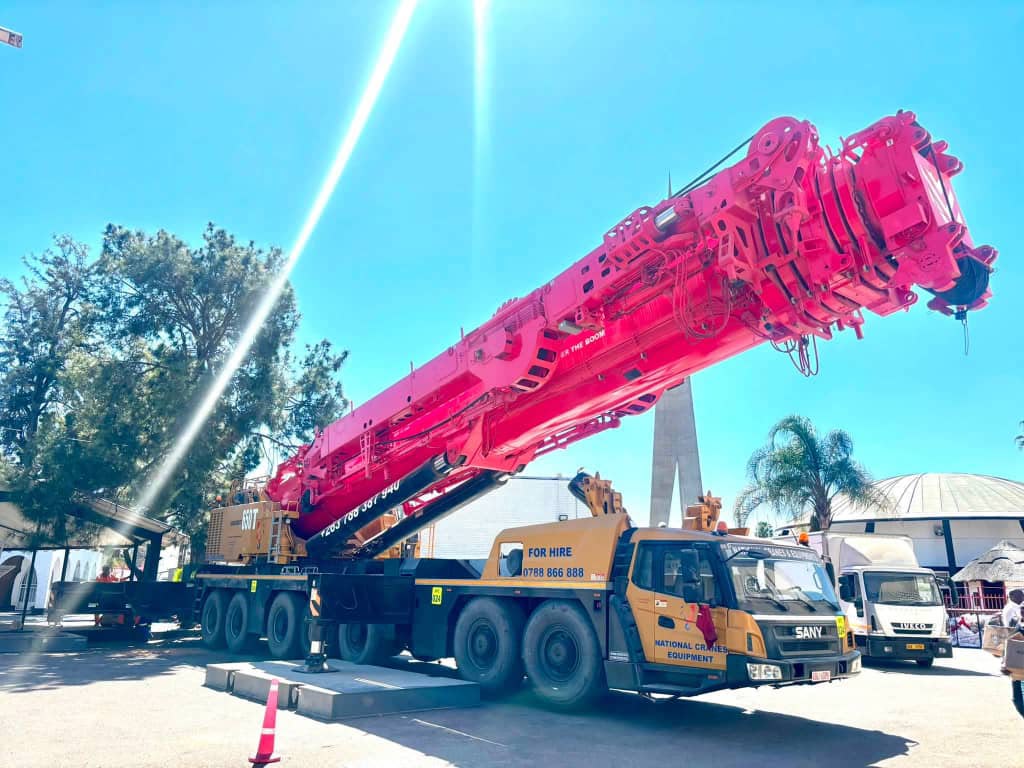
IN PICTURES: Mine Entra 2026 ready to roar into life as exhibitors move in
Pictures by Joshua Muswere THE countdown to Mine Entra 2026 is well and truly on, with preparations entering the final stretch as heavy machinery rumbles into the Zimbabwe International Exhibition…