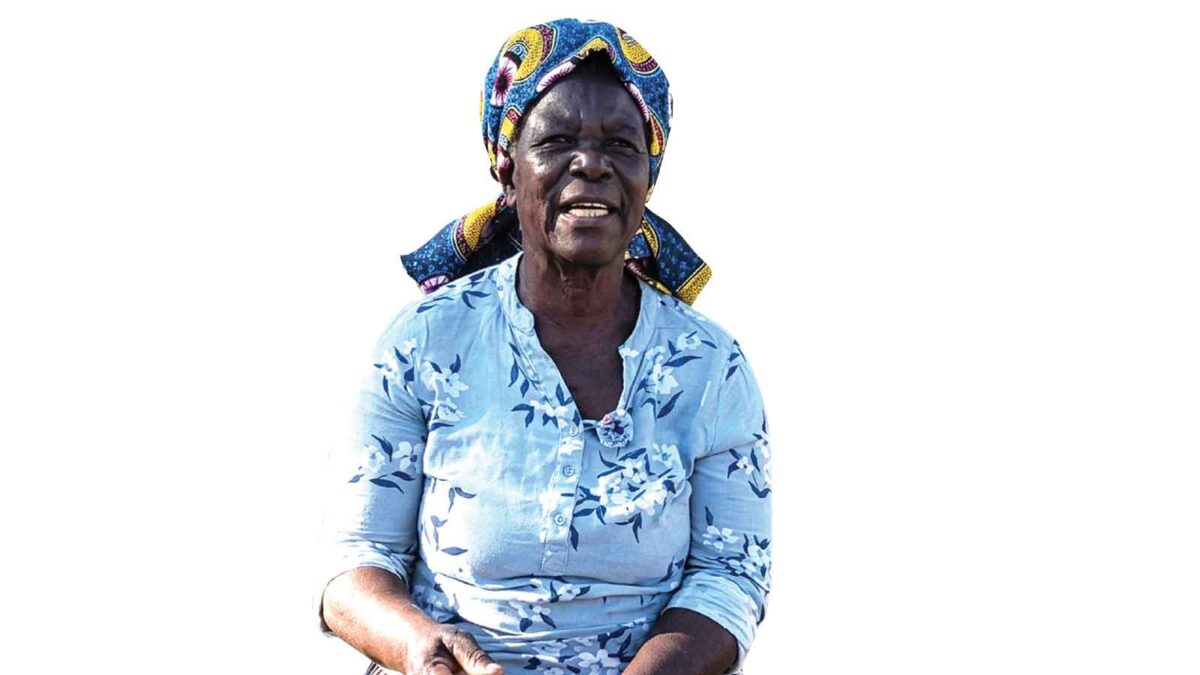
At the height of the liberation struggle, a legendary group of Zimbabwe African National Liberation Army (ZANLA) female fighters significantly boosted the quest to liberate the country. These female combatants operated with a unique vigour and discipline that deeply unsettled the enemy. Their deployment forced the Rhodesian Security Forces to restrategise their field operations after suffering massive attacks and heavy casualties. One of these formidable fighters, CDE GRACIOUS MUTSATSA, whose nom de guerre was Dorcas Mabhunu, begins narrating her journey in the struggle to our Society Editor PRINCE MUSHAWEVATO.
***************
Q: Could you please start by introducing yourself and telling us your background?
A: My name is Cde Gracious Mutsatsa and my liberation struggle name was Dorcas Mabhunu. I was born on April 11, 1961, in Makaha, Mutoko, where I grew up.
We were seven children in our family — three boys and four girls — though four of my siblings have since passed away.
In addition to myself, my cousin Peter Mutsatsa, son of my father’s elder brother, whose nom de guerre was Comrade Tambai Negidi, also joined the liberation struggle and trained in Mozambique.
He currently lives in Hwedza.
Another cousin, Johannes, was a freedom fighter and joined the army after independence but sadly died in a road accident. I attended primary school at Mavhurazi in Mutoko from Grade One to Grade Four, but our education was disrupted when the colonial government forced us into a keep (protected village).
I then moved to Chikukwa for Grades Five and Six.
Unfortunately, I was unable to finish Grade Seven because I joined the liberation struggle that September.
I only managed to do my secondary education after independence following my enrolment in the Zimbabwe National Army (ZNA).
I completed Form One through Form Four, but I was unable to write my final Ordinary Level examinations after I got married.
Q: How were you first introduced to African nationalism?
A: We were frequently mistreated by mapuruvheya — Black Africans who collaborated with the white minority Rhodesian Security Forces — as well as by white Rhodesian soldiers while living in the keeps. This brutal treatment deeply unsettled us, especially as we grew older and wanted freedom to make our own decisions. At the time, we knew of comrades from our area who had crossed into Mozambique to join the struggle. We regularly met them in nearby bushes and mountains to cook for them and attend night vigils. One day, however, the Rhodesian Security Forces caught us and beat us severely, accusing us of feeding the freedom fighters and leaking operational intelligence.
We vehemently denied the accusations.
Following that traumatic ordeal, my friend Viola Mazenda, from Mazenda village, and I were sent outside the keep to fetch water.
As we reached the water source with our tins, we decided we had suffered enough under the Rhodesian regime’s brutality. We knew a local businessman’s son, Shepherd Madimutsa, who had also joined the struggle and frequently travelled between Mavhurazi and Mozambique. We got word to the comrades about our intention to join and they instructed us to head towards Mapombo, near Chikwizu, where they would meet us. Viola and I left our water tins right there at the well and set off towards Mapombo.
Q: What happened after you left?
A: Mutoko is close to Chikwizu, but on foot, it is a very long journey.
We walked until we met a group of youths who had been instructed to welcome us. They interrogated us, asking where we had come from and who had referred us. As youths, we did not know that cadres used passwords whenever they met — keywords unknown to the enemy or civilians. If anyone failed to give the password, the comrades would immediately open fire.
The youths made sure our transition was smooth. We then travelled through Mavhurazi, joining a large group of people that included almost the entire student body from Rukau Secondary School and headed towards the border that night.
Along the way, we reached the flooded Rwenya River. Because I was very young, my legs swelled badly during the long trek and the comrades took turns carrying me on their backs.
Some even suggested I return home because of my age.
Q: How old were you then and did you consider going back?
A: I was around 16 years old, but I never looked back.
Going back was not an option because the Rhodesian authorities kept strict registers of everyone entering and leaving the protected villages. Having been missing for days meant that if I returned, they would kill me.
Returning was far more dangerous than enduring the trek. I stayed with the group and we eventually reached the Mozambican border, resting at a banana-rich area called Padzunga.
Since the river was overflowing, the comrades advised us to cross at night rather than during the day. We hid and waited until sunset.
When night fell, they instructed us to form a chain by interlocking our hands — two or three youths positioned between armed comrades in a tactical formation. Safely crossing that raging river was a true act of God’s grace.
Q: Tell us about your experience after crossing the river.
A: We reached Changara in Mozambique, where we rested and met other comrades who had crossed before us. The next day, we set off for Tete. During the screening process in Tete, commanders held me back because I was considered a mtoto (child) and needed my swollen legs to heal before committing to full duties.
I spent a month in Tete before being transferred to Tembwe, as the Chimoio camp had become overcrowded.
After spending two months at Tembwe, I officially began my military training in 1978.
Our base commander was Cde Makasha, while Cde Kamudyariwa ran the kitchen and prepared our rations — what we called maguzunyero. Food was scarce; it was just enough for basic survival. I later reconnected with Cde Kamudyariwa after independence while he was working for the Harare City Council; he has since passed away. For our training, we moved to a place called Kamunda kaTito, named after Tito, an exceptional instructor. He worked alongside Cde Tsuro, who later joined the police force after independence.
The duo was exceptionally gifted in teaching military drills.
Next week, Cde Mutsatsa will detail the training she underwent and her subsequent deployment to the front.