Taurai Kandishaya – Correspondent
On February 10, 2026, Cabinet approved the Constitution of Zimbabwe Amendment Bill (No. 3) of 2026, and a week later, Parliament gazetted it, triggering a 90‑day public consultation period.
Among its provisions, the proposal that has generated the most discussion is the change to how the President will be elected under Section 92 of the Constitution now replaced with a parliamentary process rather than a direct public vote.
Under the proposed amended Section 92, the President must be elected by Members of Parliament in a joint sitting of the Senate and the National Assembly after general elections. A candidate must secure more than half of valid votes cast by MPs, and if no one does so, a run‑off between the top two candidates is held.
The Zimbabwe Electoral Commission or a designated judge presides over the process, in accordance with Parliament’s Standing Rules and Orders.
This is the clause at the heart of the debate. Critics say it disenfranchises citizens and undermines “one man, one vote.” A claim that is patently false, and misleading.
Much of the criticism has come from voices that are either confused on the substance of the reform or motivated by political positioning rather than constitutional clarity. The so‑called Defend the Constitution Platform, for example, has been circulating alarmist rhetoric about the amendment without explaining how the clause actually works or how representative democracy functions in practice. Their messaging seeks to stir emotional opposition rather than inform citizens about what the Constitution itself says.
Tendai Biti, a familiar opposition figure, has loudly condemned the Bill as a “power grab,” yet his statements focus more on rhetoric than on the text of Section 92. Instead of engaging with the mechanisms of parliamentary election of the President which preserves voting rights through elected representatives he repeats broad claims without explanation.
Similarly, social media personalities like Fadzai Mahere have amplified criticism in ways that appear aimed at maximising attention rather than clarifying constitutional realities. Their public commentary often prioritises visibility over substance, confusing many ordinary citizens who are simply trying to understand the law.
Smaller political groupings such as the United Zimbabwe Alliance have labelled the reform a “constitutional coup,” suggesting that giving Parliament this authority somehow strips people of their voting rights.
This interpretation overlooks the fact that citizens still vote directly for Members of Parliament, and those representatives accountable to their constituencies are empowered to carry out constitutional duties, including electing the President.
Even the president of the Zimbabwe National Students Union (ZINASU) has pledged to oppose the Bill without, in many cases, demonstrating an understanding of the constitutional mechanism he criticises.
Public opposition that cannot articulate why a reform is wrong does a disservice to ordinary Zimbabweans, who deserve clear, fact‑based explanations about changes to the supreme law of the land.
In contrast, the Government’s position is clear and principled: this reform preserves citizen participation and strengthens democratic accountability by aligning executive selection with the legislature elected by the people. When citizens select MPs, they are choosing representatives who carry their voice into Parliament, including during the election of the President.
This model ensures that the executive leadership commands the confidence of those directly chosen by the electorate a hallmark of representative democracy.
A parliamentary election of the President also reduces the costs, logistical challenges and polarising dynamics associated with separate nationwide presidential ballots. Zimbabwe’s experience over decades shows that extended election campaigns can consume national attention and resources, often distracting from governance and development priorities.
By integrating presidential election into the parliamentary framework, the system fosters greater accountability between MPs and their constituents: if a Member of Parliament is not delivering for their community, voters can replace them thus directly influencing the national leadership that those MPs help choose.
Some critics also invoke Zimbabwe’s liberation struggle to suggest that only direct presidential elections honour the principle of “one man, one vote.” This is a misunderstanding of history and of democratic substance.
The liberation struggle was about ending disenfranchisement and achieving representative participation for all citizens. The proposed amendment preserves that achievement: Zimbabweans still vote directly for their representatives, and those representatives exercise constitutional authority on behalf of their communities, including electing the President.
Finally, the broader objective of the amendment, as explained by the Government, is to strengthen governance stability, reduce perpetual election-mode toxicity, and support long-term national development goals such as Vision 2030. Comparative constitutional practice demonstrates that this institutional design is neither radical nor unprecedented.
In South Africa, the President is elected by the National Assembly following general elections.
In Botswana, the President emerges from parliamentary processes anchored in the composition of the National Assembly. Established democracies such as Germany and India similarly vest executive selection in legislatures or electoral colleges rooted in parliamentary sovereignty. In each case, the emphasis is on institutional accountability rather than personality-centric contests.
Reforming Section 92 in this manner situates Zimbabwe within a recognised constitutional tradition that prioritises structured governance over plebiscitary volatility. By aligning electoral cycles, improving procedural efficiency, and centring development outcomes instead of continuous campaign mobilisation, the amendment seeks to consolidate policy continuity and administrative coherence.
Crucially, a parliamentary election model enhances representational depth: every party that secures seats in Parliament becomes part of the presidential selection calculus, thereby institutionalising inclusion. Members of Parliament act as constitutional delegates of their respective constituencies, meaning the electorate remains indirectly but substantively represented in the choice of Head of State.
In this sense, Clause 3 is framed not as a withdrawal of democratic agency, but as a recalibration of how that agency is exercised shifting from direct majoritarian contestation to a system that strengthens parliamentary sovereignty, broadens political participation within the legislature, and embeds executive accountability within the representative structure of the State.
To dismiss this reform as anti‑democratic is to ignore both the legal text of the Constitution and the practical realities of effective governance. Zimbabwe’s parliamentary election of the President is a legitimate, democratic and accountability‑enhancing method that reflects the will of the people as expressed through their elected representatives a refinement of democratic practice, not a retreat from it.
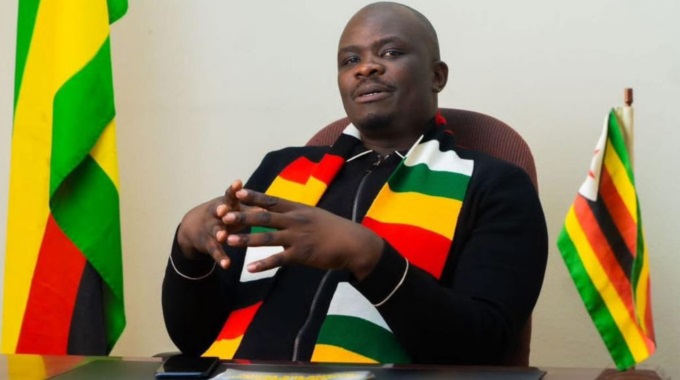
Taurai Kandishaya is the Deputy National Political Commissar in the ZANU-PF National Youth League executive. He is also the chairperson of the African Youth Congress.