

 malvernmugadzikwa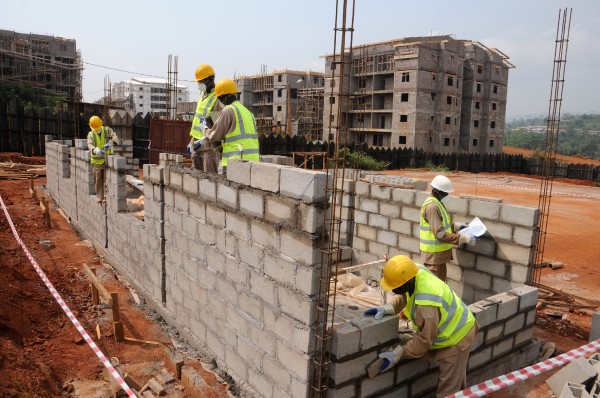
Oliver Kazunga
The Construction Industry Federation of Zimbabwe (CIFOZ) says 2022 is ending on a good note for players in the sector on the back of supportive and transformative policies by Government.
The sector, however, had it dark side too as some players contributed to the economic instability experienced during the course of the year as they used their heft payments from mainly Government to attack local currency.
But following the Covid-19 pandemic, viability and growth of the local construction industry, contracted in the past two years due to national lockdowns, the country embarked on in line with the World Health Organisation (WHO) protocols to contain the respiratory disease.
CIFOZ president, Martin Chingaira, told Business Weekly recently that following the easing of the national lockdowns, coupled with supportive policies like the awarding of construction tenders to indigenous players on major Government projects, the sector was on a rebound.
At present, he said the construction industry was operating at 30 percent capacity.
“This year has been a good year for the construction industry due to the supportive policies and transformative policies adopted by the Government.
“Tenders on infrastructural development by the Government are being awarded to local contractors and coupled by the transformative thrust the Second Republic has embarked on, there is a lot of construction taking place on infrastructure such as roads and housing.
“The sector is now on a rebound operating at 30 percent after two years of stagnation due to the national lockdowns induced by the Covid-19 pandemic,” he said.
In line with the National Development Strategy 1 (NDS 1) and Vision 2030, the Second Republic led by President Mnangagwa envisages the attainment of an upper middle-income economy by 2030.
It is against this background that the Government has come up with infrastructural development projects such as the Emergency Road Rehabilitation Programme, where the country’s road network is being constructed or rehabilitated to promote economic growth and development.
Infrastructure such as roads remain the lifeblood of economies the world over.
For example, under the Emergency Road Rehabilitation Programme (ERRP), the Harare -Beitbridge Highway, one of the country’s busiest trunk roads, is undergoing a major upgrade to turn it into a modern road.
So far, a total of 370 kilometres have been opened to traffic as the modernisation of the road and many others across the country continues.
The Government carries on to upgrade Zimbabwe’s roads under ERRP to facilitate trade as well as reducing road carnage.
“Government through the Ministry of Transport and Infrastructural Development, has rolled out the ERRP our members are involved in, ultimately improving our operational capacity.
“The good thing has also been that the Government on all its infrastructural development programmes, be they housing, dam or road construction projects, has adopted the tendering system,” said Chingaira.
“One good thing with the tendering system is that local contractors if they meet all the requirements to qualify for the project they bid where a winner would be selected among domestic contractors.
“Foreign contractors are only coming in to participate in the tenders where the Government seeks investors to fund the infrastructural projects. So, really, 2022 has been a good year for us.”
Going forward into next year and beyond, it is hoped that infrastructure development would be accelerated by President Mnangagwa’s administration as the country targets to achieve the national vision of an upper middle income economy by 2030.
Key infrastructure projects such as the Gwayi-Shangani Dam in Matabeleland North province are being developed and the investment from which local contractors are participating, is now 50 percent complete.
Once completed, the massive water body will go a long way in propelling sustainable economic growth and development through supporting projects such as irrigation around the Gwayi area, tourism and recreational facilities as well as supplying water to Bulawayo, which presently experiences perennial water woes.
“As a result of the transformative policies by the Government, we are also seeing a lot of housing development projects being pursued by both the public and private sectors. We are also benefiting a long way as we always say that the growth of any company is determined by its activities, so when we are getting the tenders our sector is being capacitated,” said Chingaira.
In the 2023 national budget statement presented last month, Finance and Economic Development Minister Professor Mthuli Ncube, said the selection of projects targeted for implementation next year draws from NDS1 collection of projects, with focus on-going and stalled projects.
In September this year, the country held its inaugural Infrastructure Summit in Victoria Falls and brought together stakeholders from the public and private sectors, development partners and the construction industry, seeking to address bottlenecks affecting infrastructure delivery in Zimbabwe including crowding in private sector investments.
“Benefiting from the outcomes of the summit and other inputs from stakeholders, the 2023 Budget will institute measures that will address the losses and waste in public infrastructure investments,” said Mthuli.
The dark side of the sector
Following the unsustainable pricing by some contractors, Government then demanded to get value-for-money and said would not pay for goods and services that were overpriced.
In August, Treasury also suspended payments to contractors that were overpricing their goods and services amid allegations that these were causing runaway inflation and a fast depreciating local currency.
“Such pricing framework by the suppliers of goods and services, have not only been causing inflationary pressures but also parallel market activities,” Secretary for Finance and Economic Development, George Guvamatanga said then.
According to Guvamatanga, the inflated prices had eroded the national budget and created “inherent fiscal risk of unsustainable budget overruns and budget deficits”.
There were, however, fears that the measure to suspend payments to contractors will delay public projects and that such contractors also risk closing shop.
Guvamatanga, however, said the Government was not letting up on its quest to get “value for money.”
He said contractors under the Emergency Road Rehabilitation Programme (ERRP), as well as players in the tourism sector, were the major culprits when it comes to overcharging for their goods and services.
“But I had a meeting with them (contractors) and told them they have to go back and revalidate their prices. I paid them only 30 percent so that they can at least pay salaries and meet a few other obligations,” said Guvamatanga.
To deal with non-compliant contractors, with a view to plug parallel market dealings, Government has blacklisted the 19 firms including Nariox (Pvt) Ltd, New Age Marketers (Pvt) Ltd, Pepwit Investments (Pvt) Ltd, Tirumi Investments (Pvt) Ltd, Mwendo Africa (Pvt) Ltd and Construction Warehouse (Pvt) Ltd among others.



 Online Reporter