

 admin
admin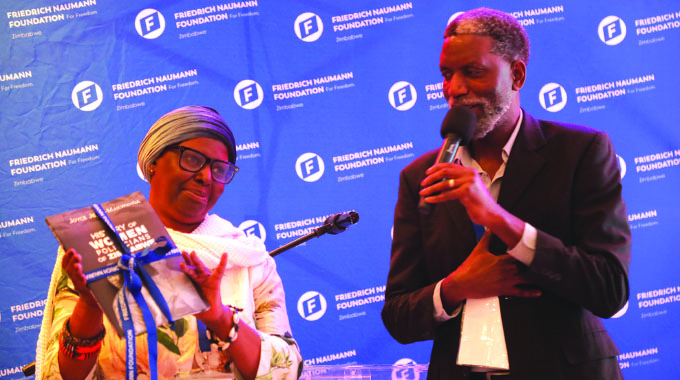
Joseph Madzimure and Yeukai Karengezeka
WOMEN across the political divide have been urged to continue actively participating in politics despite the hurdles they face as the Government remains committed to emancipating them through effective initiatives, a senior Government official has said.
Permanent Secretary for Women Affairs, Community, Small and Medium Enterprise Development Dr Mavis Sibanda made the remarks while representing her Minister Senator Monica Mutsvangwa at an event that celebrated the history of women’s participation in politics in the country.
The book, “The History of Women Politicians of Zimbabwe” authored by writer and filmmaker Joyce Jenje-Makwenda was also launched at the event.
Dr Sibanda acknowledged the struggles and sacrifices of women who paved the way for justice and equality, including revered figures like Mbuya Nehanda and Queen Lozikheyi.
“As we reflect on the history of women’s political participation, we recognise the immense struggles and sacrifices made by countless women who paved the way beginning with historical figures who fought valiantly for justice and equality.
“As we reflect on this journey, we take pride in the strides made by our Government to create a conducive environment and put in place laws and policies that seek to catalyse women’s political participation,” she said.
The Government had made strides in creating a conducive environment for women’s political participation through laws and policies, such as extending the quota system for women in parliament and introducing it into local government.
This has led to an increase in women’s participation, with notable examples that include Defence Minister Oppah Muchinguri-Kashiri, Senate president Cde Mabel Chinomona and Deputy Speaker of Parliament Cde Mabel Chinomona.
Dr Sibanda said despite progress, women still faced obstacles like being under-represented, holding less than 50 percent of positions and often shy away from direct election seats due to violence, economic marginalisation, and negative socio-cultural norms.
On the other hand, violence against women, a major obstacle to women’s effective political participation, is also prevalent.
Zanu PF Women’s League political commissar Cde Maybe Mbowa said there was need to educate women so that they vote for each other in future elections.
“We are not happy with the number of women in politics. The figures are not pleasing, because most women are afraid of participating in politics. With women we will have a very stable situation because they fear God. Once you have empowered a woman, you have empowered the whole nation,” said Cde Mbowa.
Veteran politician and former Zanu PF Central committee member Margret Dongo advised upcoming young women who want to participate in politics to be strong and committed to speak out.
“Women should be part of the struggle like we did during the liberation struggle to get recognition. They have to bear in mind their history because it is the history that builds the future. The workshop for women is a good reminder that history is there to build the future,” said Mrs Dongo.
MDC-T vice president Paurina Mupariwa said politics was difficult when it came to female participation in politics.
“The reduction in numbers of women in Parliament signifies a drift from our expectations as senior politicians. We need to encourage youth women to participate in politics,” echoed Ms Mupariwa.
Former Deputy Prime Minister Dr Thokozani Khupe said it was high time women’s contribution in politics were realised.
“Women constitute 52 percent of the population so are the majority of voters.
“As women, we are saying we need to change our ways of doing things and make both men and women represented equally in politics because women play a critical role in nation building.
“They are more registered women voters than men, but come Election Day more women vote for men. Women play a critical role in politics, but the sad reality is that when it comes to representation at ward, parliamentary and cabinet level, you will find a few women. As we speak right now there are only 10 percent of women in Parliament in constituency seats. It is a sad reality. We need to change our ways of doing things,” said Dr Khupe.
Lead president Linda Masarira highlighted that the girl child was raised in an environment where they were told that politics was a man’s game, violent and dirty.
“This definitely led to a girl child not even having a dream of becoming a Member of Parliament, councillor and even to occupy the highest office of the land. It is actually sad that we actually have social structures that do not encourage young women to participate in politics,” said Ms Masarira.
“We have seen the decline in female parliamentarians, councillors over the years due to misogynistic character of men who occupy positions of influence in political parties.”
She said the society was accustomed to seeing men as leaders.
She added that women were not given the opportunity to lead even at a personal level.
“There is a lot that we need to do to change the way we are raising the girl child; the way we are raising the boy child,” she said. She lamented that men in Zimbabwe had no respect for women.



 Online Reporter