Chronicle Editor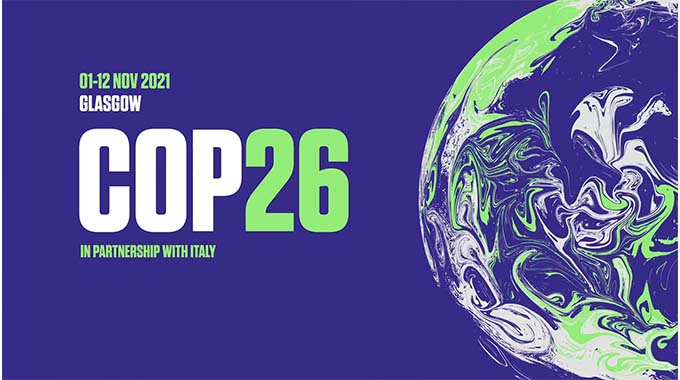
THE past 16 days have been highly productive for the country.
Last month, UN Special Rapporteur on the negative impact of unilateral coercive measures on the enjoyment of human rights, Professor Elena Douhan conducted a 10-day mission at the end of which she called on the European Union (EU), Britain and the US to immediately and unconditionally lift their sanctions on Zimbabwe.
Speaking on the last day of her visit on Thursday last week, she also said the punitive measures were illegal since they aren’t backed by the UN as all legitimate sanctions must be. In yet another significant remark, Prof Douhan said the sanctions were hitting the most vulnerable — women, youths, the disabled and the poor — the hardest, not the so-called targets in the Government, military or Zanu-PF.
By demanding the lifting of the Western embargo, declaring them illegal and that they impeded economic growth and enjoyment of human rights, the UN envoy not only confirmed what the Government has been saying all along but also boosted the country’s two-decade fight against the measures.
All well-meaning citizens are delighted that the UN pronounced itself so emphatically on this very crucial matter.
As Prof Douhan was concluding her working visit, Zanu-PF was beginning its 19th Annual National People’s Conference in Bindura, Mashonaland Central Province. As a party of Government, the ruling party convention was eagerly and widely watched. Its organisation and management were flawless. Among other highlights, the event that ended on Saturday, endorsed President Mnangagwa as the ruling party’s candidate for the 2023 harmonised elections.
On Sunday night, the President landed in Glasgow, Scotland ahead of the beginning yesterday of the 26th UN Climate Change Conference. He joins world leaders in discussing ways through which they can reverse climate change for the betterment of humanity and the wider environment. Zimbabwe targets to reduce carbon emissions by 40 percent by 2030.
It seeks to achieve this ambitious target through the carbon tax on all liquid fuel imports, blending petrol with ethanol, protecting wetlands, reducing energy transmission loss from 18 percent to 11 percent by 2025, expanding solar’s contribution to the mix to 300 megawatts by 2025, adding 4,1MW of biogas capacity by 2024, improving efficiency in the agriculture sector by 12 percent by 2030 and eight percent in the mining industry.
We look forward to the adoption of concrete measures, especially by industrialised and most polluting countries, to protect the global environment from the looming catastrophe caused by the rapidly changing climate. After adopting them, the polluting West and less polluting nations of the South, must religiously implement them after the conference.
Indeed, the discussions on the environment are critical but for our country, the UN conference presents yet another glorious opportunity for the national leadership to engage and reengage politically and economically.
Just the presence of the President in the UK, the country that started it all by inciting its Western allies to impose sanctions on Zimbabwe following London’s bilateral dispute with the Government over the land redistribution exercise, is a massive boost to the Second Republic’s thrust to normalise relations with the West.
We saw him yesterday walking to be welcomed by a smiling British Prime Minister, Mr Boris Johnson and proceeding to pose for a photo shoot flanked by the UK leader and UN Secretary General Antonio Guterres. We don’t think yesterday’s interaction, even though it was brief and customary at such platforms, would have happened in the First Republic given the Zimbabwe-Britain acrimony of that time.
We want those reciprocal smiles between President Mnangagwa and Mr Johnson, the welcome by the British Premier, that wrist greeting that Covid-19 imposed on the world and that photo shoot to signal the beginning of negotiations to ultimately lead to warm relations between our two countries and by extension, between our country and the West.
The President also held a productive bilateral meeting with the EU President Mr Charles Michel. This too must advance the Government’s engagement and reengagement drive. We acknowledge that the EU has been relaxing some of its sanctions on our country since November 2017. Formal dialogue between the two parties resumed in 2018 and is ongoing, which is encouraging.
However, we want that dialogue to be intensified so that the sanctions that the EU has maintained on Zimbabwe since the turn of the millennium are totally removed, now and unconditionally.


 Online Reporter