Chronicle Editor
Hazel Marimbiza
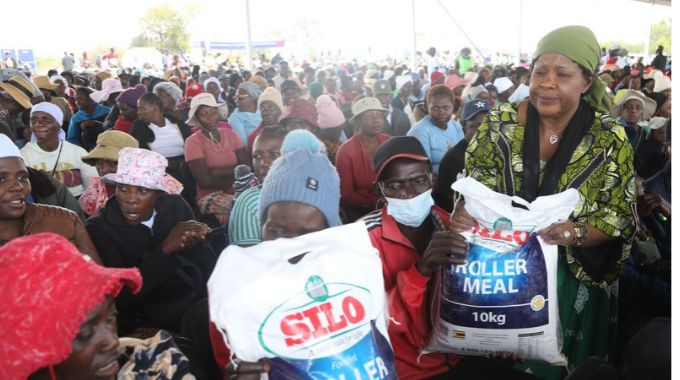
LAST month when the world celebrated the International Day of Rural Women, the women were recognized for their contribution in enhancing agricultural and rural development, improving food security and eradicating rural poverty.
While rural women have been acknowledged for contributing immensely to food security, they are facing serious challenges in fighting the effects of climate change on their agricultural produce.
Climate change is causing an increase in temperatures, rainfall variations and the frequency and intensity of extreme weather events, adding pressure on Zimbabwe’s agriculture system — which is already struggling to respond to rising demands for food as a result of population growth. The changing climate is also contributing to resource problems beyond food security, such as water scarcity, pollution and soil degradation.
The challenges rural women are facing come at a time when world leaders, activists, high-level officials, and industry groups are gathered in the United Kingdom for the UN Climate Change Conference (COP26).
The two-week summit is an opportunity for countries to scale up their climate commitments through action on gender inequality.
In order for rural women to continue ensuring that countries are food secure it’s important for world leaders to address adaptive strategies for rural women to curb effects of climate change.
Women are overwhelmingly the poorest farmers in the world, responsible for feeding their families, and remaining at home as sole household managers when men migrate for work.
In Zimbabwe, approximately 80 percent of women live in the communal areas where they constitute 61 percent of the farmers and provide 70 percent of the labour. Most women are unpaid family workers. Rural women work 16 to 18 hours a day, spending at least 49 percent of their time on agricultural activities and about 25 percent on domestic activities.
With all the work they are doing climate change poses a considerable threat to them. In Zimbabwe, the increase in temperatures has led to reduced crop yields for those living at lower latitudes, especially in seasonally dry and tropical regions. More frequent and extreme weather events, such as droughts and floods, have made local crop production even more difficult.
In an effort to address challenges faced by rural women, recently the Associate Vice President — Strategy and Knowledge Department at the International Fund for Agricultural Development (IFAD), Dr Jyotsna Puri said IFAD’s focus at COP 26 is on the rural small-scale producers who supply half the world’s calories.
“If they can’t adapt to climate change, the world’s food systems will be in serious trouble. That’s why they should be at the centre of climate change discussions, especially in terms of the investment needed to help them adapt. But right now, climate finance isn’t accommodating them. Somewhere between US$140 and US$300 billion a year is needed to help them become climate-resilient and sustainable, yet as of 2017/2018, only US$20 billion per year was tracked for agriculture, forestry and land use,” said Dr Puri.
According IFAD in many people’s mind, including policymakers, the rural space is often still seen as an area of stagnation and backwardness.
“While it is true that we find the poorest of the poor, the most vulnerable of all, the landless and powerless, in the remote rural areas we also witness the richness of their traditional knowledge, the strengths of their communities, the innovation that comes from their striving for locally made solutions to improve living situations. Wherever we look, we find women among the most resourceful, the most enthusiastic and most committed to new ways to improve their lives, that of their families and communities. Rural poor women become powerful agents of change when opportunities arise,” said IFAD in a statement.
Additionally IFAD highlighted that during several decades of fighting poverty in rural areas, the organisation has learned three important lessons.
“The first is that women are the backbone of the rural economy. In addition to caring for their families and their domestic chores, rural women are actively involved in producing food crops and look after livestock, especially in small holdings. Poor women also tend to work on small income-generating activities or micro-enterprises whenever they can find time.
A second lesson is that where women are able to earn an income, and control their earnings, their families will benefit. By directing their earnings to family needs, women become the key to ending hunger and poverty. A third lesson is that while all rural poor suffer numerous constraints, women are particularly hampered in effectively carrying out their work activities. This is where IFAD sees its role in terms of providing support at both policy and programme levels to remove the constraints that affect women’s status, their income generating activities and resulting income.”
Improving rural women’s agricultural opportunities by ensuring they have adequate strategies to fight the effects of climate change has a major impact on women’s overall status and not just on income, bringing lasting benefits to families and entire communities.
Women’s access to resources of fighting climate change is one element of women’s empowerment and therefore critical for the attainment of gloal development goals on gender equality and empowerment of women. It is also critical to achieving the goal on eradication of extreme poverty and hunger.
These goals will not be achieved unless significant progress is made in addressing gender inequality and empowering rural women.
According to the Sadc Gender Protocol Barometer Zimbabwe 2015, most rural women in Zimbabwe work in communal lands so they are most affected by changes in climate since they rely on rainfall for their livelihoods and domestic use.
The Barometer notes that for climate change solutions to be truly effective, women must be included at all stages of policy and strategy development.
This means that women must be included at decision making tables when stakeholders develop strategies and action plans.
The Barometer further notes that women, especially those in rural communal lands, need to be trained and made aware of various strategies put in place by local governments, NGOs as well as the involvement of women and girls to improve their welfare and livelihoods.
According to the Barometer, women and men should have equal access to climate change financing vehicles which have been made available by Sadc.
It can never be over-emphasized that rural women are powerful agents for promoting sustainable development and effective responses to climate change.
According to the UN’s Food and Agricultural Organization, when women have equal access, ownership and control over land and other productive resources, their crop yields increase by 20 to 30 percent.
Therefore, sustainable development demands the active participation of rural women in environmental planning, finance, budgeting and policy-making processes.
Since leaders at COP26 will launch an adaptation goal for climate change and adopt a strategy for achieving such a goal, this is an opportunity for them to recognize and address the unique needs and circumstances of rural women.


 Bunjiwe Mkwananzi