Chronicle Editor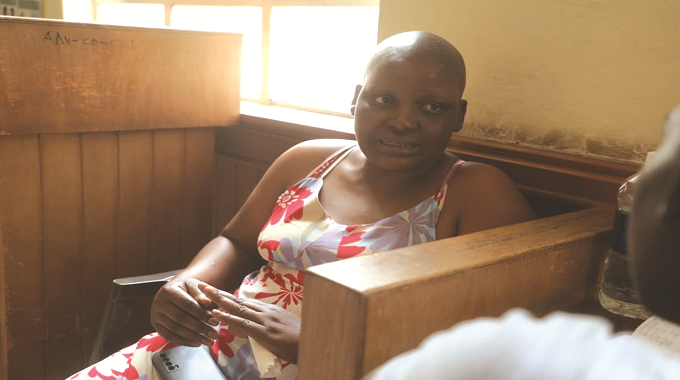
Flora Fadzai Sibanda, Chronicle Reporter
IN February this year, Ms Lister Gumbi (36) of Bulawayo’s Nketa suburb underwent a mastectomy, a procedure used to treat breast cancer by removing the entire breast.
At first, the idea of losing her breast was not appealing as she thought of societal expectations of femininity and womanhood, but the will to live saw her going for mastectomy.
Chronicle spoke to Ms Gumbi and others in her situation as part of the annual global campaign rolled out every October to raise awareness about the impact of breast cancer.
As part of the global effort to raise awareness on breast cancer, October was designated as the Pink Month, a time when efforts to educate people about the disease, including issues to do with early identification, signs and symptoms.
Ms Gumbi said she was diagnosed with cancer in September 2021 after she discovered a lump that she initially thought was milk as she had recently had a miscarriage.
The lump kept on growing leading to the diagnosis after she visited a local private health institution.
She felt devastated by the diagnosis as she never suspected that she could suffer from cancer.
Ms Gumbi said the thought of having her breast removed made her feel like she was not woman enough.
She also grappled with the fear of dying, leaving her three-year-old child without one parent.
“I remember crying and thinking this is it I am going to die. My son is the only zeal that I have to fight. The thought of leaving my son motherless pushes me to fight this cancer,” she said.
She had a mastectomy earlier this year in February at Mpilo Central Hospital as the only way to try and control the cancer was through removing her breast.
“I did not get proper counselling when I needed it the most. I had to be strong for myself and my family, especially my son. My son would come and sit on my lap and ask me if I am ok because as young as he was he could see I was emotionally drained,” she said.
“I was ashamed of having only one breast. I thought the whole world could see beyond whatever clothes I had on and see that I was not woman enough and had lost a breast.”
She said she is not well emotionally as she still battles with the thought of losing one of her breasts and the fear of finding out whether the cancer has spread to her other breast.
Ms Gumbi started chemotherapy in May and she said this has been the most dreadful and painful part of her journey.
“Chemo is very painful. It leaves my body in pain and I sometimes become forgetful. I remember I once forgot my own son’s name. I could see the confusion in his eyes,” she said.
“My hair started falling during this time. I had to cut it off and go bald. It took me four months to start walking around without covering my head. The emotional wound is still there and I doubt it will get better anytime soon. I wish people would learn to not comment on a person’s situation when they do not know the real story.”
Ms Gumbi is still waiting for her final results to tell her whether she is now cancer free or not.
“I don’t think I will be able to deal with another surgery should I be told the cancer had spread to the other breast. Just the thought of the whole experience is enough to let me know I won’t survive it,” she told the Chronicle news crew.
Ms Gumbi said breast cancer cases are on the rise, especially for young women and it would be good and helpful if research is done and people can be warned if there is something they are not doing right.
“I would advise young girls to go for screening and have their breast removed if possible. Keeping a breast that will kill you is not worth it,” she added.
Despite Ms Gumbi’s ordeal, there is still hope if one gets a cancer diagnosis.
A cancer survivor, Mrs Dudu Tshuma of Tshabalala suburb survived the ordeal and is thankful to local doctors who were there for her.
Mrs Tshuma said she had been following awareness campaigns on national radio stations when she felt a lump on her left breast in 2019.
She discovered she had stage two of breast cancer in 2020 at the United Bulawayo Hospitals.
Under stage one — the cancer is small and hasn’t spread anywhere else. Stage two — the cancer has grown, but hasn’t spread. Stage three — the cancer is larger and may have spread to the surrounding tissues and/or the lymph nodes.
Mrs Tshuma had chemotherapy to reduce the size of the lump before going for a mastectomy surgery in 2021.
She said losing one of her breasts caused her to be depressed as she thought everyone would know and judge her for having lost such an important body part.
She said the whole experience was heartbreaking and she thought she was not going to make it.
Mrs Tshuma said fighting cancer is an on-going journey that does not end as one has to continuously take medication and go for screening.
“The first time the doctors told me my results were cancer positive I thought of death. I did not think I was going to make it. I thought I had been bewitched because it is an African belief that cancer is associated with witchcraft,” she said.
She said she had to accept the situation and she chose to lose a breast instead of losing her life which could have affected her sons.
She said she was the first one to have breast cancer in her family as there has never been a case before. Mrs Tshuma had to go through radiation therapy and after it she was put on Tamoxifen medication for the next 10 years.
Radiation therapy also called radiotherapy is a cancer treatment that uses high doses of radiation to kill cancer cells and shrink tumors.
“The medication that I take is meant to kill any cancer cells that might grow in my body. I have been advised to be faithful to my medication so that I do not face a risk of having new cancer cells,” she said. “I wish there could be an active organisation that deals with counselling breast cancer patients. People are scared to fight because they have no one who can tell them they will be fine and that it will pass.”
She said she is grateful to Mpilo Central Hospital’s oncologist department as there are good doctors who have taken good care of her since the beginning of her journey.
“Having campaigns only is not enough,” she said.
Unlike Mrs Tshuma who was lucky enough to be saved on time from the claws of cancer, Mrs Silvia Dube of Entumbane said her sister Ms Virginia Ndebele (43) unfortunately lost the fight to breast cancer.
The late Ms Ndebele was diagnosed with breast cancer in 2019 in South Africa after she felt a lump in one of her breasts.
Instead of starting treatment, Mrs Dube said her sibling decided to consult with traditional healers as she believed the cancer was due to witchcraft.
Her cancer progressed and ended up being a wound that would ooze discharge.
Late in 2020 the cancer had progressed to other parts of Ms Ndebele’s body when she decided to seek medical help.
It was already too late and she succumbed to cancer in December 2020.
In an interview, Mrs Dube said if only her sister had been educated about breast cancer on time she would still be alive.
“I believe if my sister had been taught about breast cancer she would still be alive. Growing up in the rural areas of Kezi we were always told breast cancer was due to witchcraft. This influenced my sister’s decision and unfortunately led her to her grave,” she tearfully said.
Mrs Dube said her sister used to clean her breast using salt and some herbs on a daily basis. She said she believes this worsened the wound.
She said the late Ms Ndebele did not want to go to hospital as she feared having her breast removed. “By the time she agreed to be taken to hospital it was already too late for her. The cancer had spread to other parts of her body. Doctors could not do much other than make her comfortable for her death,” she said.
Mrs Dube said more awareness campaigns need to be done to teach people even in rural areas that breast cancer is not caused by witchcraft but rather is a medical condition that can be treated if detected early.
Former Minister of Health and Child Welfare Dr David Parirenyatwa said self-inspection is the best cure for breast cancer.
“Self-inspection is the best cure to breast cancer. The more you self-inspect the higher the chances of finding the lump before it progresses and affects other parts of the body,” he said.
“Apart from self-inspection people should normalise visiting the hospital for cancer screening.”
Dr Parirenyatwa said it is not quite clear what is really causing breast cancer among a lot of young women but there are some health tips to prevent it.
“Some families have a history of breast cancer being hereditary in their families so that is why they fall victim to the cancer. People should avoid excess drinking of alcohol and smoking tobacco. These two have been closely linked to breast cancer. Fatty and sugary foods should be avoided at all times,” he said. “This does not apply to women only as men can also get breast cancer although the cases are very low. However, the procedure for dealing with cancer is the same, men also undergo surgery and chemotherapy.”
He said more could be done as a country to help fight breast cancer as there are a lot of organisations that are willing to work with government. “More awareness campaigns should be done especially in rural areas to teach young people who are marginalised about this deadly disease. There are organisations that are willing to work with the Government in offering emotional support to people who are fighting the battle,” he said. — @flora_sibanda


 Online Reporter