


 admin
admin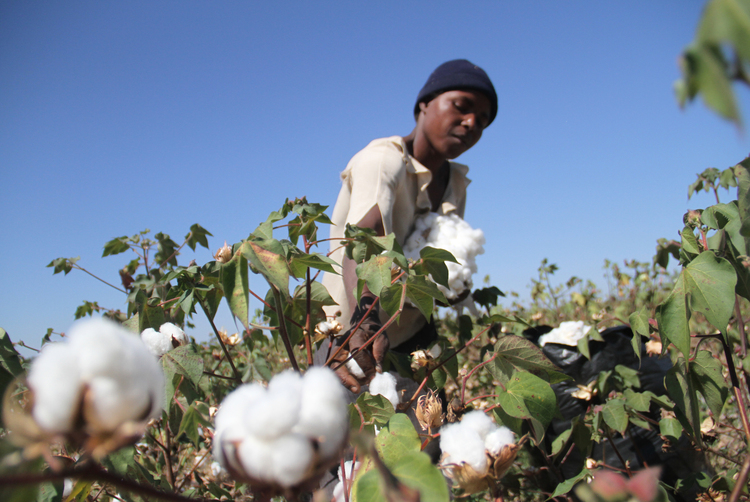
Are we set for a return to the glory days when cotton fetched high prices and was referred to as “white gold”?
The announcement by President Mugabe that Government will soon revive Cottco and restore viability to the cotton industry has set tongues wagging. In his State of the Nation Address last week, President Mugabe said Government will ensure that the industry provides a livelihood for over 300 000 households and create jobs in the textile industry. He said the same success story that was witnessed in the production of tobacco in the past few years must also happen in the cotton industry. Since the Cotton Marketing
Board was turned into privately-owned Cottco in 1994, the price of cotton has fallen dramatically and the cotton industry has faced a number of challenges. A number of measures, among them the liberalisation of the sector and the entry of new players, were introduced by Government. A new legal framework to control side-marketing, which saw the Agricultural Marketing Authority (AMA) deploying officers at cotton buying depots in an effort to combat side marketing, was also enforced. However, enforcement of the legal framework has proved to be problematic as the framework left a lot of grey areas. As a result, the cotton industry never recovered despite these measures.
Farmers are unhappy with the producer price of 30cents per kilogramme and the delays in getting payments.
During a recent tour of Gokwe, cotton farmers indicated that they would want prices to go between 70cents and 80cents per kilogramme. Following the President’s address, farmers have applauded the proposed take-over, which they believe will improve their livelihoods and also create employment opportunities. Mr Wonder Chabikwa, president of the Commercial Farmers Union of Zimbabwe, is optimistic that once Cottco is in Government’s hands, more farmers will switch to cotton production.
“For the farmers, a lot of benefits will surely come with the take-over. Inputs are going to be affordable to most farmers since the company will be selling them at reasonably fair prices. Farmers are being ripped off by private buyers who are charging more,” Mr Chabikwa said.
Mr Chabikwa said the availability of affordable inputs will result in high yields.
“As a result of the high input prices, farmers were no longer adhering to the correct fertiliser and pesticide applications since they could not afford them. Plant yields are going to improve greatly since the farmers will be doing the correct things,” added Mr Chabikwa.
Plant yields in Zimbabwe are at 17 000 plants per hectare, compared to 45 000 to 50 000 in other countries. During the 2014/15 season, cotton production declined to its lowest level in three seasons due to a reduction in inputs support. Output fell by 7 percent to 135 000 tonnes from 145 000 tonnes in the preceding season. Production was negatively affected by low rainfall patterns whilst some farmers abandoned cotton farming after the dramatic fall in cotton prices.
While most farmers shifted to tobacco production, some farmers in Gokwe switched to brick moulding. Analysts have noted that poor grower viability and side marketing are the fundamental challenges facing the local cotton industry.
Mr Berean Mukwende, the Zimbabwe Farmers Union vice-president, said the resuscitation of Cottco will assure farmers of a ready market that will also pay fair and competitive prices.
“Problems began after the privatisation of the then Cotton Marketing Board. Before the privatisation, farmers would get inputs at fair prices and the farmers had a ready market. CMB would buy the cotton at a fair and viable price,” Mr Mukwende said.
He said CMB would only sell the cotton to the international market when the prices were competitive. With rainfall patterns becoming more unpredictable due to climate changes, farmers have been advised to grow drought-tolerant
crops such as cotton.
This white gold can be grown in most parts of the country. In the past, cotton production was mostly centred in areas such as Gokwe, Sanyati, Kadoma and some parts of the Lowveld. Some parts of Mbire, Guruve, Bindura and Shamva in Mashonaland Central also produced cotton.
Some farmers, however, questioned the rationale behind Government’s intent to resuscitate Cottco at a time when other state enterprises such as the Cold Storage Company (CSC) and the Grain Marketing Board are struggling.
“Farmers are yet to be paid for grain delivered to GMB. I am not sure whether that will also not happen at Cottco. We shall wait and see,” said Mr Winston Changadeya of Royden Farm, Norton.
Recently, the GMB said it needed funds to undertake the rehabilitation of its dilapidated grain silos, to upgrade its information communication systems and to recapitalise its commercial unit.
Like Cottco, the GMB has been operating at a loss. In 2014, the company recorded a loss of $51 million from a profit of $910 000 a year earlier, largely due to low handling and storage fees, high staff costs and high fixed costs resulting from a wide depot network. During this period, revenue declined from $80 million to $38 million.
About 70 percent of GMB’s income comes from grain handling and storage fees.
Early this year, Government availed $34 million which was used to pay the creditors before the parastatal embarked on a staff rationalisation programme.
Mr Chabikwa said although the problems affecting both Cottco and GMB might appear the same, they are not in any way related.
“Cotton is an export crop which has its own value chain. The value chain is different from that of maize and other crops. Downstream industries are also set to benefit from cotton production,” Mr Chabikwa said.
Whilst other countries are embracing synthetic fibres as an alternative to cotton, Mr Chabikwa said cotton has the advantage of producing many other bi-products such as cooking oil and cotton cake, which is a stock feed.
Technology has made advances in synthetic fabrics, threatening the production of cotton in the process.



 Online Reporter