Online Reporter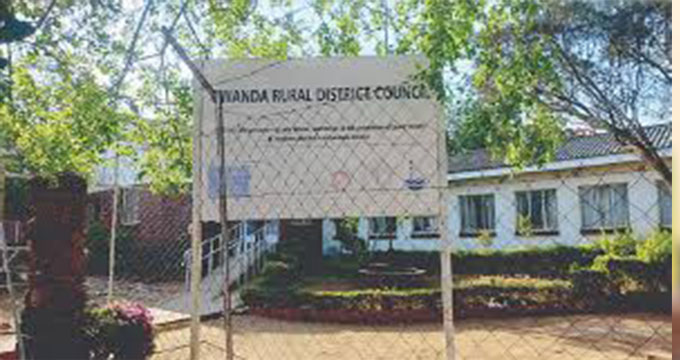
Sukulwenkosi Dube-Matutu, [email protected]
COUNCILLORS in Gwanda District have been urged to take the lead in establishing Disaster Risk Reduction (DRR) committees, to enable communities to respond to potential hazards before they escalate into full-blown disasters.
This call comes as the Gwanda District Civil Protection Committee rolls out a comprehensive programme aimed at equipping local stakeholders — including councillors and extension officers — with disaster risk management skills.
The initiative is part of broader efforts to build resilience in the face of increasing threats linked to climate change.
Recently, the district trained extension officers from all 24 wards, with similar training sessions for councillors already completed.
The initiative will now be cascaded to the ward level, where trained extension officers will guide the formation and capacitation of DRR committees. Each ward is expected to develop its own DRR plan tailored to local risks.
Councillors, who chair the ward DRR committees, will play a critical role in mobilising communities and overseeing the implementation of mitigation strategies.
Speaking after a training workshop, Gwanda Ward 15 Councillor Emmanuel Makhabane Ndlovu said the empowerment of councillors and extension officers marks a turning point in the district’s disaster preparedness.
“I want to commend the district leadership for driving this programme. As DRR committee chairpersons, it is now our responsibility to take these strategies back to our wards and engage communities at the grassroots level.
“What is vital is the shift from dependency to self-initiative. DRR committees must not wait for handouts during disasters but assess and take immediate community-based action. Many challenges can be addressed locally,” he said.
Clr Ndlovu cited crocodile attacks as a key hazard in his ward, noting that his committee will now explore proactive measures to reduce such threats. Gwanda Rural District Council chairperson Mr Mphathiswa Ncube said that going forward, each ward DRR committee will be encouraged to establish a DRR fund to support local emergency interventions.
Gwanda District Development Co-ordinator, Ms Nomathemba Ndlovu, said training councillors and extension officers is a key component in ensuring inclusive disaster risk management across all levels of governance.
“Disaster preparedness is a multi-sectoral approach, and all sectors must be trained — from the village level right up to the district. For example, if we have a cholera outbreak, it doesn’t mean that only health officials must respond; everyone has to come on board.
“This time around, we trained extension workers and councillors. Government departments at the ward level will play a crucial role in capacitating communities,” she said.
Ms Ndlovu emphasised the importance of councillors in the process, noting that they must be empowered to understand and fulfil their roles.
“The councillors will mobilise communities to ensure they have effective DRR committees, and from there, each ward will develop a DRR plan,” she said.
She said that the district is embracing a community-led disaster management model, stressing that real impact will come from community participation and ownership of the process.
Gwanda District is vulnerable to a range of hazards, including prolonged droughts, flash floods, livestock and human disease outbreaks, environmental degradation, and technological risks such as mining and road traffic accidents. The district is also grappling with rising cases of substance and drug abuse, particularly among the youth.
To respond effectively, the district revised its DRR strategy last year to reflect updated statistics and administrative boundaries. The revised plan includes three key documents: the district’s risk profile, mitigation and adaptation strategy, and the emergency response plan.
The capacitation programme is expected to significantly enhance the district’s ability to detect, prepare for, and respond to disasters while promoting community-driven resilience. — @DubeMatutu