Online Reporter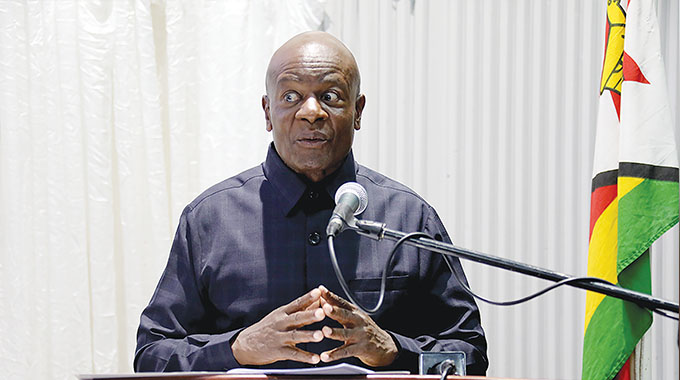
Rutendo Nyeve, Victoria Falls Reporter
THE Government has subjected the local authorities’ Master Plans under a 90-day public scrutiny before implementation, Minister of Local Government and Public Works, Daniel Garwe, has said.
In a recent interview in Victoria Falls, Minister Garwe emphasised the critical role these blueprints will play in guiding sustainable growth, fostering provincial economies, and curbing haphazard development.
Of the 92 local authorities in Zimbabwe, 91 have submitted their Master Plans to the ministry for review, with technical teams having already completed initial assessments. Only one urban local authority is yet to submit its plan.
“We have 92 local authorities in the country. Of the 92 local authorities, 32 local authorities are urban local authorities and 60 are rural district councils.
“Of the 32 urban local authorities where your interest lies, only one has not completed and submitted the Master Plan,” said Minister Garwe.
“I will not give you the name of that local authority, but if you come to the offices, I am sure we will be able to share with you. But all the other 91 local authorities have submitted their Master Plans, and our technical teams have gone through them,” he said.
“We have assessed them, and as we speak, they are now under public scrutiny. We wait for 90 days for public scrutiny to take place, after which we then start implementation.”

Minister Garwe applauded councils for the progress in terms of submitting their Master Plans, which map development plans in line with the Government’s Vision 2030 ideals.
He said the Master Plans are part of a nationwide push to bring order, vision and sustainability to urban and rural planning.
Master Plans serve as comprehensive development frameworks that outline land use, infrastructure projects, environmental conservation measures, and economic zones for periods often spanning decades.
For years, many local authorities have struggled with illegal settlements, inadequate service delivery and poor spatial planning, leading to congestion and inefficiency.
The new Master Plans are designed to reverse this trend by providing a clear, legally binding roadmap for development.
Crucially, Minister Garwe highlighted the role of these plans in creating robust provincial economies.
By designating land for industrial, agricultural, residential and commercial use, the Master Plans will attract investment, stimulate local business and create employment opportunities tailored to each province’s unique strengths and resources.
“Sustainable development is at the core of this exercise. We are not just planning for today, but for future generations. The Master Plans will ensure that as we grow, we do so in an organised manner that preserves the environment, promotes resilience, and improves the quality of life for all citizens,” he said.
The 90-day public scrutiny period is a key component of the process, allowing residents, stakeholders and experts to review and provide input on the proposed plans.
This participatory approach aims to enhance transparency, foster ownership and ensure that the final documents reflect the needs and aspirations of local communities.
Once the consultation process is concluded, the Government will move to the implementation phase, which is expected to transform local governance and service delivery across the country.
The move has been welcomed by planning experts and business leaders, who see it as a long-overdue measure to align local development with national goals under the National Development Strategy (NDS).