Chronicle Editor
Patrick Chitumba, Feature IT’S a cold Tuesday afternoon and Mrs Irene Muradzikwa (70) of Mtapa suburb in Gweru is seated on her bed with a fleece wrapped around her legs in her tiny room which she shares with her daughter and teenage grandson.
Mrs Muradzikwa has problems with her legs but she doesn’t know what it exactly is because she doesn’t have money to consult a doctor. She suspects it could be arthritis.
The room has a double bed, a kitchen unit, a two-plate stove and an old 14 inch black and white television set to complete the list of what she calls her valuables.
At the edge of the bed, there is a curtain hanging from the roof that she uses for some privacy at night while her teenage grandson and daughter share the floor.
She has been staying in this room in Mtapa suburb in Section 3 way before independence and all her children grew up there as she could not afford a decent accommodation.
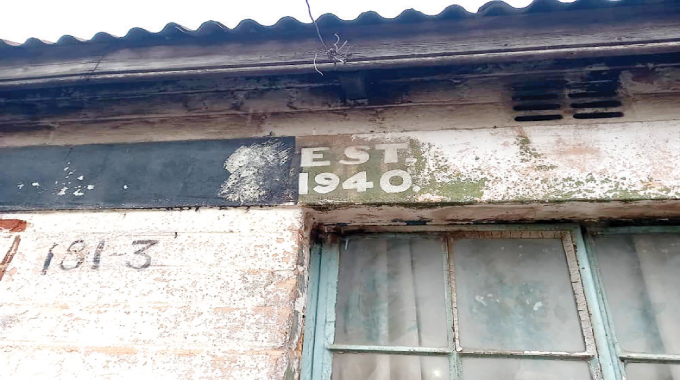
Her one room is everything in a location that was established around 1940 and the houses are wholly owned by council.
“I have challenges in walking, my feet are painful and with this cold weather, they are worse. I therefore have difficulties when I want to visit the toilet because it’s outside of this room.
My children and grandchildren don’t spend time at home during the day, they only come to sleep because they know that the situation is not conducive but they don’t have a choice,” said Mrs Muradzikwa.
She said she started staying in the room with her late husband before the family grew and now, they are grown up while the space remains the same.
“There is no privacy,” she lamented adding that they were looking forward to the home-ownership scheme that was introduced by Gweru City Council (GCC) aimed at decongesting the Section.
“We live like rats in these tiny houses with my family. We are looking forward to the home-ownership scheme so that we do away with this colonial way of living,” she said.
Across the road from Mrs Muradzikwa’s place is another elderly woman Ms Mary Sithole (63) who is also using a curtain to divide a room she shares with her daughter (42), her grandson who is married and her great grandson.
“My story sounds unbelievable to someone who doesn’t know me but I am staying with my 42-year-old daughter who is single. She has a son who is married and has a child. We are staying together in a single room in Mtapa Section 3,” said Ms Sithole.
She said they were struggling and are hoping that one day the GCC home-ownership scheme will benefit her so that at least she has her own two rooms.
“We have heard of the home-ownership scheme and council officials have been here. We also saw some people pegging stands and our hope is that sooner rather than later, some of us will be allocated stands and others will be given more space,” said Ms Sithole.
Shared accommodation is a colonial era phenomenon where single male workers were made to share one big room with an outside flush toilet.
This type of accommodation is still prevalent in the Mtapa Section 3 with fears that the overcrowding may cause a health hazard where in extreme cases eight people share a tiny room.
To alleviate the problem, GCC said at least 198 families will become home owners after it agreed to give them ownership of the properties.
The properties include one-roomed and semi-detached cluster houses in Mtapa 3 and 7 that were built around 1940.
Mtapa Ward Councillor Godfrey Giwa said the remaining families would be relocated to new suburbs that council intended to develop.
“Mtapa is one of the oldest suburbs which needs upgrading in order to uplift the standard of living of the residents. Conversion of the rented houses to home ownership will see 198 families in Mtapa owning houses.
Mtapa Section 3 will have 127 families benefiting, while Section 7 will see 71 families getting ownership,” he said.
Clr Giwa said elderly occupants would remain at the houses to claim ownership, while other occupants would be offered residential stands at subsidised prices in the new suburbs.
He said 166 families would be relocated to new housing schemes in Mambo Infill, Shamrock Infill and Mkoba 21.
“We are working on making sure that we do away with these single tiny rooms. At this block, there are rooms which are occupied by six different families sharing one communal toilet.
So, with home-ownership, we are moving three families and three will remain occupying two rooms each. They will also have space to extend the rooms to a bigger house and a bit of space for a garden,” said Clr Giwa.
Acting Gweru City Council town clerk Mr Vakayi Douglas Chikwekwe said the home ownership scheme was in line with smart cities concept.
“Council is working on the home ownership scheme for Mtapa Section 3. The scheme has been a success in other Sections and we are now waiting for a full council meeting to deliberate on Section 3 home ownership,” he said.
Mr Chikwekwe said residents need privacy to maintain good mental health.
“Right now, they don’t have space. Adequate space ensures privacy; proper housing should provide sufficient space between houses to avoid infringing on the privacy of others.
Each family member ought to have his or her own private space like a bedroom. Inadequate living space may affect human health and security and therefore the need to decongest,” he said.
For residents to realise their dreams Gweru Residents Forum (GRF) has come in to construct toilets so that the residents do away with communal toilets.
GRF director Mr Charles Mazorodze said they were constructing toilets to avert a potential health hazard in Mtapa Section 3.
“As Gweru Residents Forum we are constructing toilets for residents in Section 3 in Mtapa suburb. We want them to have a household toilet facility as compared to communal toilets that they are using.
Remember the communal toilets were constructed around 1940 and have developed cracks, they don’t have running water which makes residents prone to water-borne diseases and so we are constructing 14 to 18 toilets now but in total we want to construct 24,” he said.
Mr Mazorodze said the fact that each household has four to five people in a single room calls for them to have single toilets.
“This is all part of urban renewal. It is part of the smart cities concept that also ensures that residents have running water. Mtapa is the only suburb that is still using communal toilets and an initiative has been put in place to address the various water and sanitation challenges they have been facing,” he said.



 Online Reporter