Online Reporter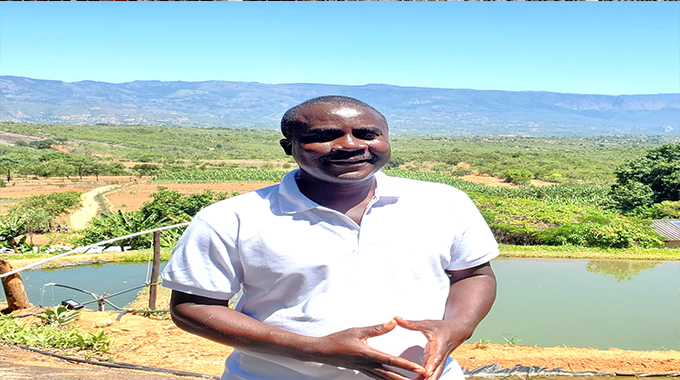
Theseus Shambare, Features Writer
IN the heart of Honde Valley, where the rhythmic splash of cascading water echoes through the lush landscape of Sahumani, Mr Excellence Mbona and his wife Catherine, are writing a story of resilience and prosperity.
Amid Zimbabwe’s ongoing fight towards rural development, these dedicated teachers have transformed their rural community, proving that sustainable agriculture is not just a dream, but a tangible reality.
Their journey, rooted in a shared vision and unwavering determination, began in 2010.
“We dug it up as a family, no helpers,” Mr Mbona recalls, highlighting the spirit of self-reliance that resonates deeply in today’s Zimbabwe.
“My wife would wield a pick as we dug our first fish pond.”
That initial pond, a symbol of their grit, has blossomed into a diversified enterprise boasting eleven fishponds, a flourishing banana plantation and various livestock.
In a nation striving for food security, the Mbonas’ approach is a beacon of hope.
Their ingenious system, harnessing natural springs from the mountains for their fishponds and using nutrient-rich runoff to irrigate their 10 000 banana plants, demonstrates a closed-loop system of resource maximisation.
“Fish is nutritious,” Mrs Mbona emphasises.”
“No need to search for meat. And they are a good income earner too.”

This practical approach aligns with the government’s push for sustainable agricultural practices.
Their impact extends beyond their farm. Recognising the importance of knowledge sharing, particularly in a time of economic hardship, the Mbonas have built a conference room to educate aspiring farmers.
“We believe in sharing what we have learned,” Mr Mbona said, understanding that community empowerment is crucial for national development.
“If we can do it, so can others.”
Local headman, Mr Moji Sahumani, said the Mbonas have played a crucial role in rural development.
“They have shown us that we can achieve anything with hard work and determination.”
Gogo Christine Gwenzi, a 79-year-old member of an all-women farming group echoed.
“They (Mbonas) have given us the tools and the confidence to build a better future for ourselves,” said Gogo Gwenzi, highlighting the empowerment of women, a key focus in Zimbabwe’s development agenda.
The Mbonas’ influence is evident in the formation of numerous farming groups, fostering collaboration. One such group, supported by the Fisheries and Aquaculture Resources Department (Fard) and the Food and Agriculture Organisation (FAO), recently received a state-of-the-art fingerling distribution hub.
“When the advert for this project was flighted, it was Mr Mbona who encouraged us to submit our papers as a group for consideration,” said Ms Elizabeth Sibangwe, secretary for Women-led Fish Co-operative, demonstrating the couple’s proactive role in facilitating access to vital resources.

Mr Mbona’s vision extends to the most vulnerable, supporting the government’s commitment to inclusivity.
He is actively working to establish a co-operative for people with disabilities (PWDs), recognising their potential in contributing to the nation’s economy.
“Living with a disability is not the end of the world,” he said.
Concerned about the challenges facing local youth, particularly the scourge of drug abuse, Mr Mbona is developing programmes aimed at providing them with opportunities and guidance.
“As we move forward towards Vision 2030, no one must be left behind,” he said, echoing the national mantra for inclusive development.
The Mbonas’ solar-powered home, nestled at the foot of a mountain, stands as a symbol of sustainable living and community upliftment.
Their story, a testament to the transformative power of education and hard work, is a beacon of hope in a challenging economic climate.
They are not just teachers; they are catalysts of change, demonstrating that even in the face of adversity, a single family can make a profound difference.