Elliot Ziwira-At the Bookstore
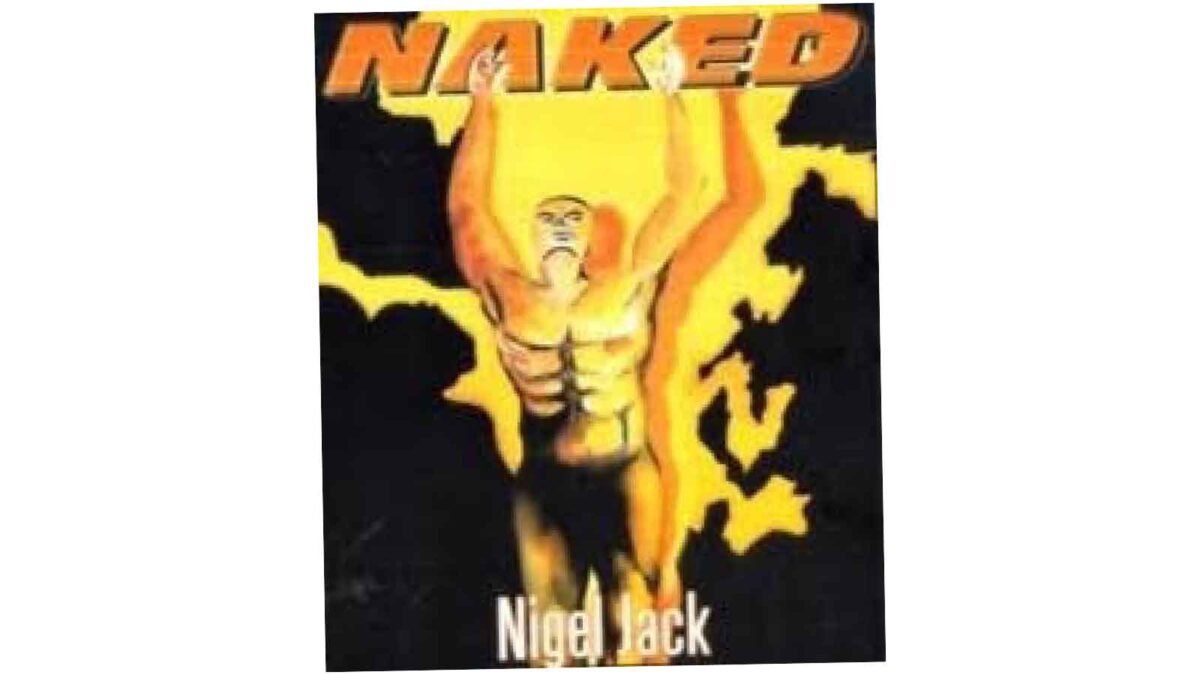
Nigel Jack’s “Naked” is an exploration of the human condition in all its vulnerability, contradictions and unsettling complexity.
The novel’s central metaphor reaches beyond physical exposure to examine the emotional and psychological nakedness that comes with confronting one’s past, accepting one’s present and contemplating an uncertain future.
In Jack’s world, to be naked is to be stripped of comforting illusions and forced to confront the self.
Through an autobiographical narrative, he draws on personal experience to tell a story that gradually assumes a wider national significance. The individual’s journey becomes inseparable from the social, political and economic circumstances shaping Zimbabwe.
In this respect, the narrative recalls the autobiographical impulses found in the works of writers such as Shimmer Chinodya and Dambudzo Marechera, while its confessional quality also invites comparison with the tradition of personal storytelling associated with Henry Fielding.
At its heart, the novel is a story of battles. Some are fought in the communal arena and others within the private recesses of the mind. Jack understands that war is not confined to the battlefield. Instead, it can also be psychological and emotional, leaving wounds that remain long after the immediate danger has passed.
The individual, too, can become both combatant and casualty in struggles shaped by memory, desire, fear and conscience.
The first-person narrator, Sean Quincy, whose experiences appear closely aligned with the author’s, grows up in a family whose movements between rural and urban settings expose him to different social environments. This unsettled upbringing shapes his understanding of human relationships and the vulnerabilities that cut across age, gender and class.
The opening confession establishes the novel’s troubled atmosphere: “I do not live like any normal youth. I am haunted by the past, limited by the present and frightened by the future.”
It is an admission that draws the reader into Sean’s inner world, where childhood memories continue to dictate the terms of adult existence.
As a bildungsroman, “Naked” traces a painful passage from childhood into adulthood. At six, Sean is sexually abused by Sipelile, a Form Three girl who is given overnight accommodation at his family home in Concession. His inability to disclose the abuse to his parents deepens the trauma, leaving him to carry a burden that shapes his later relationships.
Sean’s subsequent encounter with Rosemary, his cousin, also complicates his understanding of sexuality and intimacy. Instead of offering healing, the experience underpins the confusion and emotional dislocation already rooted in his childhood.
Jack presents a young boy struggling to make sense of experiences for which he is neither emotionally, nor psychologically prepared.
However, the novel’s treatment of women invites critical scrutiny. Sean’s experiences lead him to develop deeply ambivalent attitudes towards women, whom he simultaneously desires, fears and mistrusts.
His reflections sometimes slide into generalisations that cast female sexuality as a source of danger and moral uncertainty. Yet these attitudes may also be read as part of the narrator’s damaged consciousness, shaped by early abuse, disappointment and unresolved emotional conflict.
His paternal grandmother, whose life is marked by abandonment and fractured relationships, becomes another figure through whom he tries to understand desire, loyalty and betrayal. Therefore, the women in Sean’s world are not merely objects of attraction or resentment, but they are also complicated individuals whose choices and contradictions expose the limitations of his own understanding.
The movement between rural and urban spaces leaves Sean struggling to establish a sense of belonging and direction. Even as he pursues education and employment, his personal uncertainties remain.
After completing his Advanced-Level, he enters the insurance industry, earning little from commission-based work. His trust in dubious colleagues leads to his arrest over a crime committed by fraudulent brokers. He eventually secures his freedom through a bribe, an encounter that exposes the moral compromises demanded by a society in which integrity is often placed at a disadvantage.
His admission to a journalism college in Harare opens another chapter in his journey of self-discovery. By then, Zimbabwe is experiencing profound political, social and economic challenges.
Born a year before independence in 1980, Sean measures the present against memories of a country where food was once abundant.
Recalling Harare’s former prosperity, he observes: “Harare had no cattle, but I never spent a day without eating beef. Harare had no maize fields, but its people had the widest choice of maize-meal, ranging from the creamy roller meal to the crystal white ‘Ngwerewere’ and ‘Pearlenta’. What irony of life was so deeply rooted here?”
The contrast between remembered abundance and the hardships of the early 2000s gives the novel much of its historical weight. The personal narrative becomes a lens through which the reader encounters a nation wrestling with economic decline, political contestation and diminishing confidence in the future.
Jack also turns his attention to colonial legacies and the enduring struggle over Africa’s resources and political direction. His criticism of Western influence, the media’s representation of Zimbabwe and the sanctions imposed on the country reflects the political outlook that informs the novel.
These passages are revealing when read against the contested narratives surrounding the land reform programme and Zimbabwe’s place in the international community.
However, the novel’s strongest moments are not necessarily its declarations, but its exploration of how national uncertainty enters private lives. Sean’s anxieties mirror the larger disillusionment around him. Like the country he inhabits, he is forced to confront the distance between aspiration and reality.
Faith offers him a measure of resilience, although it does not entirely silence his doubts. As a Christian, he believes in the power of faith to move mountains. He also recognises that the mountains of lived experience can loom large enough to test even the strongest convictions.
His association with Mr Akinola, a Nigerian whose family accommodates him for four years, becomes an important stage in his intellectual and emotional development. Through the Akinolas, Sean encounters different perspectives on love, trust, hypocrisy and personal responsibility. The family also provides a setting in which his insecurities and aspirations are brought into sharper focus.
A promised scholarship opportunity to Howard University in the United States turns into another painful lesson in deception when a conman swindles Sean and his college colleagues out of US$100 each.
While Mr Akinola initially believes the scheme, his wife remains sceptical and insists that the money be recovered. Sean eventually benefits from the intervention of his affluent maternal uncle.
However, his difficulty in expressing affection remains one of his most persistent struggles. Having experienced sexual abuse and emotional distress in childhood, he approaches intimacy with apprehension.
His feelings for Tobi, the Akinolas’ daughter, remain unspoken until she leaves for university in South Africa. By the time he learns of her relationship with Jan, a troubled young man, who has followed her south, the opportunity for an honest declaration of love has passed.
The revelations surrounding Tobi, Jan and her younger brother Tolu unsettle Sean’s already fragile understanding of sexuality and human relationships. His response, though coloured by his own prejudices, exposes the emotional confusion that runs through the novel.
His professional life offers little consolation. At the national broadcaster, his failure to reciprocate the advances of Susana, the chief executive who frequently gives him a lift to work, ends in his dismissal on charges he considers contrived. The episode reinforces his sense of vulnerability in a world where power, desire and personal ambition often intersect in troubling ways.
In the end, Sean’s nakedness is not simply a condition imposed on him by others. It is also the painful recognition of his own limitations, fears and contradictions. In discovering how exposed he is, he begins to understand the forces that shape his identity and the society in which he lives.
Published in 2007, “Naked” continues to engage with childhood trauma, fractured relationships, the search for belonging and the uncertainties of a changing Zimbabwe. Some of its gender assumptions and political arguments invite debate, but that is part of what makes the novel worth revisiting.
Notably, it goes beyond offering easy answers to also open difficult conversations about memory, responsibility, faith and the human capacity to endure.
To be naked, Jack suggests, is to confront the truth without the protection of pretence. Sometimes, it is only through such exposure that the possibility of liberation begins.
• For an immersive reading experience, visit the DigiHub Retail Shop at Herald House, corner George Silundika Avenue and Sam Nujoma Street in Harare. Contact Leon on 0772739306.