Emmanuel Kafe
PEOPLE involved in disputes over unpaid debts, property, divorce and family matters will soon have an opportunity to settle their differences through a court-approved mediation process rather than endure lengthy and costly court battles under a new reform programme set to be rolled out next year.
The new system will allow disputing parties to sit down with a trained mediator to negotiate an amicable settlement. Any agreements reached will subsequently be referred to the courts to be endorsed as legally binding orders.
For instance, instead of two people who disagree over an unpaid debt spending months pursuing the matter through the courts, they could meet with a mediator, agree on how the money should be repaid and have their agreement endorsed by the court.
The initiative is part of efforts to speed up the delivery of justice, reduce the growing workload on courts and make dispute resolution more accessible to the public.
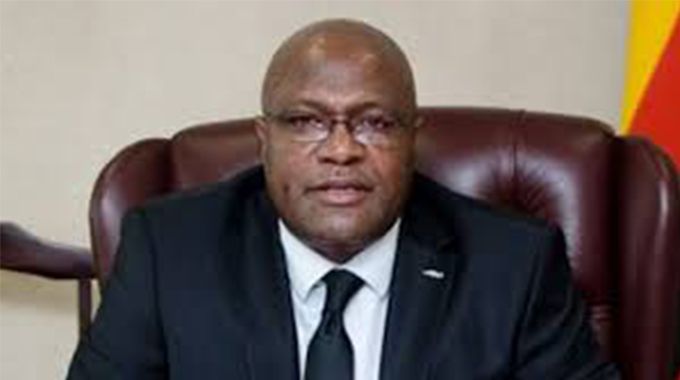
In an interview with The Sunday Mail, Judicial Service Commission (JSC) secretary Dr Walter Chikwana said preparations for the programme were underway.
He said Chief Justice Elizabeth Gwaunza is soon expected to announce the implementation framework and how it would be rolled out countrywide.
Under the current system, parties that fail to resolve disputes generally have to institute or defend legal proceedings, with cases proceeding through the formal court process before a judge or magistrate makes a determination.
The introduction of court-annexed mediation will provide an alternative avenue through which suitable disputes can be resolved before they go through the full judicial process.
“The idea is meant to reduce the number of cases that are processed through the formalised court system, where matters can be diverted before they are formally heard in our courts and taken to mediation centres through the assistance of mediators,” said Dr Chikwana.
“Parties who are in dispute are assisted to engage between themselves and find a solution to their matters, come to a consensus or an agreement in terms of resolving their disputes without the need to rely on a formalised court system.
“Where they agree and come to a consensus, that agreement will then be forwarded to the court, where it will be endorsed as a court order and the matter will be finalised.”
The system, Dr Chikwana said, would promote quicker dispute resolution while preserving confidentiality and relationships between people who might still need to interact after settling their differences.
He said this was particularly important in family disputes and divorce cases, where former spouses still have parental responsibilities and need to maintain a working relationship for the benefit of their children.
“It ensures that matters are diverted and finalised as quickly as possible.
“It ensures that there is confidentiality when parties are able to sit down amongst themselves and discuss their matters without the need to go through a formalised court system,” added Dr Chikwana.
“It protects relationships, especially in family matters or divorce matters where, even after divorce, there are still children who require a parent, a mother and a father to be present for them.”
Unlike conventional court proceedings, where a judge or magistrate makes a ruling after hearing the parties, mediation will give disputants control over the outcome of their cases.
Dr Chikwana said mediators would not impose decisions but would facilitate discussions and help parties find solutions acceptable to both sides.
“Whilst the mediator is there, the mediator does not resolve an issue for the disputant parties.
“The mediator is there to facilitate the parties to engage amongst themselves and come to a resolution,” he said.
However, mediation will not replace the courts or deprive anyone of the right to have their dispute determined through the judicial system.
Where parties fail to reach an agreement, their cases will be referred back to the conventional courts for determination by a judge or magistrate.
“In the event that there is no resolution between the disputants, the matter will then be returned to the formalised court system where the judge or the magistrate will need to adjudicate over the matter,” said Dr Chikwana.
He described the initiative as an important step towards improving access to justice by encouraging people to resolve disputes peacefully rather than automatically resorting to litigation.