Online Reporter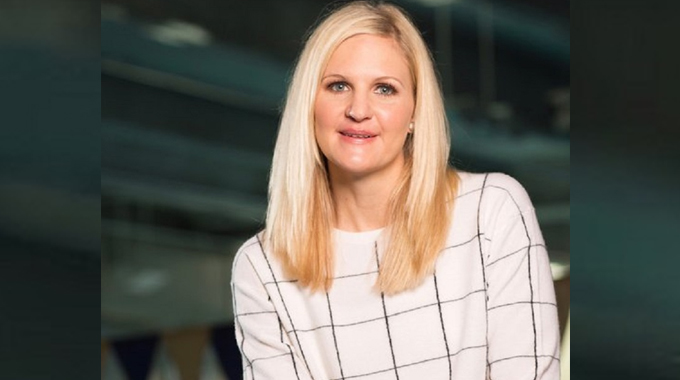
INTERNATIONAL Olympic Committee presidential candidate Kirsty Coventry says it is time the organisation was led by a woman but she says she wants members to have confidence in her that she is the right person.
In the event she wins, the 41-year-old former swimmer will also become the youngest and the first from outside Europe or North America to lead the organisation in its 130-year history. She has to beat six male rivals in a vote later this month.
“I don’t think it’s just about gender, the same way that I don’t think it’s just about being the only African candidate,” the Zimbabwean sports Minister told BBC Sport.
“It really is about, ‘what does the movement need today’?
“I think being a double Olympic champion and having the experiences that I’ve had within our movement and outside, all bring a lot of value to ensuring I could lead this organisation.”
Coventry, who won the 200m backstroke at the 2004 and 2008 Olympics and is Africa’s most-decorated Olympian, is “very positive” about her chances of becoming sport’s most powerful figure when IOC members make their choice in Greece on March 20.
When asked how she felt about being seen as the preferred choice of outgoing president Thomas Bach after his 12-year tenure, Coventry added: “He’s allowed the candidates to do what we need to do and talk to the members and it’s (their) decision. He’s been fair to all the candidates.”
Coventry wants to “try to challenge the status quo and to bring change”.
“Being able to showcase the biggest and most wonderful sports event in the world, where you have athletes from all different backgrounds coming together . . . that for me is what the world needs right now,” she added.
“We have to make very good decisions so that this movement can remain relevant for generations to come. And, for me, being a mum of two young girls, I feel the weight on my shoulders is maybe a little bit more than that of the other candidates because I’m going to have a constant reminder that I need not mess this up.”
The IOC allows each international federation (IF) to set its own gender eligibility rules, and in recent years a number have barred athletes who have undergone male puberty from competing in elite female competition, amid concerns inclusion may come at the expense of fairness and safety.
Coventry has been an IOC executive board member since 2023, but confirmed that — as with rival presidential candidate Lord Coe — she is now backing a blanket ban of transgender women from competing in female Olympic sport.
“I believe with the work that has been done with the IFs, the rules they have put in place, you can see there has been research done where it’s showing a disadvantage to women, to the female category” she said.
“From the conversations that I’ve had now, a lot of the international federations want the IOC to take a more leadership role. We have more facts, there’s more science and medical research being done.
“We need to protect the female category and I think it’s time right now for the IOC to take that leading role.”
The IOC was engulfed in controversy at the Paris Games last summer when Algeria’s Imane Khelif won the women’s welterweight boxing gold medal — a year after being disqualified from the World Championships for reportedly failing a gender eligibility test.
The IOC cleared the 25-year-old to compete — along with Taiwan’s Lin Yu-ting, who was also banned by the suspended International Boxing Association (IBA).
Both fighters have insisted they are women, and there is no suggestion they are transgender.
When asked if she and her IOC colleagues could have avoided the episode, Coventry added: “There are always lessons we can learn. There are always going to be things we can’t foresee, but we should do the best to ensure something like that doesn’t play out again at an Olympic Games.”
The other six candidates for the IOC presidency are France’s David Lappartient, Japan’s Morinari Watanabe, Prince Feisal al Hussein of Jordan, Spaniard Juan Antonio Samaranch Jr, Swede Johan Eliasch and the UK’s Lord Sebastian Coe. — BBC Sport