

 daniel chigunwe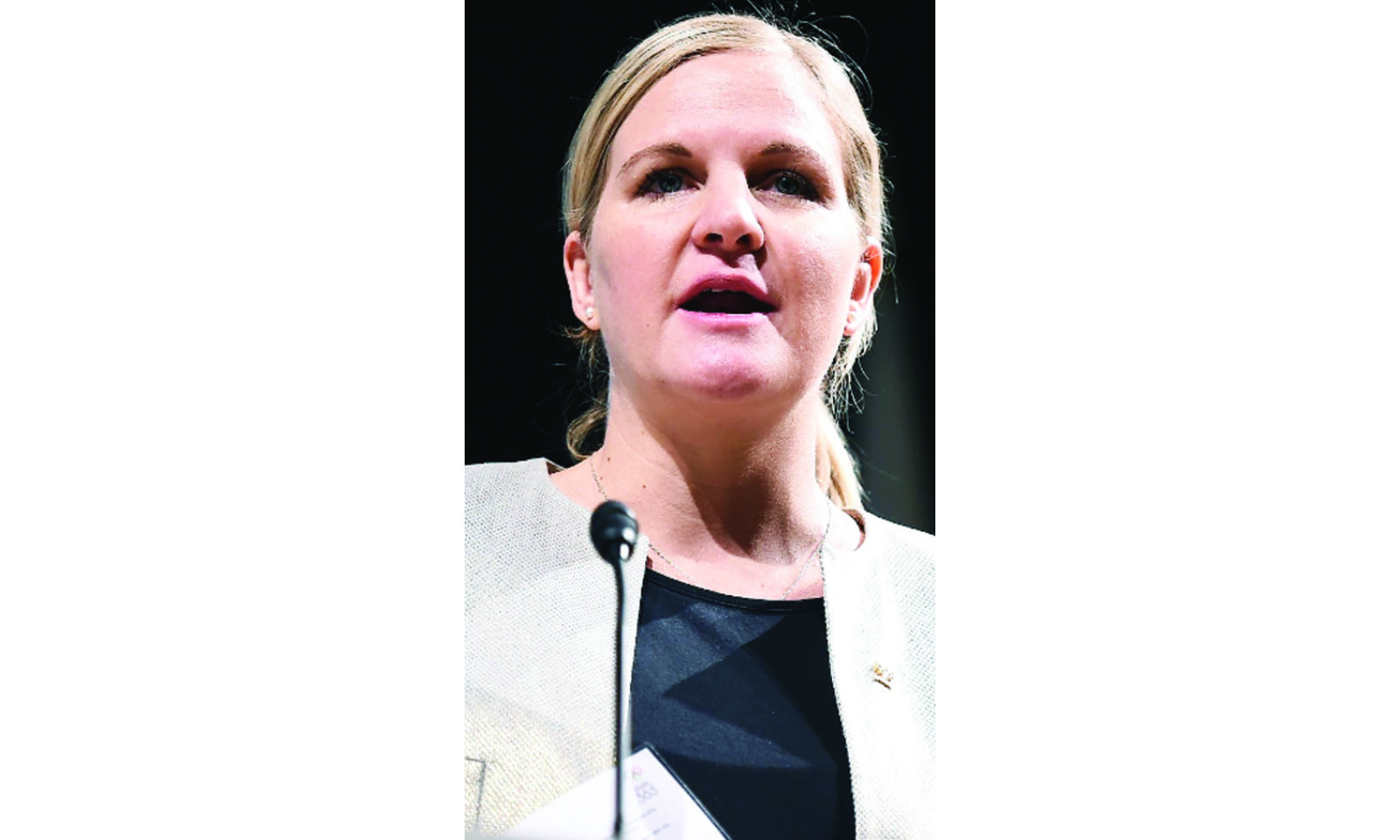
FORMER Olympic swimmer and Zimbabwe’s Minister of Sport, Recreation, Arts, and Culture, Kirsty Coventry, has called for a fundamental overhaul of the sponsorship framework of the International Olympic Committee.
Coventry is one of seven candidates bidding to succeed Thomas Bach as president of the International Olympic Committee.
She attended the 143rd IOC Extraordinary Session in Lausanne, Switzerland, last Thursday, where the seven candidates submitted their bids.
And Coventry did not hold back in her address, calling for a fundamental overhaul of the sponsorship framework.
“If we can reach more people, particularly in the Global South and under-represented regions, how will this create new opportunities for our current partners and attract new ones?” she questioned. Frenchman David Lappartient, president of the International Cycling Union (UCI) and the French National Olympic Committee, also defended that the Olympics “must go to Africa” during his speech presenting his candidacy. The African executive was advocating for open dialogue with corporate backers and a working group within the TOP Programme to align expectations with the IOC’s evolving needs.
“Sponsors want more than just visibility during the two weeks of the Olympics; they want ongoing engagement with athletes and fans,” Coventry argued.
“To deliver truly exceptional Games, we must have a serious conversation about the future of the TOP Programme and what it must look like to remain sustainable.’’
For the IOC’s next cycle, US$7.3 billion is already secured, but top sponsors are jumping ship; the candidates must prove they can strike the right balance between Olympic tradition and the demands of the global market after unveiling their bids at the 143rd IOC Session last Thursday. In an atmosphere of absolute secrecy, with no cameras, no microphones, and no mobile phones, the 143rd Extraordinary Session of the International Olympic Committee (IOC) provided the only platform for the seven presidential hopefuls to lay out their strategies.
For 15 minutes, each contender presented their vision to a select audience comprising royals, former heads of state, and some of the most powerful figures in global sport.
The election, set for March 20 in Costa Navarino, Greece, will mark the end of the Bach era and usher in a new chapter for the Olympic Movement.
While key issues such as Russia’s reintegration, gender equity in sport, technological advancements, and climate impact were all on the agenda, the real battleground—both in explicit arguments and implicit power plays — revolved around money: sponsorship deals, broadcasting rights, and the long-term financial sustainability of the Games.
In this presidential election, everyone votes in their own interest. It all comes down to money, who gets what share of the Olympic revenue,” admitted an international federation official anonymously to Reuters.
It is no coincidence that four of the candidates currently head international federations; the next IOC president will have to ensure a steady flow of resources to their respective sports. “Staggering” could define the numbers: the IOC already secured US$7.3 billion in revenue for the 2025–28 cycle and is projecting an additional US$6.2bn through to 2032.
But those figures don’t tell the full story. With major sponsors like Toyota, Panasonic, and Bridgestone exiting the Olympic Programme (TOP) in 2024, concerns over the financial sustainability of the IOC’s premier sponsorship model are mounting.
The three Japanese giants walked away as their contracts expired, some without explanation, while Toyota openly voiced frustration over “the politicisation of the Games.”
Sebastian Coe, president of World Athletics, had a different approach, expanding into untapped markets with high growth potential, particularly in Africa and Asia.
“If we want the Games to stay relevant, we must broaden our fan base and commercial partnerships beyond the traditional regions,” he stated.
Coe is also pushing for a redistribution of power within the IOC, advocating for greater involvement of its members in key decision-making processes, including Olympic host city selections.
His stance positions him as a strong contender, though at 68 years old, he would only be eligible for a single term under IOC age restrictions.
The IOC’s broadcast deal with NBC, one of its primary revenue streams, is set to expire after the Brisbane 2032 Games.
Since Los Angeles 1984, the American network has been a cornerstone of Olympic financing, but the media landscape is shifting.
Juan Antonio Samaranch Jr., son of the legendary IOC president who served from 1980 to 2001, believes flexibility is key, both in decision-making and in modernising media rights.
“Athletes should be allowed to share footage of their performances on social media. It keeps audiences engaged and attracts new fans,” he argued. The challenge is clear: how to preserve lucrative long-term con-tracts with major broadcasters by simultaneously adapting to a rapidly evolving digital landscape where sport competes with an ever-expanding array of entertainment options.
The next IOC president will inherit an increasingly complex geopolitical landscape.
With Los Angeles 2028 and Salt Lake City 2034 on the horizon, the relationship with Donald Trump’s administration will be vital. Prince Feisal Al Hussein of Jordan, another candidate, made his stance on Olympic diplomacy clear: “I will not sacrifice my core values just to please one individual,” he said, referencing the former US president. “Trump loves sport and will back Salt Lake City, but Olympic diplomacy must remain independent of any government,” he affirmed, a sentiment Bach himself echoed earlier in January when addressing LA28. Feisal also stressed that any reintegration of Russia into the Olympic fold must strictly adhere to the Olympic Charter. “I would like to see them return, but the Charter governs us all. If an athlete respects the Olympic Charter and has not violated its principles, why should they be sanctioned?”
Revenue distribution: Fairness or business?
The IOC claims that 90 percent of its revenue is reinvested into sport, distributed among international federations, national Olympic committees, and athlete scholarships.
The allocation process remains a subject of debate, though. Taking into account athletics, gymnastics, and swimming, each receiving over US$50 million, smaller federations are almost entirely dependent on IOC funding.
Morinari Watanabe, president of the International Gymnastics Federation, believes the financial structure needs to be revisited.
“It is critical that all federations have the resources to remain competitive,” he stated. If elected, Watanabe would become the first Asian IOC president. —Agencies/Sports Reporter.


 Online Reporter