Andrew
Leroy Dzenga
Senior Reporter
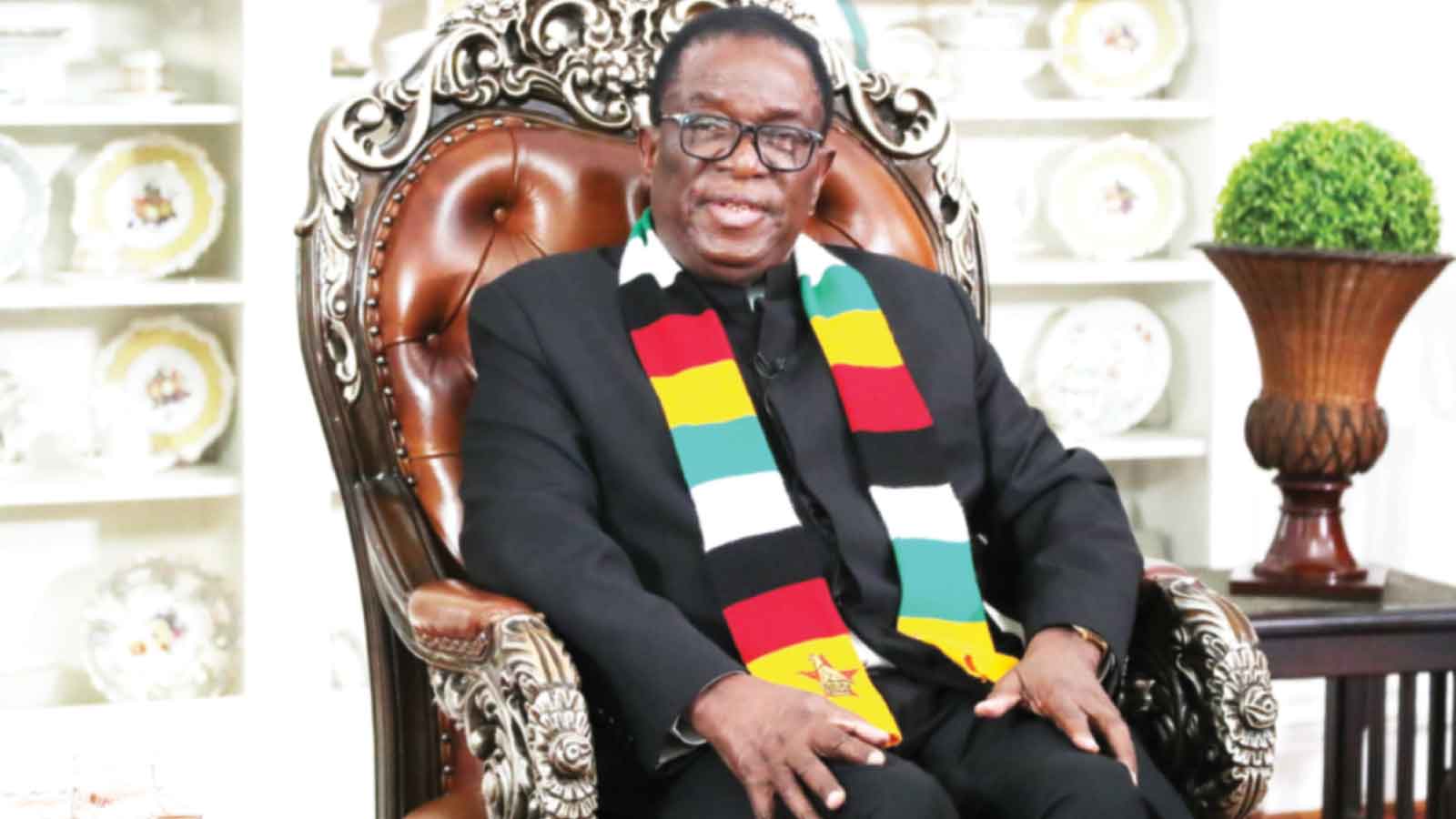
TODAY marks exactly two years since President Mnangagwa made an unprecedented address to the country, arguably the first time in the history of Zimbabwe for a Head of State to appear on national television to announce a nationwide curfew and a partial closure of business to save lives.
The country was on a good economic streak, a disruption of that nature was the last thing the national leadership and citizens needed. However, the threat which confronted the world required that governments exercise caution to protect citizens — Zimbabwe was no exception.
“… all our citizens are required to stay at home, except of course in respect of essential movements related to seeking health services; to purchase and procurement of food and medicines and for the essential supplies and critical services,” said President Mnangagwa in an address on March 27, 2020.
The decision must have been difficult, as a sizeable number of citizens earn their keep in the informal sector.
“Some of the measures will be drastic and are sure to upset the daily routines of our lives. Should it become necessary, security forces will be deployed to assist in the enforcement of these measures,”
Covid-19, an infectious disease caused by the SARS-CoV-2 virus had taken grip of the world and by mid-March had arrived in Zimbabwe.
The highly contagious disease was spreading at an alarming rate and there is no known cure to date. Its arrival was marked by the passing on of Zororo Makamba, a prominent media personality who became the country’s first publicised Covid-19 death.
Many at the time believed they were being punished for the excesses of the rich, as there was a feeling that the disease was for the rich.
Some even thought Zimbabwe due to its relatively hot weather was exempt from the throes of the disease.
Slowly, reality sank and cured prevailing misconceptions.
A new life . . . but not quite
Covid-19 changed the manner in which people live. The regulations which were instituted at the recommendation of the World Health Organisation saw people being required to wear face masks and have their hands sanitised.
Nightclubs were closed, churches too, funeral numbers were trimmed radically.
It was hard for those who had grown used to the old way of life to change their ways.
Even when bars were declared closed, there were those who slithered into bottle stores and were willing to be locked inside as they indulged.
On regular occasions, the police would raid night spots as people sought thrills in the face of danger.
Paranoia
When Covid-19 was first announced, there was paranoia which gripped the country. With information in short supply and social media playing its usual role as a funnel for fake news, people were sent into panic.
Immediately after the announcement of the initial 21-day lockdown, there were long queues at supermarkets as people hoarded basics predicting an apocalypse.
There was an influx of theories, Christian fundamentalists believed the world was being punished for its mounting indiscretions.
Zumbani (Lippia Javanica) leaves gained prominence, as it was and is still, believed that they aided people’s immunity against Covid-19. Some believed that regular steaming would keep the virus at bay.
While remedies were not discredited, they delayed some in seeking treatment and were presented to the doctor’s a bit late.
There was a general negative attitude towards those who would have caught Covid-19. Reports were told of how nurses would run away from early cases of Covid-19.
It took a spike in cases for people to realise that Covid-19 though it can kill, does not always spell a death sentence.
Corruption
There are those who pride themselves in finding opportunity in chaos. They did not waste time, as the immediate need for consumables saw some
Health and Child Care Minister at the time Obadiah Moyo was fired for acting in a manner inconsistent with a Government official relating to the procurement of Covid-19.
Some cases emanating from Covid-19 ‘fraud’ are still active before courts.
Recovery
The world is trying to recover, but with anxiety. Locally, most activity has resumed but the feeling is not quite the same.
On the social front, there are activities which are still to regain their lustre.
In football, the Premier Soccer League, which used to command better numbers is currently being played in echoing stadiums.
Even tourist destinations are yet to get their full-vigour.
In Victoria Falls, which is Zimbabwe’s prime tourist destination, spots that were previously popular with foreign tourists became shells, whose glory only those who live in the city could remember.
Shearwater Café, which is the unmistakable beacon at the corner of the city was literally empty, when just a few years ago getting a place to sit was considered an act of ingenuity.
On the bright side, it took Covid-19 for the tourism industry to realise that local visitors are important.
A recent cabinet brief showed that the ZimBho campaign which was launched to boost domestic tourism, scored some notable successes.
“The launch of the ZimBho campaign in 2020…helped improve domestic tourism; and increased domestic entries into National Parks to 251 088 in 2021 compared to 173 714 in 2020,” Information, Publicity and Broadcasting Services Minister Monica Mutsvangwa told journalists last week.
There is measured optimism, as a life after Covid-19 is beginning to shape up, although it is still unclear whether or not the world is fully out of the woods.
News of a fifth wave continues to linger in the horizon.
Vaccination drive
After about a year of relying on non-pharmaceutical methods of prevention, the country kick-started its vaccination programme.
Using its geopolitical standing and returns from a good fiscal year, Zimbabwe did not waste time in procuring vaccines.
The easy choice would have been to join the Covax vaccine facility, in which countries would pool resources to ensure there are no vaccine inequalities.
However, Zimbabwe bit the bullet and decided to instead pursue a radical but effective method of going alone.
As countries, including neighbouring Botswana, kept waiting for Covax to deliver vaccines, cargo airlines were criss-crossing Zimbabwean skies delivering vaccines.
Zimbabwe’s palate to date has SinoPharm, SinoVac (from China), Covaxin (India) and Sputnik V (Russia).
Zimbabwe is approaching five million first vaccine doses, which is among the highest in Sub-Saharan Africa.
This has allowed authorities to loosen conditions surrounding Covid-19.
After two years of closure, bars and nightclubs were opened this year.
Curfew times were pushed up to midnight, a contrast from the time people had to be indoors by 6pm.
There is now a semblance of familiarity, traces of old life are beginning to emerge.
Are we out of the woods?
As the world begins to breathe with relief and past lockdowns become a memory, experts are still encouraging caution.
In his last routine update, World Health Organisation Director-General Dr Tedros Adhanom Gebreyesus said the declining cases should not allow for complacency.
“Although reported cases and deaths are declining globally, and several countries have lifted restrictions, the pandemic is far from over – and it will not be over anywhere until it’s over everywhere,” he said.
Speaking to journalists in Geneva, Dr Tedros said the spikes being seen in Asia and the Pacific should be interpreted as a warning that the battle is far from over.
“The virus continues to evolve, and we continue to face major obstacles in distributing vaccines, tests and treatments everywhere they are needed”, he said.
One thing the world has learnt from the Covid-19 virus is that the future cannot be predicted.
Whatever the outcome, the past two years have been unreal – a trance of sorts.


 Online Reporter