

 admin
admin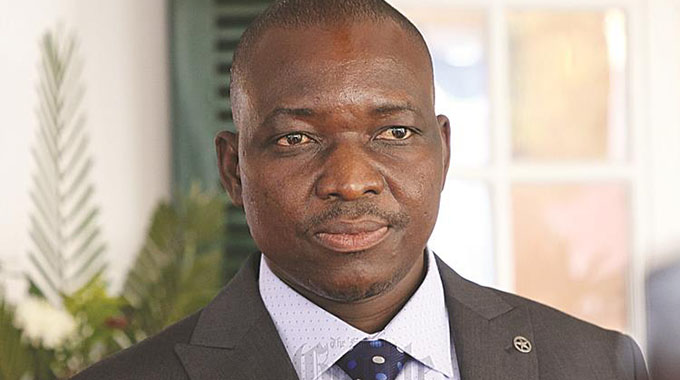
Business Reporter
THE commissioning of new generators at Hwange Power Station has been pushed back by almost six months, Energy and Power Development Minister Zhemu Soda said.
While this represents a slight setback for a country facing acute power shortages, he said the first generator should come by October this year and the second in by the first quarter of 2023.
Zimbabwe targeted to commission the first 300 megawatt unit around July this year while a similar capacity was expected to come on stream in September 2022.
However, Covid-19 induced disruptions delayed the delivery of some of the equipment. Zimbabwe contracted China’s SinoHydro to build two more units, also known as 7 and 8, at Hwange thermal power plant at a cost of about US$1,4 billion.
“We expect to start testing various components of the first unit in May this year while commercial production will start in November,” said Minister Soda in an interview.
“The other unit will come on stream during the first quarter of 2022,” he added.
The new units at Hwange are expected to ease power shortages in a country producing an average 1 000 megawatts (MW), against peak demand of 1 600 MW.
Widening power shortages have resulted in ZESA, the power utility resorting to load shedding in some areas to balance available supply, with households and businesses enduring long periods without electricity.
On the power situation, the Minister said it will remain “fragile” in the absence of an economic tariff, which continues pushing up “unproductive” demand and reckless use of electricity.
“The tariff has been severely eroded and what we now see is the rising demand of unproductive electricity especially by domestic customers,” Minister Soda said.
“Until there is restoration of a viable tariff, the situation will remain fragile.”
Electricity has become the cheapest energy for households over other sources such as gas, with an average household spending as little as US$10 for electricity per month.
The last power price review was in January 2022 when the Zimbabwe Energy Regulatory Authority (ZERA) increased electricity tariffs by 12,3 percent.
Families on pre-paid meters are buying 200 units per month for $1265,11 (US$5 on the parallel market or US$9 at official rate) including the 6 percent rural electrification levy.
There are five bands of discounted tariffs before the full $14,31 a unit comes into effect on purchases over 400 units. The first 50 units cost $2,38 each, before the rural levy.
The 50 units are considered the bare minimum that a family needs for essential purposes.
Consumers on post-paid meters pay similar charges plus $35,68 monthly fixed charge.
The fixed charge covers the extra administration costs.
“We need a viable tariff and I understand that ZESA has applied for a tariff review and I want to believe the regulator (ZERA) is considering the application,” said Minister Soda.
ZERA chief executive Mr Edington Mazambani said yesterday the regulator was studying the cost reflective tariff proposed by ZESA, which would be used to set the price.
However, it will be implemented over at least three years to avoid disruption of economic activity.
“We are analysing the cost reflective tariff proposed by the World Bank and proposing a pathway to the Government to achieve that,” Mr Mazambani said in an interview.
“We can’t just move from a non-cost reflective tariff regime to a cost reflective tariff in a short period of time. It is something that we will implement, gradually over at least three years, so otherwise we risk disrupting economic activity,” Mr Mazambani added.


 Online Reporter
 dyton mupawaenda