Chronicle Editor
Thandeka Moyo-Ndlovu, Senior Reporter
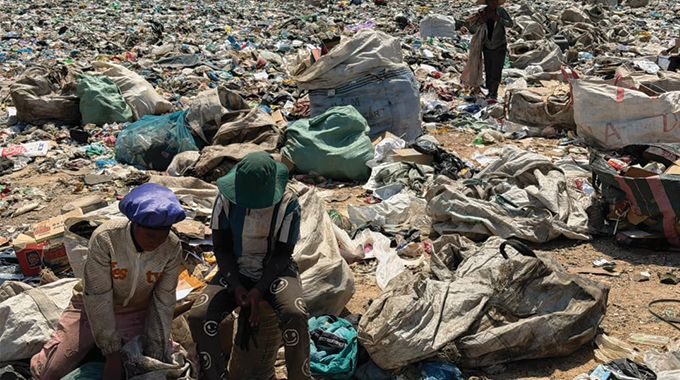
THE number of people in need of food aid due to Covid-19-induced poverty has gone down in Zimbabwe, a development attributed to the success of the Government initiated Pvumvudza/Intwasa programme which resulted in a number of people realising bumper harvests last year.
In a report titled “Monitoring Covid-19 Impact on Households in Zimbabwe,” the Zimbabwe Statistical Agency (ZimStat) said the proportion of the population facing severe food insecurity fell from 18 percent in March 2021 to nine percent between September and October 2021.
The onset of Covid-19 came with lockdowns and many Zimbabweans lost their sources of income, leaving thousands food insecure in 2020.
Government adopted Intwasa programme to address the problem of low production and productivity which continued to negatively affect food security in Zimbabwe.
The concept promotes climate-proof agriculture by adopting conservation farming techniques and it involves utilisation of small pieces of land and application of the correct agronomic practices for higher returns.
Statistics show that more than 8,6 million Zimbabweans were food insecure and the situation was worsened by the Covid-19 pandemic whose impact disrupted many economic activities in 2020.
“In July 2020, immediately after the onset of the pandemic, severe food insecurity was 27 percent.
Likewise, the proportion of people facing moderate or severe food insecurity decreased from 61 percent in March 2021 to 38 percent between September and October 2021.
In July 2020, the moderate to severe food insecurity was 72 percent,” read the report.
“This means the food security situation improved steadily from early 2020 into late 2021.
The improvement in food security in 2021 was most pronounced in rural areas, with severe or moderate food insecurity falling from 72 percent of population to 39 percent.
This is consistent given the bumper harvest of the 2021 season following implementation of the Pfumvudza.”
The results suggest that the extreme poverty rate declined to 43 percent in September-October 2021 from a peak of 49 percent in September 2020 soon after the onset of the Covid-19 pandemic.
“Extreme poverty rate was 38 percent in 2019, according to the Zimbabwe Poverty Update of 2017 to 2019.
The drop in poverty is driven by an improvement in rural areas, and this is consistent with the bumper harvest of 2021 coupled with a substantial improvement in food security in rural areas in 2021.
“However, there was not much improvement in extreme poverty in urban areas in 2021, likely because the pandemic and lockdowns that negatively affect employment, income, and livelihoods had not fully gone away,” read the report.


 Online Reporter