Chronicle Editor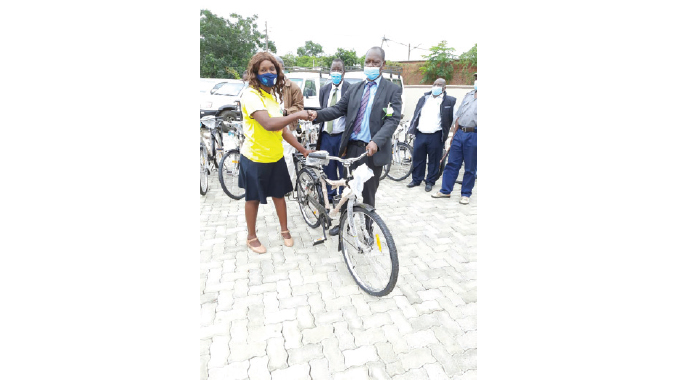
Yoliswa Dube-Moyo, Matabeleland South Bureau Chief
THE Covid-19 pandemic should not overshadow HIV/Aids intervention as the country aims to reach the global target of ending Aids by 2030.
The third Sustainable Development Goal (SDG) seeks to end the HIV/Aids pandemic by 2030 with experts saying this will be achieved when the number of new HIV infections and Aids-related deaths decline by 90 percent between 2010 and 2030.
So far, the rate of drop in Aids-related deaths is on track, while the rate of drop in new HIV infections has been affected by the Covid-19 pandemic in addition to other factors.
Speaking at a handover ceremony of 119 bicycles procured by the National Aids Council (Nac) for community volunteers as part of efforts to support communities involved in HIV/Aids intervention programmes in Matabeleland South province, Chief Masuku said the Covid-19 pandemic should not overshadow HIV/Aids intervention programmes as this would threaten the country’s goal to end Aids by 2030.
“The advent of the Covid-19 pandemic has diverted attention from other diseases we have been fighting as a country.
In some spheres, people now have a lax approach towards preventative measures against HIV/Aids. People need to understand that the start of the Covid-19 pandemic did not end the HIV/Aids pandemic. They need to continue to protect themselves and take preventative measures against HIV/Aids,” said Chief Masuku.
He said communities need to be reminded that HIV/Aids still exists and efforts were still needed to combat the pandemic.
“It’s important that people continue protecting themselves against HIV/Aids as they were doing before the Covid-19 pandemic. Let’s not lose sight of how far we’ve come in fighting HIV/Aids and work hard to prevent new infections,” said Chief Masuku.
Nac Matabeleland South provincial manager Mr Isaiah Abureni said the province had made significant strides in the fight against HIV/Aids.
“We’re seeing numerous dividends as a result of the work that community volunteers are doing in the province.
We’re seeing a reduction in terms of the incidence from the recently carried out analysis on HIV/Aids data. The estimates point to a reduction in the incidence of HIV in the province.
It also points to a reduction in the prevalence in the province although we still host the highest prevalence of HIV in the country, but these are declining. We attribute these positive reductions to some of the work that is being done by our volunteers,” said Mr Abureni.
He said Nac had recruited in excess of 600 community volunteers who are pivotal in HIV prevention programmes in the province.
“HIV community volunteers refer to individuals who require services such as HIV testing and pre-exposure prophylaxis among others to health facilities in the province. They play a critical role as far as HIV/Aids is concerned.
They also provide basic HIV prevention commodities such as condoms, lubricants and HIV self-testing kits to the communities in which they live. They also provide basic information to community members on both communicable and non-communicable diseases that are linked to HIV/Aids such as TB and some cancers,” said Mr Abureni.
Community volunteers help in raising awareness about HIV prevention, treatment and living with the virus while also offering counselling to people infected and affected by HIV/Aids and related conditions such as tuberculosis. — @Yolisswa



 Online Reporter