admin
admin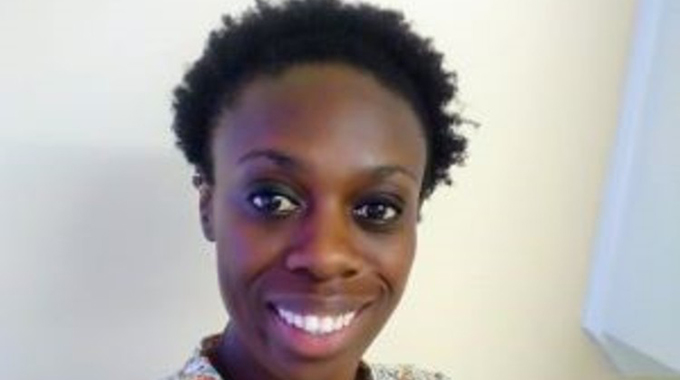
Sifelani Tsiko The Interview
As Covid-19 escalates worldwide, killing more than 200 000 people and affecting over three million others, the world is desperate to test potential treatments. Ever since the outbreak was reported in Wuhan, China, last December, researchers have launched more than 180 clinical trials of everything from anti-virals and immunomodulators to unproven cell therapies and Vitamin C. In this report, Sifelani Tsiko (ST), our Agric, Environment & Innovations Editor, speaks to Ms Pinky Manyau (PM), a University of Zimbabwe clinical pharmacologist who has been actively following the global debates. Her response reflects her personal views.
ST: What is your general comment of the race to develop a Covid-19 drug? Will we have a magic bullet soon?
PM: I don’t think a magic bullet is likely to emerge soon, this is because some of the promising candidates are already subject to controversies. If a treatment does emerge, it is not likely to be 100 percent effective. Most of the proposed magic cures were the result of anecdotes in which there is no control group. The problem with having no control group is that when a disease has a good prognosis, you can attribute improvement in condition to the drug when in actual fact, the person was going to get better anyway. For example, the chances of getting hospitalised from Covid-19 is approximately 1-8 percent if you are 20-50 years of age. This means that at least 92 percent of people below 50 years get better on their own without antiviral treatment. Now, if they are all given drug X, we cannot conclude that drug X is 90 percent effective.
ST: Worldwide there is a study of four therapeutic approaches for hospitalised patients with confirmed Covid-19. These consist of remdesivir, the antimalarials hydroxychloroquine and chloroquine, the HIV protease inhibitors lopinavir and ritonavir, and lopinavir and ritonavir in combination with the immunomodulatory agent interferon beta-1a. What can you say about these efforts to find a cure for Covid-19?
PM: Various stakeholders have responded rapidly. The efforts themselves are really commendable. However, I am finding that the hype surrounding the potential treatments overshadow science and/or the scientific process. Normally, we require an evidence-based approach for recommendation of treatments for management of any illness (this is what is drilled into us in university). Anecdotes and case series are considered weak because there are no control groups. Observational studies provide a better base, but they are not ideal for establishing causality because they are subject to many biases. In a manner of speaking, they provide ‘signals’, but not conclusive evidence. Covid-19 poses a unique challenge because of the urgency with which a treatment is required.
The drug candidates mentioned above, although promising initially, are starting to disappoint me personally as they come under closer scrutiny. Remdesivir: This broad-spectrum antiviral was intended for Ebola, has shown in-vitro activity against coronaviruses, including SARS-CoV-2. Remdesivir resulted in clinical improvement in in-vivo studies in primates inoculated with SARS-CoV-2, however, there was no effect on viral loads, but it seems like results from robust clinical trials are coming in with US National Institutes of Health remdesivir study with a larger group of patients (1 063) found a 31 percent improvement in recovery of patients, and a trend toward an 8 percent reduction in mortality when compared to placebo.
Anecdotes showed from initial use that the drug was promising. Conversely, results from an RCT carried out in China was leaked on the WHO website showed no benefit. The drug manufacturer Gilead, stated that the study was stopped prematurely due to lack of cases, and it was the sample size that was too small to draw statistical conclusions. The study included 237 patients (158 treatment vs 79 control).
Hydroxy/chloroquine: There was a lot of excitement about a potential treatment which is relatively inexpensive and widely available. Recommendations for these drugs were initially based on a weak scientific evidence base, namely, in-vitro activity, anecdotes from China, US and a small French study. More recently, a small RCT from China, observational studies from the France and the US are suggesting that there is no clinical benefit. Additionally, a clinical trial in Brazil was stopped due to safety concerns in patients who were receiving high-dose chloroquine (600mg/ day for 10 days). Sweden also recently stopped the use of chloroquine outside of clinical trials due to safety concerns.
Lopinavir/ritonavir showed in-vitro activity against coronaviruses SAR-CoV-1/2 as well as MERS, and there was some evidence of activity against MERS in animal studies. An RCT carried out in China which included 199 participants showed no benefit in the reduction of viral RNA load, duration of oxygen therapy and duration of hospitalisation. Efficacy has still not been established.
Other retrospective studies suggest that there may be some benefit when combined with other antivirals, but it seems to show no benefit on its own. With respect to other antiretrovirals which are locally available there is no data to support darunavir ± cobicistat or atazanavir. The Centre for Disease Control interim guidance recommends against HIV ARVs because of unfavourable pharmacodynamics and negative clinical trial data.
Generally, LPV/r is not looking very promising. However, there were some methodological flaws in prior assessments, especially the retrospective studies which is probably why it has been included in the SOLIDARITY trial.
Lopinavir/ritonavir + Interferon (INF): The evidence base for this combination is mainly based on prior work with MERS and SARS-CoV-1. In-vitro studies against MERS showed that the effective concentration of the combination was similar to INF alone. The combination showed promise in several animal models. There is generally no data available for this combination for SARS-Co-V-1, but it is hypothesised that there may be a synergistic effect from the combination. Although there is not enough evidence to reach conclusions, objective data speak for themselves if we are willing to listen.
ST: Is there any study taking place in Zimbabwe or elsewhere in Africa to find a cure to the disease?
PM: I am not aware of any Africa-originated studies. World Health Organisation SOLIDARITY trial will be enrolling participants from South Africa. I have heard of the Madagascan COVID organics ‘cure.’ The tonic contains extracts from artemisia plants. Again, this appears to be based on anecdotes. They have stated that clinical trials are underway. I await the results. Personally, I do not advocate for the use of the word ‘cure’, because it is misleading, it implies 100 percent efficacy. From a scientific/medical standpoint we assess clinical efficacy which can be of varying degrees.
ST: If so, can you tell us briefly about the drugs and their potential?
PM: Artemisinins are widely used anti-malarial drugs. With regard to their potential, they have been shown to inhibit viral replication of a broad range of viruses in-vitro. To my knowledge they have not yet been tested against SAR-CoV-2 in-vitro or in-vivo. There has been computational chemistry studies showing that they can bind to one of the Covid-19 spikes, potentially inhibiting cellular entry.
ST: What do you think are the main challenges facing African scientists when it comes to developing new drugs?
PM: We have a lot of ethnomedicines to consider, and so there is need to coordinate our research activities. We also need to generate data in a systematic way which will result in product registration by regulatory authorities. Very few of our traditional medicines proceed to clinical trials, so it becomes difficult to argue for their efficacy.
ST: What can be done to support them to conduct research?
PM: The expertise is there, however, access to well-equipped laboratories appears to be a hindrance. Research with the intention to find treatments for widespread use requires regulatory support to guide researchers on regulatory requirements for product development and other requirements for marketing authorisation.
ST: Some say invention does not need money, it needs a crisis. Is money a critical ingredient for invention and innovation or not?
PM: It’s a fine balance. Ideas cost nothing, but actualisation of those ideas requires money.
ST: What potential do indigenous medicines have in curing the Covid-19 diseases? What do you think can be done to harness their potential?
PM: I do not know about what potential therapies are out there. If they do exist, data should be documented systematically so that we can make an argument for these treatments in a scientifically credible way which cannot easily be dismissed.
ST: Do you have hope that a cure for Covid-19 will be found this year? What are your fears and hopes for the fight against the pandemic?
PM: I do hope for a cure, but I think it is overly optimistic given where we are. I don’t think that we will have a miraculous breakthrough. It will likely be an iterative process of figuring out what works and what doesn’t. This will lead to small, but significant strides in understanding the virus and improving clinical management and patient outcomes.
Personally, I would like to see an effective vaccine emerge from all the research, because at the moment it seems like the only way of getting things back to normal. I hope to see Zimbabweans learn from countries with advanced epidemics and mitigate the potential devastating effects. My greatest fear is the effect that the most effective Covid-19 containment method (lockdown) will have on our economy and livelihoods. Another fear I have are the adverse effects of misinformation.


 Online Reporter