admin
admin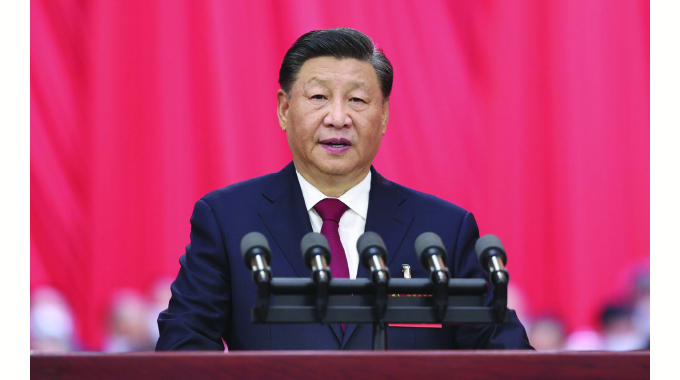
Elliot Ziwira Senior Writer
Notwithstanding setbacks endured in its 100-year historical journey, particularly in the past decade, owing to lack of ideological conviction, leading to disregard of fundamental tenets of morality as guided by the law, China managed to change its fortunes for the greater good through commitment to the fight against corruption, cultural hinging and grooming of leaders for posterity.
As the driving force behind the Asian economic powerhouse’s success, the Communist Party of China (CPC) has remained obligated to the overall success of the Chinese people. From the beginning, the CPC realised that ideology, though crucial in nation-building, falters if it is not supported by other rudiments like integrity, cultural pivoting and continuity through self-renewal.
Although it is trite that there could never be a one-size-fits-all approach to democracy and governance since all nations are unique, the recently held 20th national congress of the CPC was all the more a learning slate on the relationship between prosperity on the one hand and corruption, culture and grooming on the other.
Even though China has remained committed to Marxism-Leninism and established its guiding role in the ideological domain, over the past decade China has also advanced socialist political theories with Chinese characteristics.
Nipping corruption in the bud
In his report to the CPC congress on October 16, 2022, titled “Hold High the Great Banner of Socialism with Chinese Characteristics and Strive in Unity to Build a Modern Socialist Country in All Respects”, General Secretary Xi Jinping—also the People’s Republic of China President, highlighted that if allowed to fester, corruption poses dangers to “the Party, the country, and the military.”
“Corruption is a cancer to the vitality and ability of the Party, and fighting corruption is the most thorough kind of self-reform there is,” he said, adding, “We have hammered away at the task of rectifying pointless formalities, bureaucratism, hedonism, and extravagance; opposed privilege-seeking mindsets and practices; and taken strong action to address misconduct and corruption that occur at people’s doorsteps.”
China, President Xi said, was working on achieving modernisation for its over 1,4 billion people, thus, the CPC has “waged a battle against corruption” on “a scale unprecedented” in the country’s history.
True, corruption is destructive for it creates acrimony among siblings and friends, leading to anger, poverty, despondency, frustration and civil strife. This is so because resources are usually not distributed equitably, culminating in “privilege-seeking” behaviours.
Corruption should not be measured in terms of proportionality, no; corruption is corruption. If a small cancerous part is not removed in the nick of time, it will eat into the whole body and when that happens it may be too late to undo it.
Like a venomous snake, corruption has a tail, body and head. Dismembering the tail may not destroy it, and lashing it on the back will only incapacitate its movement, but it will not destroy the venomous head, which will still strike any unsuspecting target with so much vigour and ruthlessness. In such instances hitting the head will suffice.
It is this that General Secretary Xi was all too aware of when he said: “Driven by a strong sense of mission, we have resolved to ‘offend a few thousand rather than fail 1,4 billion’ and to clear our Party of all its ills.
“We have taken coordinated steps to see that officials do not have the audacity, opportunity, or desire to be corrupt, and we have used a combination of measures to ‘take out tigers,’ ‘swat flies,’ and ‘hunt down foxes,’ punishing corrupt officials of all types.”
The realisation that sacrificing “a few thousand” is better than failing the majority should always be the spirit in the fight against corruption if gains are to be consolidated.
It is interesting to note that President Xi’s swipe on bureaucratism, hedonism and extravagance, which create fertile grounds for corruption, are echoed in President Mnangagwa’s stance on the same.
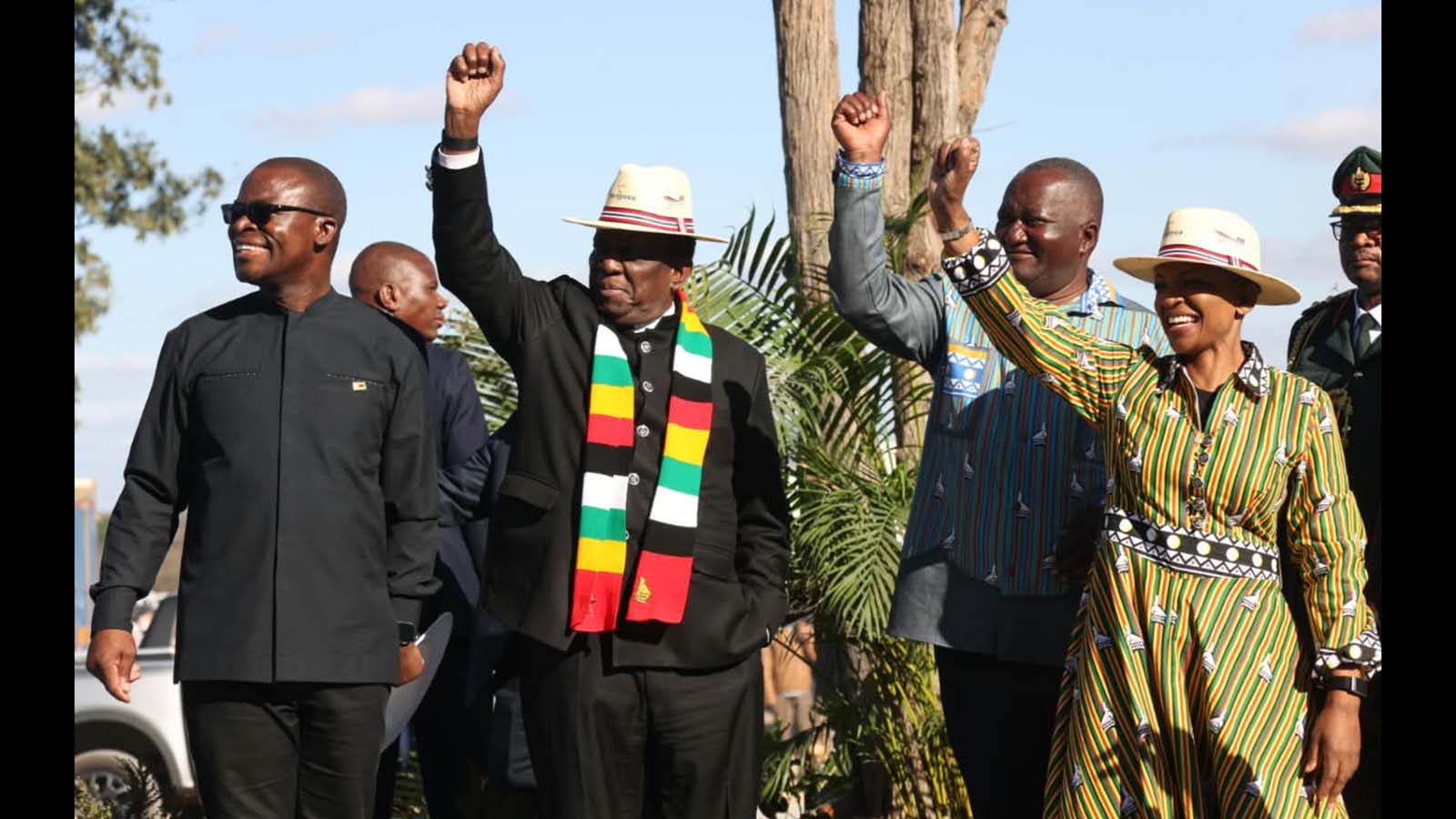
“Equally, the bureaucracy in the Second Republic will be expected to be development-oriented, responsive to the people’s needs as well as exhibit high principles of professional ethics and integrity,” said President Mnangagwa at his inauguration at the National Sports Stadium in Harare on August 26, 2018.
“My administration will, therefore, expect public sector officials to deliver quality and timely services to the people as well as facilitate business, trade and investment. Bureaucratic bottlenecks, unnecessary delays, lethargic and corrupt activities will not be tolerated.”
The President was on point regarding public sector officials, who have been largely blamed for throwing spanners in the wheels of progress due to skewed bureaucratic and corrupt dispositions.
Hence, as General Secretary Xi said, punishing “corrupt officials of all types” is the way to go as it safeguards the ruling party, the nation and the military, as well as guaranteeing that the people are the ultimate winners.
Upholding both the rule of law and the rule of virtue, and rewarding honest and hard work are hallmarks in curtailing corruption. All the “breeding grounds” and conditions conducive for corrupt tendencies should be cleared, with every step taken to punish wrongdoers.
“There must be no mercy for corruption,” President Xi underscored. “We must show zero tolerance in opposing corruption and punishing wrongdoing, and we must take more forceful action to both prevent new cases and root out existing ones.”
The philosophy in the new era, he emphasised, was to investigate and deal with corruption involving political and economic elements, preventing prominent officials from acting on behalf of any interest or power group, and cracking down on any conspiracy between Government officials and businesspeople aimed at undermining the political environment or economic growth.
“We will strictly investigate and handle cases of corruption where leading officials’ spouses, children, children’s spouses, other relatives, or staff use their influence to seek personal gain,” General Secretary Xi said.
Because corruption is two-pronged, punishing bribe takers alone will not suffice in curbing the scourge. Bribe givers are equally complicit, and should, therefore, be brought to book.
The CPC has a solution to that and all other forms of subtlety, as President Xi drove the point home, “We will punish both bribe takers and givers and combat new and disguised forms of corruption. We will deepen international cooperation to combat corruption and establish an integrated mechanism for pursuing fugitives, preventing escape, and retrieving stolen assets.”
In its quest to get to the root of both symptoms and causes of corruption, in the new era, the CPC, whose main objective is to lead the Chinese people to modernisation in all respects, will advance anti-corruption legislation and promote a culture of integrity.
On integrity, grooming
The CPC is alive to the fact that integrity and professional competence override all other loyalties in shaping national ethos that spur long-term economic prosperity for the common good.
General Secretary Xi, therefore, emphasised the need to select officials on the basis of “both integrity and ability, with greater weight given to integrity”, where merit supersedes background.
“Cultivating a large workforce of high-quality talent who have both integrity and professional competence is of critical importance to the long-term development of China and the Chinese nation,” he said.
Furthermore, officials should be aware that they “can be demoted as well as promoted and dismissed as well as recruited,” in an environment in which “the competent are elevated, the outstanding are rewarded, the mediocre are demoted, and the incompetent are dismissed.”
A high-calibre, professional, loyal, upright and responsible workforce under the supervision of equally competent leadership teams goes a long way in achieving set goals.
On grooming, the CPC is cognisant that “people emulate paragons of virtue, look up to heroes, and strive to become pioneers”. Also, it is conscious that “self-reform” is the solution to “the historical cycle of rise and fall”.
Therefore, the party commits to recruiting promising young people, industrial workers, farmers, and intellectuals into its ranks, using political commitment as the primary criterion for selection.
“It is of critical importance to the Party’s future that we have qualified successors to carry forward our cause. With this in mind, we will improve the regular working mechanisms for training and selecting promising young officials,” General Secretary Xi said.
The selected officials would then be vetted for political commitment to ensure reliance and corruption-free inclinations. As part of their grooming, they are deployed to local communities and areas where conditions are harsh, with such assignments being an integral part of their training.
That way, a new generation of capable young people, with “sound moral grounding, intellectual ability, physical vigour, aesthetic sensibility and work skills” are nurtured to advance socialism and carry the socialist cause forward.
This is envisaged to maintain firm ideals and convictions, enhance the party’s ideological consciousness, and bolster members’ resistance to corruption.
“We will foster within our party members an inner strength to never be corrupted by wealth or power, never deviate from principle even in poverty or humble positions, and never yield to the threat of force,” President Xi said.
He pointed out that it is only through tapping into the rich historical and cultural soil of China that the truth Marxism embodies can flourish, thus crystalising the wisdom of Chinese civilisation.


 Online Reporter