

 Online Reporter
Tafadzwa Zimoyo
Lifestyle Editor
For lack of diction, there is no option but to use generous magazine hyperbole.
Clink!
Tinkle!
Hiss!
Thud!
And, the list is endless, yet the final product is a melodious symphony. Creativity might as well be an understatement.
These are rare occasions when you have a dearth of diction.
Well, the rhythmic clinking of glass against glass fills the air, harmonising with the soft hissing of molten material being shaped into something beautiful.
Each sound tells a story of meticulous craftsmanship and unwavering dedication, as shards of glass are transformed into stunning works of art.
The process is not without its perils; a giant man, staggering and his massive frame casting a long shadow across the room, his hands, akin to massive ham hocks, are capable of crushing glasses given a chance.
His name is Cedric Sikhosana, who often finds himself nursing small cuts as he strives for perfection, each puncture a reminder of the sacrifices made in pursuit of his vision.

The sweat drips down his brow as he meticulously shapes each piece, pouring his heart and soul into the creation, knowing that every mark is a step closer to his breakthrough.
Interestingly, glazing glass work is a mesmerising blend of artistry and technique, where molten glass is transformed into stunning, translucent creations.
The process begins with carefully selected raw materials, which are heated to extreme temperatures, allowing them to melt into a viscous liquid.
Skilled artisans then manipulate this glowing substance, shaping it into intricate forms that capture light and colour in enchanting ways. Each piece is a testament to precision and creativity, reflecting the unique vision of the artist.
From delicate vases to elaborate sculptures, mirrors, glazing glass work not only showcases the beauty of the medium but also tells a story of craftsmanship and passion.
Prominent artists like American Dale Chihuly and Italian Lino Tagliapietra have transformed the realm of glass and glazing work into a captivating art form.
Chihuly’s vibrant installations push the boundaries of colour and form, inviting viewers into a world where glass becomes a medium of ethereal beauty.
Meanwhile, Tagliapietra, with his mastery of traditional Venetian techniques, showcases the elegance of craftsmanship, turning glass into breathtaking expressions of artistry.
These creators remind us that even the most ordinary materials can be transformed into extraordinary works of art.
In the same spirit of transformation, Mayibongwe Cedric Sikhosana’s journey began in Zimbabwe, shaped by both hardship and resilience.
Cedric grew up in a modest household.
He attended Guwe Primary and Secondary, schools before moving to Inyathi High School, where he learnt the values of hard work and determination.
At just 16, after losing his father, Cedric faced the daunting challenge of becoming the breadwinner for his family.
“I sold firewood, thatching grass, mushroom and vegetables to school teachers and nurses to survive,” he said in an interview with The Herald on Saturday Lifestyle.
His entrepreneurial spirit shone even brighter when he started a small barbershop at school, offering “gentlemen makeovers” during breaks, laying the groundwork for a remarkable life dedicated to creativity and innovation.
Before founding the ‘‘SKIMPIRE’’, which is currently dominating space on social media, Cedric navigated a myriad of roles, each one adding to his diverse tapestry of experience. “Honestly, I’ve done almost everything,” he reflects.
“From working as a temporary teacher at Longwe Primary to venturing into the mining sector, my journey brought me to South Africa in search of opportunities.”
He held various jobs, including a sales consultant position at a gym while pursuing a diploma in Sports Science to become a personal trainer.
Just as Cedric was gaining momentum, the Covid-19 pandemic disrupted everything, forcing him to rethink his future.
It was during this tumultuous time that the idea for SKIMPIRE was born.
“Covid-19 was the turning point. I knew I couldn’t rely on the gym industry alone anymore,” he shares.
An old car tyre in his yard sparked a wave of creativity; he transformed it into a centre table adorned with sisal rope.
“It looked rough, but I posted it on Facebook. Within hours, someone messaged me asking for the price and wanted it delivered. That moment told me this was a business.”
This simple yet profound act of transformation opened the floodgates to his entrepreneurial journey, showcasing the beauty of turning the ordinary into something extraordinary.
Cedric said, the concept of SKIMPIRE emerged from a blend of necessity and artistry.
He describes it as “transforming ordinary or discarded items into functional and artistic pieces”.
That first tyre table, though imperfect, held potential and sparked demand.
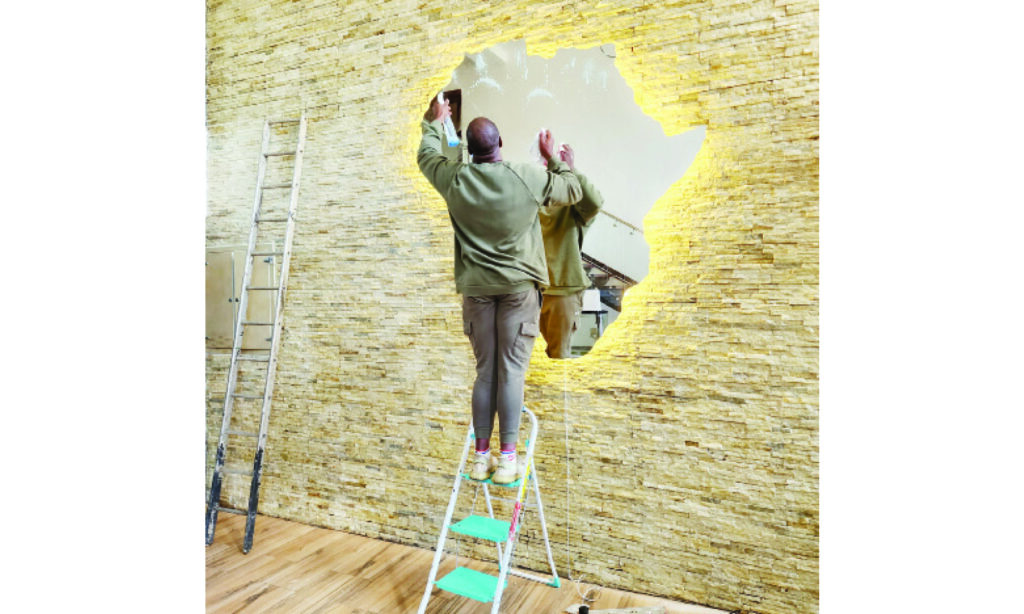
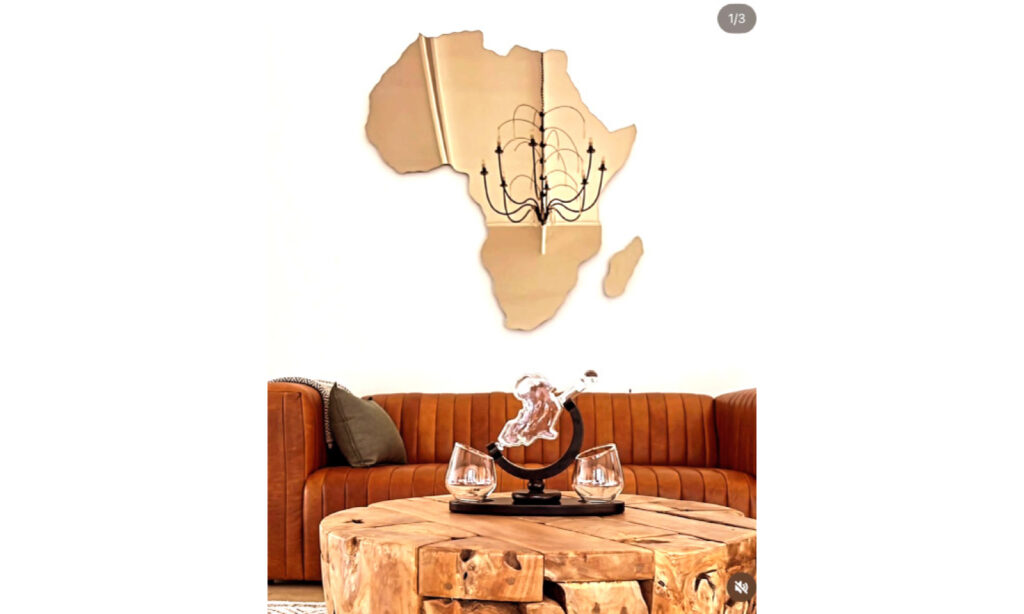
“I started making glassware, such as mirrors and decanters. I wanted it to be different as everyone was doing mirrors so because I am African, I was inspired by our continent and ended up having such designs, which today have been not only pillar a of strength but are bugging the trend,” he said.
“I have designed mirrors for both upmarket and down-market houses, some houses which belong to diplomats, celebrities and even politicians though I can’t share names due to contractual obligations. I have also set the mirror in Epworth and it looked amazing.”
So how was SKIMPIRE company born and what is it.
“The name SKIMPIRE, derived from my nickname SKIMBOE, is a tribute to my late uncle, an entrepreneur who greatly influenced my life.”
“To honour his legacy, I decided to build upon the foundation he started,” Cedric explains, merging personal history with a vision for the future.
In an age where creativity is often overshadowed by mass production, Cedric stands firm in his belief that handmade creations hold unique value.
He highlights that SKIMPIRE is not elitist but elevated, designed for those who appreciate art, meaning and originality.
“I am making African map design mirrors. “Each product undergoes a meticulous process, from ideation and design to hands-on crafting and quality control, ensuring that every item reflects the dedication and creativity behind it.”
However, the journey has not been without its challenges. “Cross-border logistics, inconsistent supply chains and lack of capital are big hurdles,” Cedric admits.
Copycats threaten the authenticity of his creations, but he remains resolute.
By focusing on strong branding and forming partnerships, Cedric aims to navigate these obstacles. He also envisions expanding skill development efforts for youth, believing that their hands hold the key to both personal success and the economic future of their countries.
Cedric’s passion for creativity extends beyond furniture design; he sees a broader mission in developing the skills of the youth in Zimbabwe and South Africa.
He dreams of establishing lifestyle spaces, cafes, boutique hotels and creative learning hubs.
“I believe that empowering our youth is essential for the future,” he asserts.
His vision is not just about profit but creating a legacy that uplifts communities.
Cedric’s journey is a testament to the power of resilience, creativity and vision.
He dreams of a future where SKIMPIRE stands as a symbol of African pride and sophistication, with flagship stores and collaborations across the continent.
“In five years, I envision SKIMPIRE as a creative lifestyle brand that embodies excellence and innovation,” he states confidently.
As he balances work and personal time, Cedric finds solace in the very act of creation, viewing it as both a job and a form of therapy.
As he gazes toward the horizon, Cedric envisions expanding his artistic endeavours into the realms of interior design, weaving together elegance and functionality to create spaces that inspire and uplift.
With a heart full of passion and a mind brimming with ideas, he aspires to craft environments that reflect the beauty of African culture and the spirit of innovation.
Through his work, Cedric not only transforms materials but also inspires a new generation of creators, proving that with determination and creativity, one can rise from humble beginnings to create a lasting impact.
Asked who his role model is, Cedric said, “I draw inspiration from several people — Vusi Thembekwayo, my uncle Everton Mlalazi, Patrice Motsepe, Elon Musk and others who have used vision and resilience to create impact. They represent excellence, innovation, and ambition.
“I get my raw materials from South Africa, Zimbabwe and other regions — everything from natural rope and reclaimed wood to premium glass and metals. Each product begins with an idea, then goes through design, selection of materials, hands-on crafting, finishing and quality control.”
Cedric added that given the chance, he would you like everyone to own his merchandise though he has a selective of personalities whom he dares and dream to present the artifacts.
“I would love everyone to own one either mirror or decanter, but I would like to give PLO Lumumba, Wodemaya, Sir Wicknell, Aliko Dangote, Julius Malema, Trevor Noah, and Ibrahim Traore — figures who embody African strength, excellence and global relevance.”
Surprisingly, besides glassware, he wants to work closely with governments, starting in Zimbabwe and South Africa, to develop the skills of our youth.
Based in South Africa, Cedric said comparing the two countries in terms of moving volumes of his business, South Africa offers infrastructure, buying power and exposure.
“Zimbabwe, offers loyalty, creativity and raw talent. The main difference is support systems and ease of doing business. I would like to expand my business to Namibia, Ghana, Nigeria and Kenya is on the horizon — with design that celebrates our shared heritage.”


