Online Reporter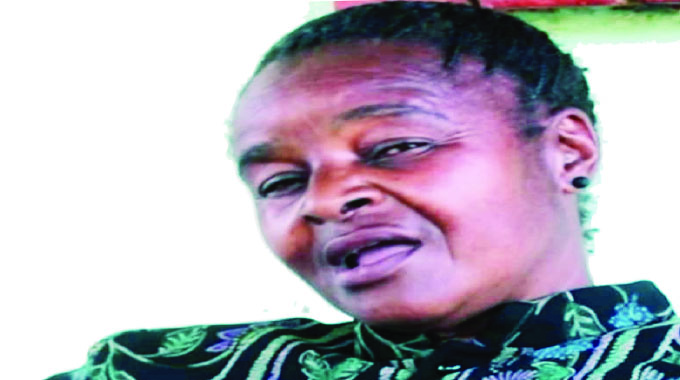
MY name is Sesinyana Grace Mlotshwa. My war name became Cde Zegeu Mpofu. Zegeu-four (ZGU) is an anti-air gun with four barrels and it can go up to six barrels.
I was born in a family of four children; two girls and two boys. I did my primary level at Mathole and Silima Primary Schools in Plumtree.
I pursued my secondary education at Luveve Secondary School in Bulawayo.
I joined the armed struggle in 1976 when I had visited my rural home Emzinmyama Village in Plumtree. I went to fetch water at a nearby well in the company of my paternal aunt, Senzeni Mhlanga.
The well was a few metres from home. While at the well we saw my mother running towards us. This was a time when parents were very strict and they could easily beat us. We became frightened as she came closer.
Panting, she told us that there were two gun-wielding men outside our home who were looking for young people to join the liberation struggle.
She was worried and told us to leave aside the water that we had fetched and run to the nearby pit to hide. We ran and hid there for some time.
We stayed for a while in the pit and we could faintly hear some of the conversations between the gun men and community members. They mentioned the recruitment of young people to fight the colonial system.
I was hit by the temptation to approach them and volunteer to train as a soldier. I stood up to peep at them. Indeed, they fitted my mother’s description.
They were wearing khaki-like trousers, putting on very long coats and carried guns. At that point, I felt like jumping out from the pit to tell them of my desire to join the war. I was prepared to do exactly that.
When you are young you get ambitious at times! I then told Senzeni of my intentions. She tried to deter me but I maintained my stance.
I added that I was not going to tell them that she was hiding there.
I came out of the pit enthused and proceeded straight to the soldiers. I found them talking to my male cousin and a maternal aunt of mine. I did not interrupt their conversation.
I greeted them and remained standing there listening to their conversation. They explained why they had come to our village and who they had recruited to fight the colonial system.
I found myself having blurted out that I wanted to join the liberation struggle.
The first question they asked me was where I lived. After I responded they laughed telling me that they had been to my home and they saw an old lady.
They described my mother. They promised to pick me up from home once they were done with their errands. Senzeni finally came out of the pit and found us wrapping up the conversation.
We carried our abandoned buckets of water and went back home.
We waited from around 11am to around 4pm for the guerillas to return. Many young boys and girls came to join us.
They had directed them to wait at our home for easy co-ordination. The gathering grew to about a 100 young people. They then returned at about 4pm and instructed us to follow their route.
They identified themselves as Bhobho and Lizwe. I don’t know if these were real names or pseudonyms. The long-awaited journey started. We moved as a group; on some paths we ran.
We passed Osabeni, and Sivaka. Between 6PM and 7PM we had reached the border separating Zimbabwe and Botswana.
We were instructed to crawl underneath the barbed wire. The two men who had suddenly become very harsh ordered that we help each other to cross.
The instruction that followed was that we should run and not look back at all. We ran until we were intercepted by another team of recruiters.
We reached some part of the bush where we slept for a while. This was around 12 midnight.
Around 4AM the guerillas instructed us to wake up and run towards the main road. Two of them led until we met lorries with Botswana number plates. We quickly had to jump into the lorries which took us to the prison.
When we got there, we registered our names and were asked to give brief introductions of ourselves, families and opine on the situation at home vis-à-vis colonial repression.
I think such was going to inform their reconnaissance. We only spent a night there and the next morning we were taken to Francistown which was a transit camp. We slept there I think for three or so days.
A lot had changed in terms of our lifestyle.
On the fourth day in Francistown, names were called out and mine was included. We were told to board four big lorries that had parked outside.
There was a parade before boarding and that is when we were informed that we were departing for Zambia.
We left by plane to Zambia and arrived at the Lusaka International Airport.
Big lorries were already waiting for us.
There was a lot going on, I felt confused as to where we were going and coming from. I was disoriented.
The lorries took us to Nampundwe Transit Camp. We arrived in Nampundwe at night.
At 4AM the following day a whistle was blown; we woke up and went to the parade square where we were informed that we needed to prepare to welcome Joshua Nkomo at the airport.
We all got excited that we were about to physically meet someone we had heard so much about at home.
A wooden drum container was opened during the parade and it had uniforms inside. The uniforms were damp and lice infested. We wore the uniforms regardless of how ill-fitting some of them were.
This is when it dawned on me that my life had changed. Three instructors led us as we ran in our uniforms.
The instructors had announced that we were going to welcome Nkomo at the airport.
Unbeknown to us it was a planned long-distance run, a ruse used on many recruits by the command element at Nampundwe.
We ran so fast for almost 15km. Along the way, some were fainting, vomiting, and others lagging behind.
You would reach a point then return as fast as you could. Personally, it was very hard for me because I was not used to physical exercises at all.
We assembled at the parade point while waiting for others to join us. As soon as others had returned, we proceeded to a nearby mountain where we were taught to climb it using frog jumps.
This was a struggle.
Instructors had become harsh and did not negotiate with anyone. We jumped and at the tip of the mountain, we were told to roll down with our hands between our feet.
We did all that and as soon as we reached the foot of the mountain, we were instructed to go to a parade point and sit down.
An instruction for us to go for breakfast followed but no one stood up. Everyone was exhausted. Real combat life had started. Instructors laughed at how everyone failed to get up.
They then began commissariat lessons.
There was a clear connection between the mountain exercise and the lesson when they started highlighting the objectives of joining the armed struggle.
That very night, big lorries came and we were told to board those lorries. We still had that confusion and exhaustion from the physical exercise.
Instructors called us by name into the trucks and we travelled from Nampundwe to Mwembeshi. That night we pitched our tents and were put into companies. The site of the camp was close to a river, that made the place cold.
The next morning training began and that was not fun. Companies ranged from A up to H. I think in a platoon you would get one woman because we were around 150 out of over 500 men. What made the training difficult was the fact that we were not separated from men.
Training with men made me realise that what men can do could be done by women too. We performed all tactics that they did.
The training included learning commissariat lessons of the objectives of the war, gun stripping and assembly, how to use guns, topography, judo, crossing of rivers, crossing of obstacles and a lot of long-distance running.
I remember one of the instructors, Eddie Sigoge, used to fire live bullets during the obstacle crossing. It was scary.
Early mornings were only meant to promote physical fitness through running, exercises and judo. After those, we would come back and break for breakfast and later return to the parade.
After the parade, we would then dismiss into companies for other lessons that required a classroom setup in order to do commissariat lessons, strip guns and assembly, learn how to use guns, and topography among other things.
This depended on the programme of the day.
Some of the women that I trained with included Hazel, Susan, Viola, Samkeliso, Vivian, Moddie, Beauty Bhuzhwa’, Silver, Anna, Ingrid, Soffie, Dorcas, Thandiwe, and Sakhile.
There were other trained women combatants that had completed their training at Morogoro in Tanzania and had been deployed as instructors.
There was Grace, Bvundzai, Constance, Belinda, Peasant, and Audrey.
These women instructors were men in women figures. All I’m trying to say is they were bold. Their level of effort was similar to that of male instructors.
I remember one time during a parade, senior commanders Stanley Gagisa Nleya and Philip Valerio Sibanda publicly acknowledged that there was no difference between what was taught by women instructors and what they taught.
These female instructors instructed everyone, including men! We looked up to them and aspired to be like them as soon as we completed our training.
They were so encouraging and we envied them that indeed what a woman can do a man can do. There was no distinction to what we were taught by men. Stanley Gagisa specialised in physical training and would be so tough on us.
On some days he would be standing and watching while Valerio Sibanda or Constance took over. That was war.
There was also the command element. The camp commander was Eddie Sigoge.
Below him were instructors who included Ananias Gwenzi (Philip Valerio Sibanda), Moses Phinda, Gagisa, Arab, Magadlela (Thambolenyoka), Doctor Mbeya (Dr Milton Chemhuru), Sibangani, Jockey, Ethan, Ntatshana and Mapara,
At Mwembeshi we ate beans, buns that we called amanyunyumane (fat cooks) and sour milk that would have initially been powdered. There was isitshwala, tinned fish and on some days, there was game meat.
We completed the guerrilla training in 1977. I have forgotten the specific month. Quite a number of us trained women combatants were deployed to Victory Camp to be security personnel.
The camp was now an exclusive transit camp for women, teenagers, and young kids that we called okijana.
VC was a camp that was left behind by the Angolans and its original name was in Portuguese and loosely translated to “Victory is certain”.
This explains why it was later called Victory Camp. I was one of those that provided security services as guards and did all security protocols that included vetting those coming in to stay at the camp.
At that time, I was always armed with an AK-47 riffle although there were also men that were in our security department who were doing anti-air security.
At Victory Camp, the camp commander was Cecil Banda, the commissar being Saul popularly known as “Professor”.
While at VC I was among those that were chosen for further training in Cuba for military intelligence, counter intelligence and espionage.
he aim was to improve understanding how information is gathered in various contexts and how one can perform a task to counter anything in that context.
Espionage involved the art of information gathering in a spy-type of scenario, leaking it, and releasing it to achieve a certain intended outcome.
It was only women that convened in Cuba although we were coming from different departments. There was Lydia, Ndlela, Silver, Hazel, Sibophile, Cecil, Mario, Phineas and I among others.
We travelled to Angola and we took a plane to Cuba while Hazel and crew travelled by ship.
The good thing is we all arrived safely and learned together.
We completed our training in 1978 and went back to Zambia. I was tasked to open an intelligence training school in Kitwe according to recommendations I received based on my performance in my studies.
Only Ndlela, Mike and I had done military intelligence in Bulgaria. That military intelligence school was opened and I became a senior instructor.
We trained the first group of other cadres that had completed their six months of training and in the second group, we then targeted all those cadres from other departments, especially men that were going to the front.
As we were still in the training the bombardments started. Many people died and others sustained serious injuries. There were plans for those that had sustained injuries to receive medical treatment overseas.
All those who were going for treatment to Poland were accompanied by me to afford me the opportunity to monitor and gather intelligence information.
I was on a mission to monitor and gather information as an intelligence officer. That was now my role. I was disguised as someone going there to receive medical treatment.
We stayed there for about four months, some were treated and given artificial legs, succored and bandaged.
Time went by, I was seconded once more together with four other women that were coming from Namibia to do a nursing course in Poland.
These women were Peninnah, Elina, Florence, Elma. We did state-certified nursing.
During that time when we were doing our nursing course, Zapu had a representative in Poland who was called Hitler Chenjerai Hunzvi. We used to go to his offices to receive orientations and be updated on the liberation situation back home.
Hunzvi loved talking and orienting everyone about what was taking place at home. People would gather at his offices during weekends.
There are some that we would meet in his offices who had come to do other assignments and courses in Poland.
These included Chipo Daughters Mabuwa the sister to former Minister, Chiratidzo, Ester, Sipho, Eugen, and Peter.
There were, however, some challenges in Poland at that time as cases of racism were so high. Some whites in Poland would pass racist comments about black people. Others genuinely marvelled when they met a black person physically.
During this time Richman poor man by Kunta Kinte was very popular. Everywhere you moved you would be called, “Kunta Kinte”. They never liked us.
You could not bath in public rest rooms in Poland without white people running and flocking to see your nakedness and try to find the baboon characteristics in you.
It was frustrating. Others would interrogate me and dispute that I am African because I was light in complexion.
They named me wander musica. This meant a very beautiful girl but directly translated it was a female calf of a mule. Still such, remained demeaning to me and others like me.
I left Poland for Zimbabwe via Zambia in 1980. Some of my peers were already in Zimbabwe.
I went to Greendale in Harare and worked as a shopkeeper in one of the stores that belonged to Joshua Nkomo.
I was integrated into the then newly formed Zimbabwe National Army. I led a normal life, got married and blessed with three children.
This narration was extracted from a book titled Yithi Laba written by historian Methembe Hillary Hadebe.