admin
admin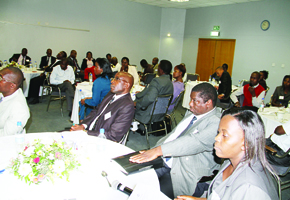
Speaking at a breakfast seminar organised by ZimTrade in Bulawayo, Africa Corporate Advisors executive director Mr Malvern Rusike said South Sudan that has 12 million cattle presented potential investment opportunities for CSC.
The seminar was held to present to entrepreneurs the findings of a trade and investment survey that ZimTrade and ACA carried out in South Sudan recently.
“South Sudan has 12 million cattle and the beef price there ranges between $10 and $13 per kilogramme. People there do not have slaughter facilities and as a result are importing beef from Uganda. This is an investment opportunity for CSC,” he said.
He said CSC could establish its slaughter facilities in the East African country and this was likely to see Zimbabwe resuming beef exports to the European Union and other exports markets.
“We just need to get out of our comfort zone to say that we are at home.”
CSC has been faced with viability challenges following the economic meltdown Zimbabwe was reeling under for the past decade.
Mr Rusike also challenged local entrepreneurs to take advantage of the good political relations between Zimbabwe and South Sudan by setting up businesses in East African country which was newest on the continent and still underdeveloped.
He said Zimbabwean entrepreneurs could invest in sectors that include agriculture, mining, construction, tourism, forestry and energy.
“In terms of land use, more than 30 million hectares of arable land surface is estimated to be suitable for agriculture. However, only five percent is currently estimated to be under use.
“There is very little commercial agricultural activity. Ninety-eight percent of their revenue is from the oil industry. The only manufacturing plant is the Southern Sudan Beverages Limited, which produces beer, soft drinks and bottled water.”
He said although South Sudan was not yet part of a preferential trading bloc, its present customs duty regime was not punitive.
Mr Rusike said the East African country was endowed with a whole range of natural resources.
However, he said upon penetrating the South Sudan market there were potential challenges such as distance and cost of transporting the products to that market, limited distribution networks and limited private sector investment businesses would face.
Speaking at the same occasion earlier on, ZimTrade chief executive Ms Sithembile Pilime said there was need for the country to grow its export trade.
“Since dollarisation in 2009, Zimbabwe’s trade performance has been far from satisfactory. Exports are lagging behind imports resulting in a massive trade deficit.”
She said according to 2013 national budget statement, the trade deficit for next year was projected at $3,5 billion.
“For 2011, the deficit was $3,1 billion and for 2012 it is projected at $3,1 billion. This trend is indeed worrisome. In cognisance of the urgent need to reverse the imbalance, Government, through the Medium Term Plan, the Industrial Development Policy, and the National Trade Policy, clearly articulates the need for Zimbabwe to export more value added products and services,” said Ms Pilime.
She said increasing exports mainly for value added products would improve liquidity in the domestic market, create employment and also assist companies to improve capacity utilisation.
She said her organisation embarked on a turnaround strategy aimed at restoring the organisation’s past effectiveness in supporting exporters.
The specific objective of the strategy, Ms Pilime said was to re-establish ZimTrade’s national and international status as a leading trade development and promotion organisation by providing high quality exporter needs-based services.
“One of the major activities stated in the strategy, is that ZimTrade should facilitate export market development into the lucrative markets of South Sudan, Mozambique, South Africa, Zambia, Botswana, Namibia, Democratic Republic of Congo, Malawi and Tanzania.”
She said last week ZimTrade undertook a trade mission consisting of more than 20 companies to Tete in Mozambique to explore business opportunities.
Ms Pilime challenged local companies to set up investments in South Sudan or supply products to that market.
“It is never too late to find your niche in any market, South Sudan included. I understand that South Sudan has its own challenges, but I have also learnt that within those challenges there are countless business opportunities and, as we speak many people from all corners of the world are busy exploring the opportunities. We, as Zimbabweans, should not be left behind,” she said.



 Online Reporter