

 admin
admin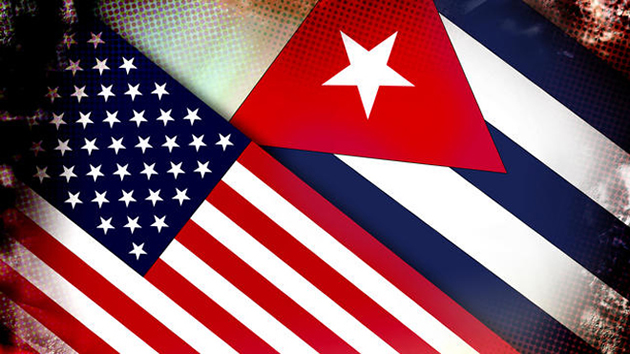
Andrew Levine Correspondent
In the wasteland that American politics has become, there are flickers of hope every now and then. In the winter and spring of 2011, there was the wave of worker-led resistance to efforts by Republican governors and legislators to destroy public-sector unions.
Then, in the fall and winter, there was Occupy Wall Street and the many Occupy offshoots it spawned.
What was happening in America seemed of a piece with the Arab Spring.
There were even more obvious affinities with like-minded expressions of outrage elsewhere, especially in southern Europe, directed against austerity politics, neoliberal ideology and, ultimately, the finance-driven capitalism of our time.
The hope was real, but what sustained it was wishful thinking.
Anyone not swept away by the enthusiasms that inevitably arise when people take their own affairs in hand should have seen this then. They should have realised that with the historical Left gone, with prevailing political systems rigged in favour of entrenched power and wealth, and with the vast majority, the ninety-nine percent, having no idea what to do next and no way to get it done even if they did, it was bound to be a flash in the pan. It is the same with the wave of protests now sweeping the United States in reaction to police killings of African American boys and men, and the de facto immunity from prosecution that the state accords their killers.
That police oppress communities of colour is not exactly news.
Lately, though, they have been going too far — striking a nerve and sparking a reaction. A few mainly cosmetic, reforms could result. But, on matters of substance, these latest eruptions of people power are likely to have about as much effect as Occupy Wall Street did.
The hope sparked by the December 17 announcement that the United States and Cuba would resume diplomatic relations, and that America’s war of attrition against the Cuban Revolution would cease (or, at least, subside), is different. In the other cases, circumstances forced flickers of hope to sputter out. In this case, circumstances are likely to move events forward.
Can it be that change for the better is in the works at last; that, this time, there really is reason for hope? Strictly speaking, all we now have reason to think will change are U.S.-Cuba relations. This is significant, but it hardly amounts to a full-fledged change of course. The demonstrators protesting police oppression envision more; the Occupy protesters envisioned a lot more.
But these are hardly reasons to discount the importance of what happened December 17 — and not only because the hope born then will likely amount to more than just a flicker. This hope will not sputter out because the circumstances that brought it into being demonstrate the fragility of the status quo.
People power didn’t make it happen; but because it did happen, people power is now more likely than before, even after 2011 and 2014, to change the world. To realise the aspirations of people in motion, real democracy is indispensable. Mass protests and popular mobilisation can be part of the process. But we are a long way from that now.
Popular sloganeering notwithstanding, in the circumstances that prevail, mass protests and popular mobilisations have less to do with “what democracy looks like” than with what it looks like for the people, the demos, to call for democracy — rule of, by and for the people. If the people really did rule, the pent-up outrage that brought people into the streets three years ago, and that is bringing people back now, would never have erupted in the first place.
Attacks on workers’ rights, increasing inequality, and austerity politics were the proximate causes of the flickers of hope seen in 2011; now the issues are police misconduct and the inability of the judicial system to deal with it.
Ultimately, though, real democracy is what it is all about — not nominally free elections between bought and paid for Democrats and Republicans, but the people in power. To be sure, public opinion in both the United States and Cuba was an underlying cause of December 17.
But it didn’t happen because public pressure gave political elites no choice. It happened because the rulers of both countries wanted it so. This would not seem remarkable except that, for more than half a century, America’s Cuba policy might as well have been on automatic pilot. More generally, American foreign policy has long seemed incapable of fundamental change. Now it no longer does.
The perception is even more consequential than the reality behind it. In the real world of politics, there is nothing so immobilising as the idea that there is no alternative. December 17 shattered that perception. It is too soon to tell what the broader consequences will be, but it is plain that they could be far-reaching.
If America’s Cuba policy can be turned around 180 degrees, why not other similarly long-standing, debilitating and apparently intractable problems: American policy towards Israel and occupied Palestine, for example?
No doubt, this thought has occurred to Benjamin Netanyahu and his supporters; it must cause them grave concern.
Of course, it is too soon to tell how, if at all, reverberations from Havana will affect Jerusalem.
But it is plain that Israel’s right-wing government and its fascisant supporters at home and around the world have reason to worry.
Thanks mainly to campaign contributions — corruptus in extremis should be the motto not just of the Mayor’s office in Springfield, hometown of “The Simpsons,” but of the entire American political system — it will be harder to deliver on that prospect than it is to set U.S.-Cuba relations aright. It will be harder still to go even farther.
But it is possible to go farther, if the political will exists. Don’t look to the Obama administration for that or, more generally, to the American political class.
Look instead to the people in the streets three years ago and again today. If we have learned anything over the past three years it is that there is a sleeping giant out there, yearning for a constructive purpose, that, if properly organised and directed, has the power to remake the world.
What better purpose is there, for a starter, than forcing the United States to play a less destructive role in the world?
First, though, the idea must take hold, based on lived experience, that a better world really is possible; that there really are alternatives.
This is the larger meaning of December 17.
On that day, it was shown that, even in the Age of Obama, the ship of state really can be turned around. — Counterpunch.



 Online Reporter