

 admin
admin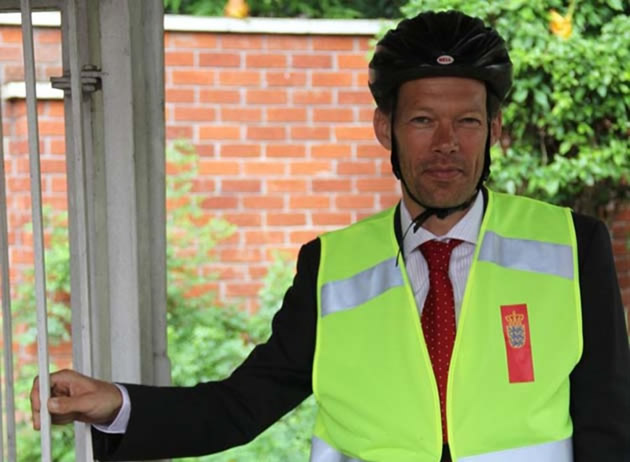
Gerald Maguranyanga Traffic Friday
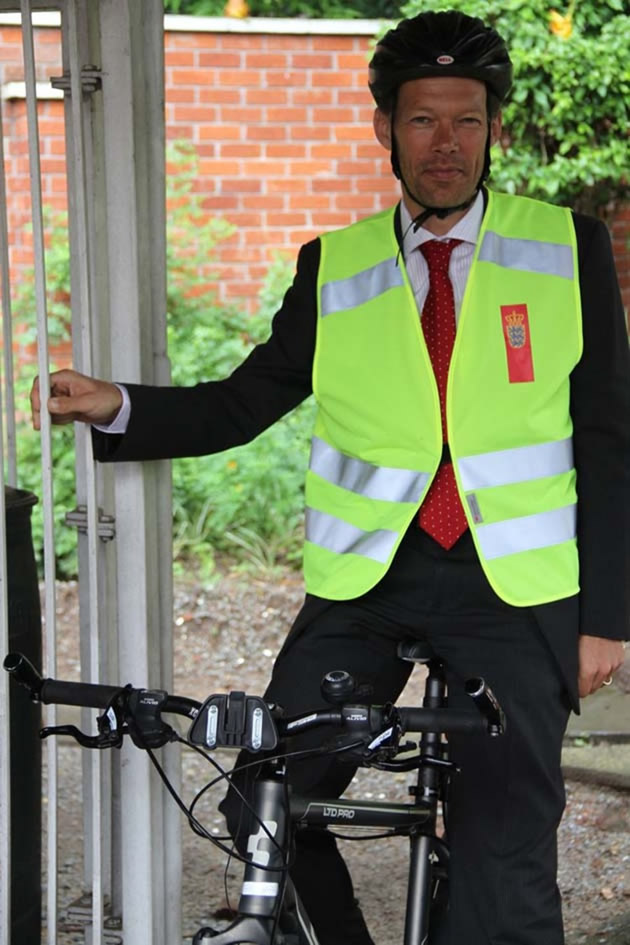
Fanuel Kangondo’s recent piece in the Herald on the bicycling life of the Royal Danish Embassy Charge d’Affaires, Mr Erik Rasmussen, who happily cycles to and from work, was inspiration for this instalment.
Once at work, our diplomat friend probably parks his darling bicycle in a bay reserved for his business-issue luxury car!
I tried — but failed — to picture any of our comfortable Government chefs or over-stuffed private corporate executives living that simple life, even for just one day.
Can you, dear reader, envision our self-important big boys reduced to the supposed dishonourable cycling life of the poorest-of-the-poor?
No way!
Mr Rasmussen easily fits the VIP category, but he seemingly does not have a problem cycling to and from work.
The career diplomat was reportedly motivated to take up cycling as it was a common cultural practice and a happy pursuit in Denmark.
Copenhagen — the Danish capital city — is world-famous for its biking culture and was officially the first Bike City in the World (Denmark.dk).
The Danes are well-known for their love of cycling and cities all around the world (Harare City too?) are now looking at replicating this cycling phenomenon. A massive 400km of designated bike lanes make Copenhagen a biking heaven.
Cycling is also quite a safe pursuit in Copenhagen and many other cities around the world because of an inherent respect of the cyclist as a bonafide road user that motorists are quite happy to share the road with.
Sadly, in Zimbabwe the colourfully painted scenario is a fantasy.
Getting onto a bike and riding around is for the brave. Ours is a dog-eat-dog traffic jungle.
The average cyclist is a lawless couldn’t-care-less rider who for the most part cycles on the right side of the road, contrary to what the Zimbabwe Traffic Safety Council’s Highway Code instructs.
It’d be interesting to check the condition of the average bicycle; the brakes, the bearings, the wheel alignment, spokes, tyres, chain, pedals, saddle, security of the handlebars, and bell, etc.
Many cyclists clearly overload their bike. I know a man who cycles with a kid perched on his handles bars and another on the rear carrier, taking them to school. Kukiya-kiya for survival, but at what risk to the children and other road traffic?
Security guards, on the way home from work, will characteristically carry an over-sized, protruding load of firewood. Needless to say, it’s potentially hazardous behaviour.
The average local cyclist never wears a colourful/reflective top but never mounts a working front and rear light at night.
Believe it or not, but we even experience speeding cyclists!
Sadly, cyclists stopped using vital hand signals ages ago. Zimbabwean police make excellent cyclists, as they are obviously well-trained.
My only problem with them is they have no lights on their bikes at night, which means they routinely break the law and set an awful example.
Notwithstanding the small numbers of regular cyclists in Zimbabwe, dozens of cyclists were killed last year in road traffic accidents, mostly involving motor vehicles.
This means the over-exposed cyclist always comes out second-best in such collisions. Considering our small number of consistent cyclists, of whom it seems many are security guards opting for a cheap ride to-and-from work, and the disproportionate number of collisions and deaths — cycling may well be ranked a dangerous proposition in Zimbabwe.
The grave danger is enhanced by many drivers’ poor attitude towards cyclists.
The average driver in Zimbabwe seemingly regards the cyclist as a nuisance who diminishes his driving space. Yet, in driving school, we were all taught to keep a proper lookout for the cyclist.
This then demands that when we see a cyclist riding in the same direction, we (drivers) are supposed to create a little more room for them by steering clear.
Many times though, the average driver would rather give the cyclist an earful of his loud car horn, intimidating the cyclist off the road, than civilly share the road.
Just a little manoeuvring, by the driver, in many cases, would allow both the driver and the cyclist to safely and happily share the road.
Our diplomat friend reportedly insists cycling has helped him improve his mental alertness and gives him a good start to each day.
He cycled in the first country he was posted to but had to give up the good habit when posted to Palestine because of security concerns.
Such precautions for him should be at zero-level in friendly Zimbabwe, but I am sure he has some concerns on his overall road safety, particularly from the commuter omnibus menace and the general driver who does not seemingly understand the need for sharing space with the cyclist as a fellow road user.
Traffic Friday suggests that Mr Rasmussen might as well add to his significant largesse portfolio, aid connected to teaching cyclists (particularly school children) safe behaviour when sharing the road with other traffic.
A free Denmark junket to our ever-loving city “fathers” to learn the ins-and-outs of promoting a safe cycling culture would possibly also help us decongest our roads after learning a few Copenhagen tricks on promoting cycling as an acceptable modern mode of transport.
Some cities such as London are now vigorously encouraging the cycling culture. It is reported that in January 2013, Boris Johnson, the Mayor of London, appointed London’s first Cycling Commissioner, tasked with making cycling a safer and more popular mode of transport in the British capital.
Mr Diplomat, you have just inspired me to take up cycling!
The humble, pedal-powered bicycle, for all its simplicity, may just be the most-appreciated way to be up-and-about in the future.
What is more; there are huge benefits; improved general fitness for any regular cyclist; mass cycling too would be eco-friendly!
What is vital is for Zimbabwe to eliminate the deadly cycle-motor vehicle conflict. The easiest way to do that is to create separate bike lanes and re-educating the carefree cyclist and careless motorist.
Traffic Friday not only wants to promote cycling safety but also the widespread investment in cycle-friendly infrastructure. I hope the Harare City Mayor is reading me.
Perhaps, also introducing a bicycle-specific written test and reintroducing licencing (which was no big deal not too many years ago) together with a modest fee.
The written test would surely help educate happy-go-lucky cyclists on the vital road rules. The licencing and testing bit though, would have to be kept far away from the notorious VID, probably the most-corrupt Government agency since Independence.
It’s a Friday; please keep the driving “happy, happy!”
- Gerald Maguranyanga moderates Road Safety Africa, on www.facebook.com/RoadSafetyAfrica, an interactive community page that solicits ideas to curb road traffic accidents in Zimbabwe and Africa. Feedback: WhatsApp only: +263 772 205 300; email: [email protected]



 Online Reporter