Online Reporter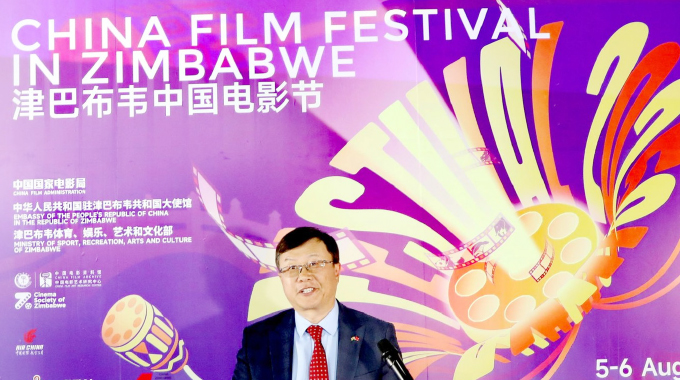
Tichaona Zindoga
People, in their universality, have common experiences, pain, happiness and shared humanity that transcend space and time.
From science, we learn that humans descended from a common ancestry and that Africa is the cradle of mankind. What then separated people are different civilisations that have been forged and moulded over years.
Yet, what binds people together, like the very blood that courses through the veins of each one of us — and animals too — is stronger and undeniable. The difference between humans and their primal counterparts is the ability and choice to foster meaningful relationships as people, communities and nations.
Ideally. This in part explains why we live in a global village.
Despite efforts to undo globalisation, or at least some form of it in the name of economic independence and excluding other people from certain geographical spaces — which is a phenomenon being embraced by a few who are attempting to erect walls — humanity thrives.
And it will win: the challenge is for global citizens to make the deliberate choice to pursue unity, mutual understanding, friendship and co-operation to achieve common goals, including happiness, which is a universal good.
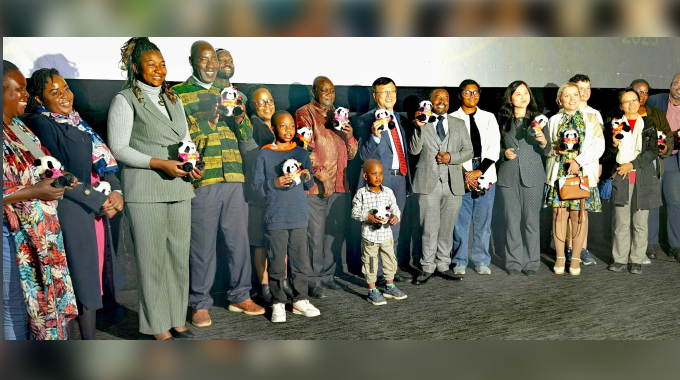
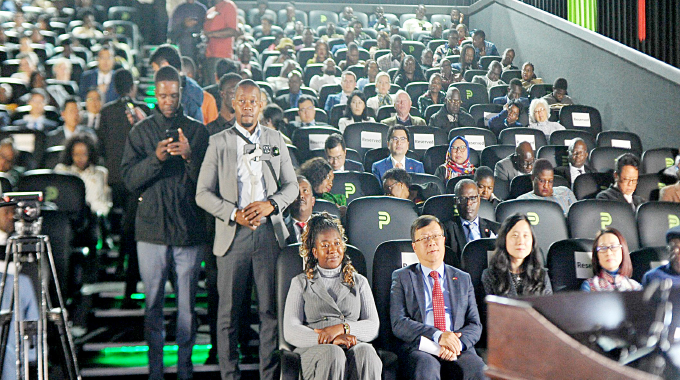
Recently, the China Film Festival held in Zimbabwe brought to the fore this reality which defies differences in colour, race, religion, creed and other superficial boundaries. The festival showcased two major Chinese films, Panda Plan and You Only Live Once.
For film lovers, Jackie Chan the star of Panda Plan, is an entertainer par excellence revered globally, acclaimed for decades of his work in action comedy showcasing Chinese kungfu. His film, however, explores themes of conservation centred around his fight to protect a baby panda, now a world-recognised environmental and cultural symbol, which China is championing.
But, more importantly, the film underscores deeper values of empathy amid suffering: a princess from an Arab country is terminally ill in a hospice, and seeks comfort and escape in images of a panda. When Jackie Chan finally delivers the real life panda — the subject of intense battle between himself and a band of poachers hired by the Arab royal to bring the panda to the ailing girl — the sense of humanity is warm and touching.
It is a moment of catharsis.
Cancer, which the little girl suffers from, has also become a global killer, including here in Zimbabwe. Locally, it was known previously as a disease for the rich and white people; but now its reaping grimly across social strata, underscoring why the scientific community is striving for cure.
In You Only Live Once, humanity shines once again — even more poignantly so. Chinese Ambassador Zhou Ding, who gave a speech in opening the remarks urged viewers to stay on for the film for its more complex message. And he was right.
The main actor Du Leying played by Jia Ling paints a picture of resilience, overcoming obesity, familial problems, relationship problems and other social pressures to achieve her goal of fighting in a professional boxing match, a feat she attains after scaling numerous failures at qualification. In the end, although she is brutally pummelled by her more experienced rival, she recognises it as a win. So do all of us. The story echoes deeply with audiences for its major themes of fighting adversity and the value of hard work and spotlights the motif of the girl child overcoming challenges.
Culture as building bridges
Film is a powerful cultural tool that can build bridges.
Africans have long appreciated Chinese films, since the 1970s kungfu movies have traditionally been favourites. In them, African audiences see and love Chinese heroes.
In 2017, Taling Tene Rodrigue, Yao Jiaojiao undertook a study titled, “Kungfu Movies as Driver of China-Africa Cultural Exchanges: Case Study of Cameroon”.
Among its major findings, the study said, “There has been a growing influence of Kungfu Movies in Africa since the late 1970s following the emergence of Bruce Lee, and this has positively shifted African audiences’ interest toward Chinese Kungfu.”
Film pave way for more cooperation between China and Africa — as well as other Third World peoples — in democratising global culture.
When it comes to China and Africa in particular, this is conceived within the framework of Forum on China-Africa Co-operation which conceives cultural exchanges as playing a unique role in promoting cooperation and friendship between China and Africa.
China has entered into 62 inter-governmental agreements on cultural exchanges and cooperation with 45 African countries, under which the two sides have organized over 200 cultural exchange delegations and hosted hundreds of cultural or art exchange events.
In addition, extensive cooperation has been conducted in sports, TV and movie, news media and publishing and in the training and exchange of art professionals.
Zimbabwe and China would do well to deepen this co-operation for mutual benefit.
Admittedly, phenomena such as economics, politics and the global order are polarising issues. They are inherently “hard” issues, while art, sport and culture are unifying, especially when done conscientiously and with ingenuity.
Thus, the world must harness their power to the fullest extent.
Ambassador Zhou also highlighted the fact that sport and art are powerful glue to unite people across borders.
Nyasha Mushekwi, a local footballer plying his trade in China’s Super League where he became a top goalscorer, has become a cultural envoy. Last year, renowned stone sculptor, Dominic Benhura exported the Shona art in a festival, becoming another envoy of co-operation.
These are dimensions that must be deepened to build mutual learning and cooperation. In the context of the Global Civilisation Initiative (GCI) propounded by Chinese President Xi Jinping, these are the many diverse flowers that make a garden beautiful.
The GCI itself advocates for cooperation rather than a “clash of civilisations”, which the West has held as natural and inevitable. For Zimbabwe and China, whose ancient civilisations co-operated since 600 years ago, it is imperative to deepen ties through aspects such as art and culture.
In the new era, “Film is a powerful bridge between nations,” as declared by Zimbabwe’s deputy Minister of Arts, Sports and Culture, Honourable Emily Jesaya.
“It narrates histories, sparks imagination, and strengthens people-to-people ties.”