


 Online Reporter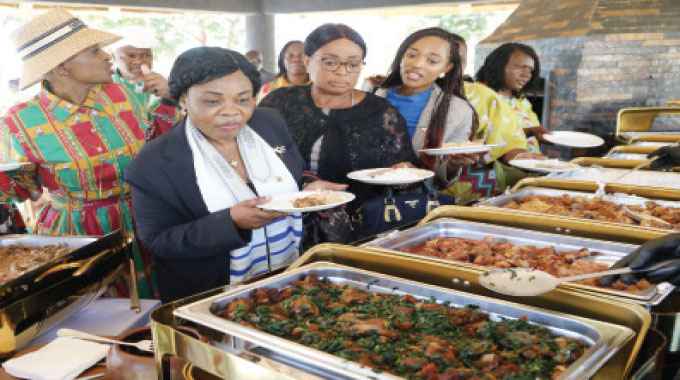
Blessings Chidakwa, Senior Reporter
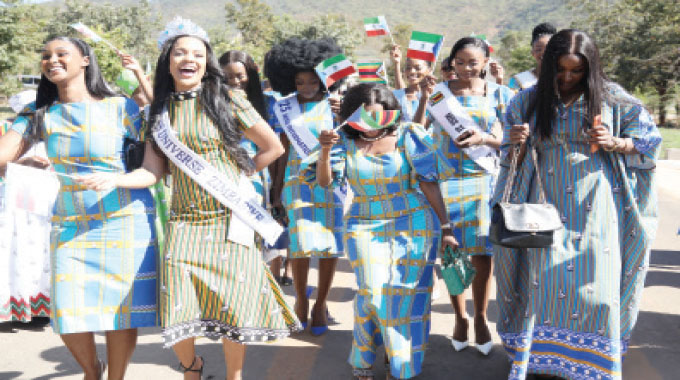
FIRST Lady Dr Auxillia Mnangagwa organised a rousing welcome for the First Lady of Equatorial Guinea, Mrs Constancia Mangue Obiang, at the Baradzanwa Cultural Village in Mazowe, Mashonaland Central province, where song, dance and ululations created a vibrant showcase of Zimbabwean heritage, identity and African unity.
Although both Dr Mnangagwa and Mrs Mangue Obiang were unable to attend the event due to other pressing commitments, they were ably represented by their respective delegations.
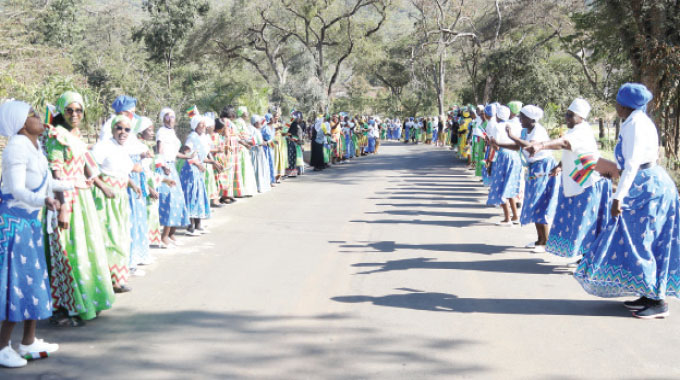
Women clad in the Zimbabwean national dress, drawn from faith-based organisations, chiefs’ families and pageantry circles, including Roseanna Hall, turned out in their numbers to welcome the Equatorial Guinea visitors led by Minister of Social Affairs and Gender Equality María Consuelo Nguema Oyana in a colourful display reflecting the cultural values championed through Dr Mnangagwa’s initiatives.
What followed was a day-long immersion into Zimbabwean culture, from indigenous foods and traditional crafts to mentorship sessions where the two nations imparted life skills and values to young girls, highlighting culture as both a source of identity and a tool for development.
The Equatorial Guinea delegation expressed admiration for the Nhanga/Gota/Ixhiba initiative, describing it as an inspiring model for empowering women, guiding young people and preserving African traditions.
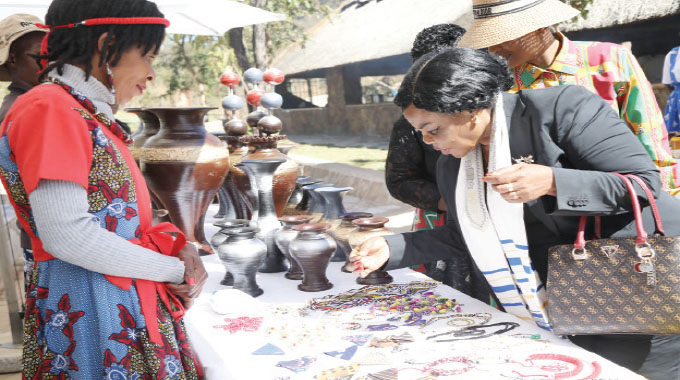
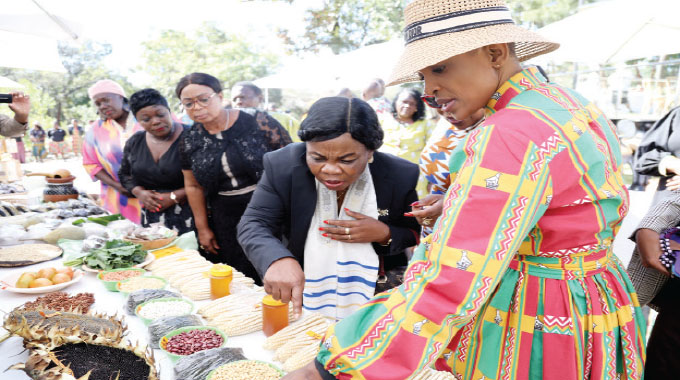
The day started with a tour of various exhibition stands displaying thriving women’s projects, beneficiaries of the First Lady’s initiatives, including those in agro-tourism, Farm to Market, handcrafted artefacts and several others showcasing Zimbabwe’s creativity, innovation and cultural excellence.
The delegation was so impressed by the high quality and organic nature of Zimbabwe’s products, including honey, traditional mealie meal, sandals and several artefacts, that they bought almost every item on display to take back home.
After that, the delegation was taken through Zimbabwe’s rich gastronomy, enjoying delicious traditional cuisine, beginning with various drinks, including baobab juice.
Among the sumptuous dishes were signature Zimbabwean delicacies such as haifiridzi, mixed mufushwa wemunyemba and munyevhe, biltong with peanut butter, mazondo, guru and matumbu.
The delegation was highly impressed by the mouth-watering dishes as they sampled the local cuisine.
The culinary showcase reflected Zimbabwe’s rich cultural heritage and ongoing efforts to preserve indigenous foods while promoting healthy, nutritious and sustainable diets.
This was followed by a tour of the iconic Baradzanwa Cultural Village, where the visitors immersed themselves in the rich cultural heritage beautifully showcased at the site.
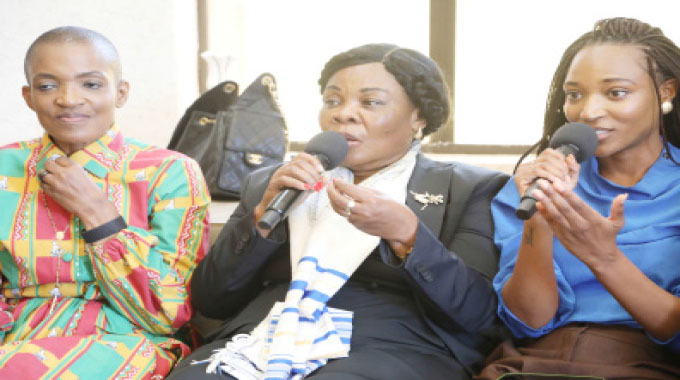
Their final stop was at the traditional maroro kitchen, where Nhanga was held, with the two nations taking turns to teach the girl children according to their respective cultures, which proved to be similar.
Chiefs’ wives and elderly women present at the gathering also offered wise counsel, guiding the girls on self-respect, responsibility and the importance of preserving Zimbabwean cultural values.
Indeed, the day blended cultural mentorship and celebration, as the Nhanga session provided a platform for elderly women and those from the religious sector to impart life skills, moral values and cultural knowledge to young girls, equipping them for responsible adulthood.
Representing First Lady Dr Mnangagwa, Tourism and Hospitality Industry Minister Barbara Rwodzi took the visiting delegation through the cultural processes that define Zimbabwe while unpacking the Nhanga/Gota/Ixhiba programme.
Minister Rwodzi highlighted how the Nhanga/Gota/Ixhiba serve as important traditional learning spaces where girls and boys are equipped with life skills, cultural values, discipline, respect and a sense of responsibility, ensuring that future generations remain grounded in their heritage while contributing positively to society.
She said that, for generations, Nhanga has been a respected institution where young girls are mentored on issues of character, family values, leadership and community service, while Gota plays a similar role for boys, moulding them into responsible men who uphold cultural norms and contribute meaningfully to national development.
The initiative has since evolved into a modern platform that blends traditional wisdom with contemporary development goals.
Minister Rwodzi urged young girls to uphold good values, practise personal and menstrual hygiene, and prioritise education, saying that a strong foundation at a young age was vital for the future of the nation.
The minister said the First Lady had shown a keen interest in preserving Zimbabwean culture and introduced the programme at the inception of the Second Republic to ensure young people remained connected to their cultural heritage.
She said the First Lady remains committed to mentoring young girls on important issues affecting their lives, often spending extended periods teaching them life skills, values and proper conduct.
“When she goes out with girls, sometimes she takes them for a whole week, teaching them how to wash their hands, what time to wake up, how to bathe, dress, cook and behave. She goes out as a mother and grandmother, not entirely as the First Lady,” she said.
Minister Rwodzi said the First Lady is usually accompanied by elderly women, chiefs’ wives, churches and communities to ensure the girls receive diverse guidance and mentorship.
She described chiefs as custodians of culture and land, saying they play a critical role in preserving traditions and fostering unity in communities.
“In our country, chiefs are custodians of our culture and land, so they bring unity. Their wives are the ones who teach within their jurisdictions,” she said.
Minister Rwodzi said young people participating in such programmes should become ambassadors of Zimbabwe’s culture and values both locally and internationally.
“Miss Universe and the First Lady should pass through this programme to carry our culture and represent our country well. Our pride is in the way we dress, speak and eat,” she said.
Minister Rwodzi urged all stakeholders to work together in preserving cultural heritage and promoting the welfare of children, saying that understanding and appreciating Zimbabwe’s traditions was key to safeguarding them for future generations.
“Our history and culture are important parts of who we are and must be preserved for future generations,” she said.
Equatorial Guinea’s Minister of Social Affairs and Gender Equality also shared her views on how girls are shaped within their culture.
The minister praised Zimbabwe’s efforts to preserve its cultural heritage, saying culture plays a vital role in shaping identity and promoting Africa’s place on the global stage.
“Culture is very important because it helps people understand who they are, where they come from and where they want to go. Identity is important for every person and, as Africans, we must continue promoting our culture so that Africa is recognised and appreciated throughout the world,” she said.
The minister said Africa’s rich cultural heritage should be preserved and passed on to future generations, particularly young people.
“Our culture is rich and valuable. It is important that we continue teaching and celebrating it because it defines who we are as a people,” she said. The minister also commended Zimbabwe’s First Lady for her work in empowering young women and instilling cultural values through initiatives at Baradzanwa.
“The First Lady of Zimbabwe is doing an amazing job by teaching young women about their culture and heritage. This is something we can learn from and emulate in our own country,” she said.
The minister also stressed the importance of listening to children and involving them in decisions that affect their lives.
“In our culture, we always want to hear what children have to say. As parents and leaders, we must listen to them and understand their aspirations. Too often, adults make decisions on behalf of children without giving them an opportunity to express themselves,” she said.
She said while adults have a responsibility to guide children and teach them right from wrong, young people should also be encouraged to become active participants in shaping their own futures.
“We must help children become the main actors in their own lives. It is important to guide them, but it is equally important to listen to them. I am very happy and proud of the young people I have met here today.”
The minister also inquired about the girls’ daily responsibilities at home and how they spent their time, encouraging them to be disciplined and helpful within their families.
One learner, who left the room in stitches, responded by saying cooking was her favourite household chore.
“I like cooking because washing plates is not really my thing,” she said with a laugh.
Another learner, who lives with her mother and grandmother, said she enjoys sweeping the house and washing dishes while listening to music.
“I feel proud because they do not have to worry about everything when I am there to help. When I have music playing, I enjoy doing any chore,” she said.
A third learner, the first-born in a family of three who lives with both parents, said she enjoys helping around the home by sweeping and keeping their room tidy.
“I greet my parents every morning and help prepare breakfast. We plan the day together as a family,” she said.
The learners said taking part in household chores not only helps their families, but also teaches them valuable life skills, responsibility and independence from an early age.
The girls were also taught the importance of hygiene and were told that plates should be washed in the evening, as leaving them unwashed may attract flies, cockroaches and rats, which can contaminate utensils and pose serious health risks to the household.
Elderly women at the event shared testimonies on the challenges of raising families and expressed gratitude for the First Lady’s programmes, which continue to complement Government efforts in areas such as health, education and livelihoods, particularly in rural communities.
Community members commended the initiative, saying it reinforced the importance of culture in promoting community unity and wellbeing.
Through initiatives such as Nhanga/Gota/Ixhiba, gastronomy programmes, traditional cookout competitions and women’s empowerment projects, Dr Mnangagwa has continued to champion the preservation of culture, the promotion of livelihoods and the advancement of inclusive community development.
Minister of Women Affairs, Community, Small and Medium Enterprises Development Monica Mutsvangwa said the visit by the Equatorial Guinea delegation to Baradzanwa reflected the growing recognition of Zimbabwe’s efforts to empower women and promote cultural heritage.
“This is an amazing place and an initiative of our First Lady. You can see that it is now attracting high-level visitors to our country.
Zimbabwe enjoys excellent relations with Equatorial Guinea, and I had the opportunity to visit that country two months ago, where I met the Minister of Gender and witnessed the work being undertaken by the First Lady of Equatorial Guinea,” she said.
Minister Mutsvangwa said the two First Ladies were playing a critical role in advancing women’s empowerment and promoting gender equality across Africa.
“The work they are doing in their respective countries to empower women and ensure gender equality is remarkable. Through such initiatives, Africa will be able to overcome poverty because no woman and no girl is being left behind,” she said.
Minister Mutsvangwa described Baradzanwa as a historic site that reflects Zimbabwe’s rich cultural heritage and the First Lady’s commitment to preserving national values.
“Our First Lady is promoting our culture and heritage while instilling pride among young girls and women across the country. This is commendable work, and we are very appreciative of her efforts,” she said.
Minister Mutsvangwa said the visiting delegation from Equatorial Guinea would have an opportunity to learn from the achievements of Zimbabwean women, particularly in agriculture.
“They are going to witness the good work being done by our women, especially in agriculture. We know agriculture is at the centre of our economy, and women are the driving force behind much of that success,” she said.
The celebrations ended on a joyful note, with song and dance filling the air as the guests joined the women on the dance floor.
The visit underscored the growing regional interest in initiatives championed by the First Lady, with the delegation also sharing their own experiences back home, which mirror those of Zimbabwe.


