Online Reporter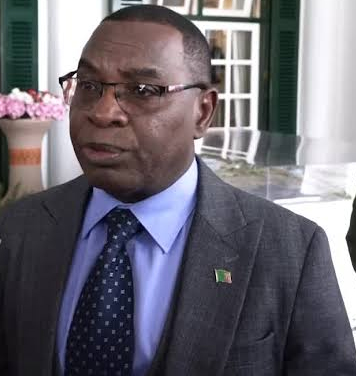
Ray Bande
Senior Reporter
STAKEHOLDERS in the regional trade and logistics sector have called for urgent policy reforms to harmonise customs procedures, trade documentation and border clearance systems across the Southern African Development Community (SADC), saying the move will significantly reduce border delays, lower business costs and accelerate regional economic growth.
The calls emerged during the 20th Shipping and Forwarding Agents Association of Zimbabwe (SFAAZ) Annual General Conference held in Nyanga last week, which brought together more than 130 delegates from Government ministries, regulatory agencies, transport operators, ports, financial institutions and the private sector.
Participants said the adoption of common customs procedures, mutual recognition of trade documents and standardised inspection processes among SADC member states will improve the efficiency of cross-border trade and strengthen regional integration efforts.
Speaking on the sidelines of the two-day conference, Zambia’s Ambassador to Zimbabwe, Brigadier General (Retired) Wilson Tembo, said efficient border management is key to unlocking trade opportunities within the region.
“Reducing border delays, harmonising customs procedures and improving transport corridors are practical steps towards deeper regional integration.
“The diplomatic significance of trade facilitation is that it strengthens the implementation of the SADC Free Trade Area and supports the broader objectives of SADC Vision 2050 as well as the African Continental Free Trade Area (AfCFTA). Efficient borders demonstrate a genuine commitment by member states to the free movement of goods and services,” he said.
Ambassador Tembo noted that different customs and licencing systems across countries are creating unnecessary delays and increasing the cost of doing business.
“Zimbabwe has its own inspection and licencing procedures, while Zambia has its own. If we can establish a harmonised system across SADC, we will improve efficiency and make it easier for businesses to operate across borders because documentation and procedures will be uniform,” he said.
Mozambique’s Deputy Head of Mission to Zimbabwe, Mr Laurindo Lampiao, said regional governments are already working towards stronger cooperation through the Joint Trade and Customs Committee.
“The committee is facilitating the exchange of information on export and import taxes with the aim of easing trade and removing both tariff and non-tariff barriers.
“This is an important initiative that should be implemented with urgency because improved trade directly contributes to stronger economies. Our countries must continue finding practical solutions that enhance trade and improve the ease of doing business across the region,” he said.
SFAAZ chief executive officer, Mr Washington Dube said one of the major impediments to trade remains the duplication of customs and border procedures between neighbouring countries.
“There should be mutual recognition of customs and other clearance procedures by neighbouring countries. For example, if a cargo inspection has already been conducted in Zimbabwe, that inspection should be recognised in Mozambique,” he said.
Mr Dube said the harmonisation of trade documentation is equally important if the region is to achieve seamless movement of goods.
“Currently, importers and exporters are often required to complete different sets of documents in different countries. What we need is a common approach to standards and documentation across SADC member states,” he said.
He said traders should be able to use one set of recognised documents across multiple jurisdictions, reducing delays and administrative costs.
“If a trader obtains an export permit in Zimbabwe, that document should be recognised in other SADC countries. The principle is similar to the recognition of driver’s licences across many African countries. We should apply the same concept to international trade documentation,” said Mr Dube.
He noted that harmonised systems will be particularly beneficial for landlocked countries such as Zimbabwe, which rely heavily on regional transport corridors linking them to ports in Mozambique and South Africa.
“Zimbabwe depends extensively on ports such as Beira and Durban. When you factor in border delays and extended transit times, these costs are ultimately passed on to consumers through higher prices of goods.
“Reducing bureaucracy and creating seamless border processes will shorten transit times, lower transport costs and make goods more affordable for ordinary citizens,” he said.
The conference attracted representatives from more than 32 Government departments and institutions involved in international trade, including the Ministry of Finance, Economic Development and Investment Promotion, Ministry of Foreign Affairs and International Trade, Reserve Bank of Zimbabwe, parastatals and border management agencies.
Delegates said the strong participation by both Government and the private sector reflected a shared commitment to addressing trade bottlenecks and enhancing regional competitiveness.
Held under the theme: ‘Customs, Freight Forwarders and Border Agencies: United in Protecting Society and Facilitating Trade,’ the conference focused on practical measures to improve trade facilitation and strengthen cooperation among border agencies.
The discussions come shortly after the Trilateral Joint Route Management Group and Joint Committee meeting held in Harare last month, where senior Government officials from Zimbabwe, Mozambique and Malawi met to strengthen regional transport cooperation.
Convened under the framework of the three countries’ bilateral road transport agreements, the meeting sought to enhance transport connectivity and facilitate the smooth movement of goods and passengers along key regional corridors.
Stakeholders at the Nyanga conference said such initiatives demonstrate growing momentum towards a more integrated regional trading environment, underpinned by efficient border systems, harmonised regulations and improved transport networks.
Ends