Trust Freddy-Herald Correspondent
THE familiar scene of municipal police, police officers, street kids or drivers taking over intersections to manually direct traffic under perfectly functional traffic signals to clear gridlocks created by impatient motorists could soon be a thing of the past.
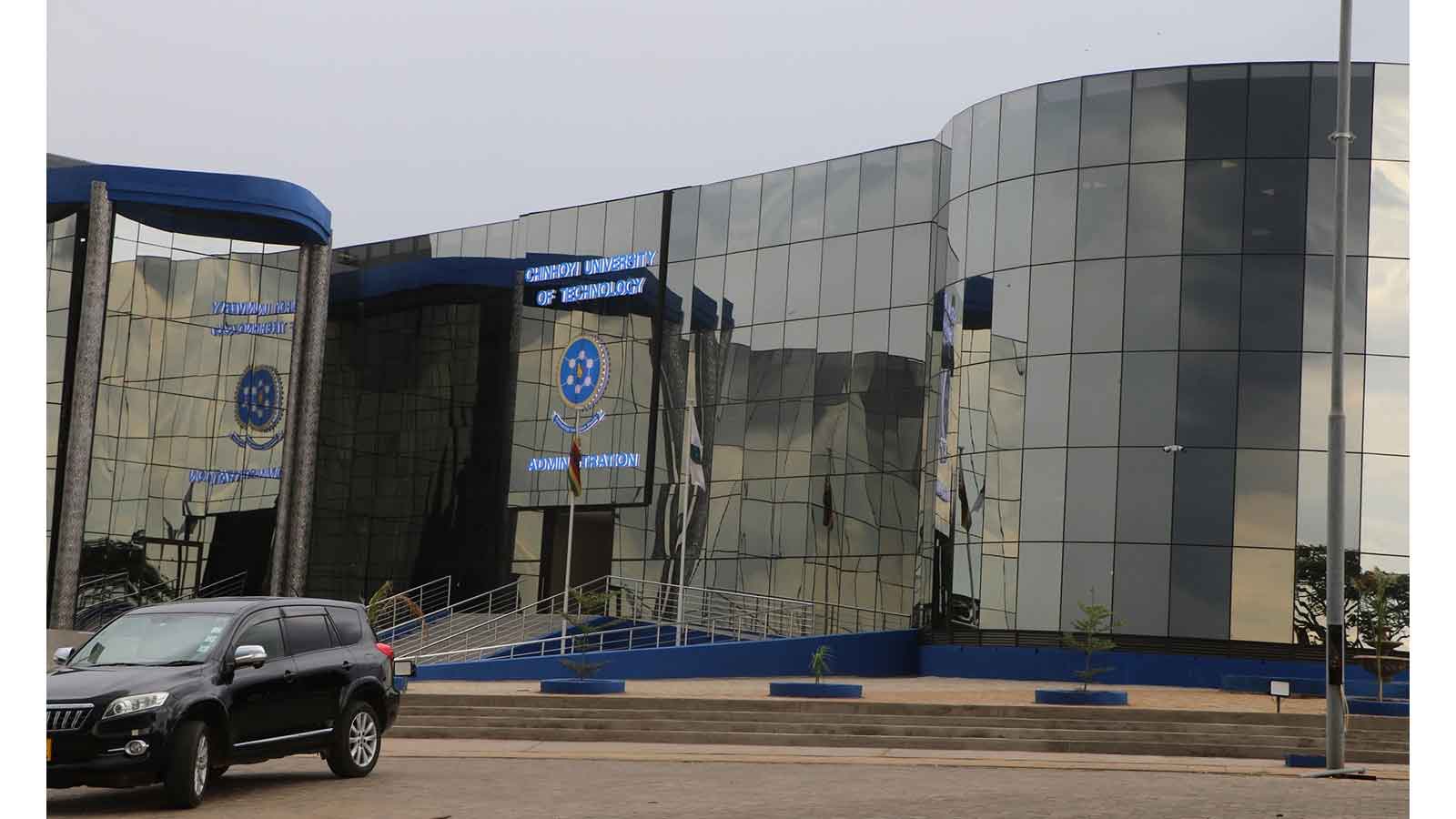
Driven by the national Heritage-Based Education 5.0 policy, which challenges tertiary institutions to translate classroom research into industrial products, students from the Chinhoyi University of Technology (CUT) have engineered an intelligent, locally-built traffic light system to replace outdated countdown timers and automate flow control.
Exhibited as a flagship innovation at the 116th Zimbabwe Agricultural Show, the CUT system directly targets the root causes of urban standstills.
The university has already installed the system in Chinhoyi.
Prototypes are running in Kadoma and Rusape.
The unit exhibited in Harare is the most advanced version yet.
In cities like Harare, conventional traffic lights operate on rigid, fixed schedules regardless of real-time queue lengths.
During morning and evening peak hours, these pre-set cycles fail to clear high-density lanes, creating gridlocks where impatient motorists enter green intersections without room to clear—effectively blocking cross-traffic when the lights signal time-out.
Developed by Computer Engineering students led by their lecturer Eng Humphrey Dera, the CUT system replaces fixed intervals with AI-driven, real-time demand monitoring.
The secret is Artificial Intelligence.
“AI algorithms are used to process the vast amounts of data collected by sensors,” explained Daniel Chinyama, a Computer Engineering student from CUT told this reporter while exhibiting the traffic light.
“These algorithms are capable of learning and adapting over time, which means they can become more efficient at predicting traffic patterns and managing flow.”
Unlike conventional lights, the smart light waits until a congested lane has cleared before changing signals, mimicking human traffic directing without the need for manual intervention.
Old traffic lights don’t care if there are three cars or 300.
They change every 30 or 45 seconds.
CUT’s lights do care.
Strategically placed cameras, infrared and acoustic sensors collect real-time data on vehicle numbers, speed and congestion.
That data goes to a central computer that uses AI to make decisions on the spot.
In practice, it means this: the road with more cars gets a longer green.
The empty road waits.
The innovation has already progressed beyond theoretical designs into practical applications across several towns.
“We have developed one for Rusape and another in Kadoma, and we are the ones who have developed all the traffic lights in Chinhoyi,” Eng Chinyama said. “So we are building them according to the indigenous problems that we have, which is the traffic congestion we have in Zimbabwe, so we have researched and come up with these intelligent traffic lights.”
One of those “indigenous problems”: the green-light rush.
In Zimbabwe, the moment the robot turns green, drivers move — even if cars are still stuck in the middle.
The result is a lock-up.
The CUT system solves that. It holds the change until the intersection clears, just like a traffic officer would.
While the units installed in Kadoma and Rusape serve as initial prototypes, the advanced model exhibited at the Zimbabwe Agricultural Show features refined capabilities.
Equipped with modern surveillance technology—including high-definition cameras and automatic vehicle counting — the system provides a fully automated approach tailored to local road conditions.
For years, fixed timers have failed during peak hours, forcing authorities to deploy manual control even with working robots. With AI-driven signals, that era is over.
As Education 5.0 pushes universities to solve national problems, CUT has delivered a home-grown answer to congestion.
Kadoma Town Clerk Mr Malvern Dondo has confirmed that the traffic lights currently being used in the town were installed by Chinhoyi University of Technology.
“Yes, CUT installed traffic lights in our town. They have been there for a long time, and they are performing well,” Mr Dondo said.
“I, however, cannot comment on the technical side. Our engineer would be better placed to assist.”
Kadoma Director of Works and Engineering Services, Eng Blessing Musasira, said:
“The traffic lights installed by CUT have been performing fairly well. The only challenge we have is with the solar batteries, which struggle to power the lights early in the morning,” he said.
“We have engaged CUT on the matter, and they have indicated that the batteries will be replaced soon.”