

 admin
admin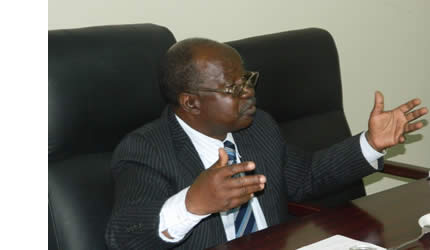
The Zambian Parliamentary Committee on Science and Technology visit to CUT was on a study to learn on how Zimbabwean universities foster their existence and whether enough funding is received from the Government and if not how the universities survive in this harsh economy.
The Zambian delegation was led by Dr Christopher Kalila, with four other Members of Parliament, who showed keen interest in CUT’ s modus operandi.
During a boardroom session, Dr Kalila highlighted said that Zambia was on the same expansion drive in higher education and that the two countries should consider a lot of innovative ideas through science and technological research to create wealth for their economies.
The head of delegation highlighted that their visit to Zimbabwe has focus on all Zimbabwean universities to explore on how these institutions are managed referring mainly to the recruiting and retaining process of PhD holders.
The meeting also majored on how students are funding their education and if the grants facility is still feasible, the benefits received by Government from private institutions and challenges being faced by the Government to fund higher education.
Addressing the delegates, Chinhoyi University of Technology Vice Chancellor Professor David Simbi said one of the major setbacks they faced was retention of local talent against the backdrop of brain drain.
“There is urgent need to avail local scholarships and train our own students here and create conducive environments to retain talent especially in the field of science and technology where we have very few experts and engineers across universities,” he emphasised. Professor Simbi clearly stated that one cannot talk about industrialisation or wealth creation without mentioning science and technology. The teaching of natural sciences, mathematics and technology should be emphasised at secondary level education since some deficiency has been noted within the feeder system.
They also embarked on a guided tour around the university and while at the recently commissioned lab, Dr Mlambo Sibonani revealed that they can now practise DNA and paternal testing and only waiting for the certification from authorities.
The delegation also included members from the Zimbabwe Council for Higher Education.
On the same day, CUT was holding its annual ICT Day, the third time since its commencement. Pro Vice Chancellor Dr Pardon Kuipa opened the ICT Day with a keynote address, urging industry to be active participants in the curriculum development as they advance critical and productive eyesight.
The event was graced by stakeholders in technology including Government officials from the Ministry of ICT represented by the principal director, Mr Cosmas Chigwamba.
Techtools, an authorised Apple products reseller in Zimbabwe, represented by Mr Walter Wanyanya, presented a talk titled “Entreprenuerial Motivational Talk” while Techbrand fulfilled the missing link in the IT curriculum.
National IT Services, a company that deals in networking infrastructure, IT services, security and control, demonstrated the importance of ensuring that practical modules are given precedence as they set a mark from performers and those who merely theorise concepts with Kenneth Kanyenze and Njabulo Mapundu helping to hammer home some points to the students.
At the end of the event some students were rewarded for the best project presentations. The winners were:
Clive Mawoko, Use of Digital Technology in Teaching Native Languages: Case of Shona; Trust Dhliwayo, Development and Adoption of an E-Voting System at CUT; and Collen Gumborinotaya, Genetic Programming in Temporary Data Mining.



 Online Reporter