

 Online Reporter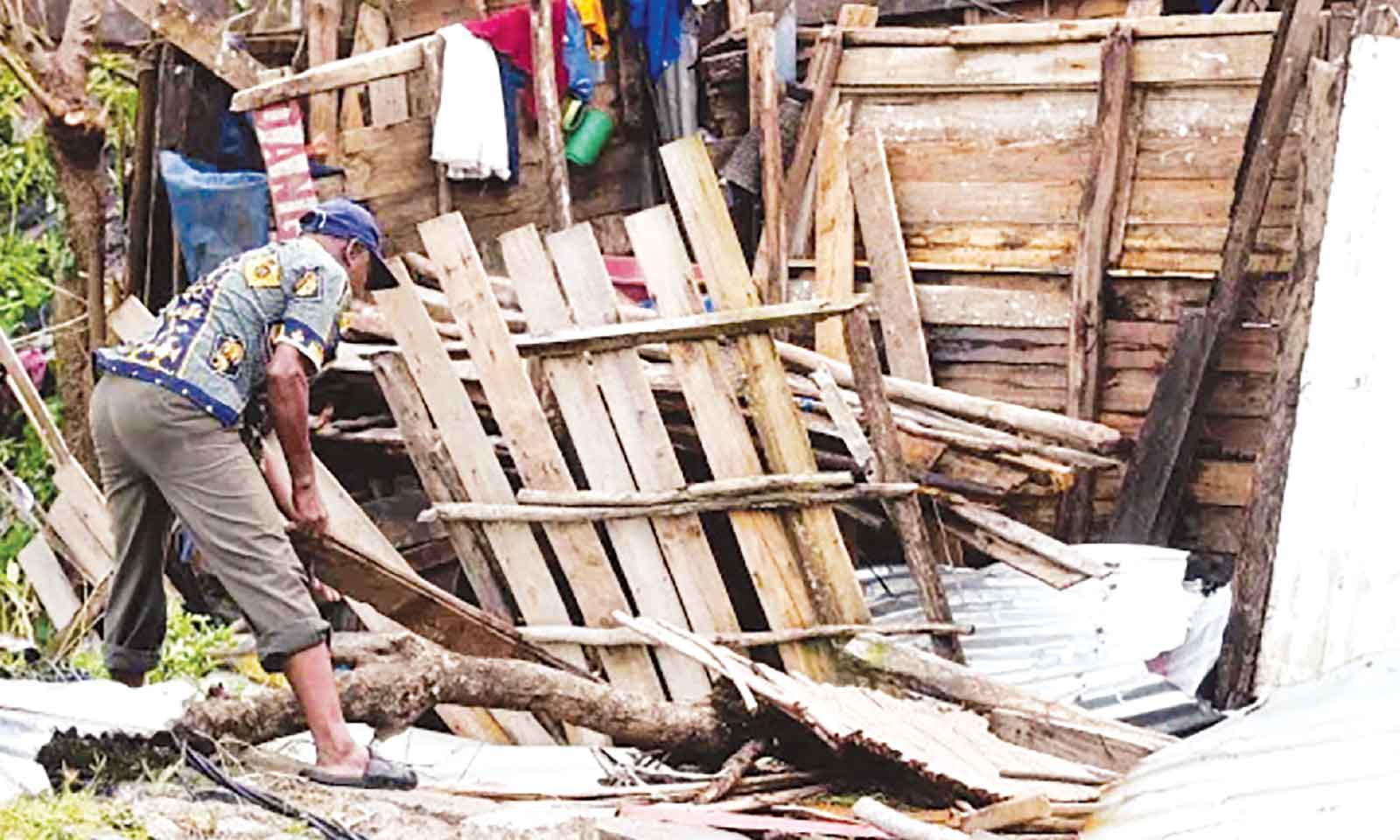
ANTANANARIVO. – The death toll from Cyclone Gezani in Madagascar has risen to 59, with 804 people injured, according to an update released yesterday by the National Office for Risk and Disaster Management.
The office said more than 420 000 people were affected across 25 districts in five regions in eastern and central Madagascar. The cyclone also damaged more than 49 000 houses and destroyed over 25 000 houses.
Authorities are continuing to assess damage and carry out relief operations in the affected areas, while assistance to impacted populations is underway.
The Malagasy government declared a “state of national disaster” on February 11 in response to the widespread devastation caused by Cyclone Gezani.
Gezani barrelled through the country just 10 days after Tropical Cyclone Fytia killed 14 people and displaced over 31 000, according to the United Nations’ humanitarian office.
At its peak, Gezani had sustained winds of about 185km per hour, with gusts rising to nearly 270km per hour – powerful enough to rip metal sheeting from rooftops and uproot large trees.
The cyclone moved westward across the Mozambique Channel, bringing heavy winds and waves of up to 10 metres in the southern end of Mozambique, its weather service said in a statement.
The weather system has since curved back eastward over the channel, and forecasts show it looping toward Madagascar again, with a second landfall expected in southwestern Madagascar yesterday.
Authorities have placed Ampanihy district in southwestern Madagascar on red alert, with Gezani forecast to pass about 100 km off its coast yesterday evening, bringing winds of around 65 km/h but no heavy rainfall, the weather service said.
In Mozambique, the cyclone left at least four people dead. The AFP news agency, citing meteorologists, said the storm lashed Inhambane with winds of up to 215km per hour.
It brought down trees and power lines, leaving more than 13 000 people without power, the national electric company said.
Water supplies were also cut off in several districts of the city of Inhambane.
The city is home to some 100 000 people.
Mozambique has been hit by frequent weather-related disasters that scientists say have been exacerbated by climate change.
The Southern African country is only just recovering from severe flooding that affected more than 700 000 people and damaged more than 170 000 homes in recent weeks, according to the United Nations Office for the Coordination of Humanitarian Affairs. – Xinhua/Reuters



