Online Reporter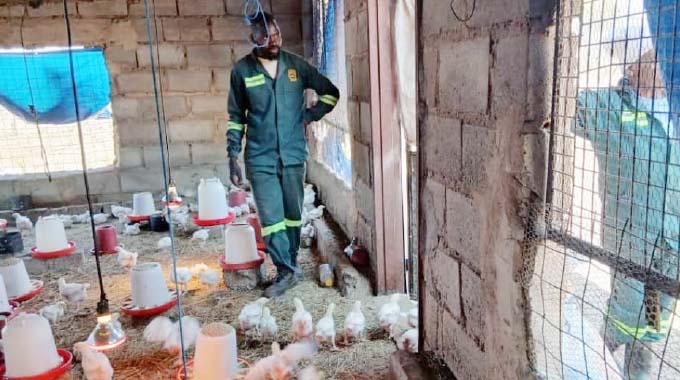
Patrick Chitumba, [email protected]
ZVISHAVANE-based Dadaya High School is spearheading an innovative poultry project that is transforming lives and reinforcing its commitment to the Heritage-Based Education 5.0 model.
The model emphasises innovation, industrialisation, and community empowerment, equipping students with research skills, critical thinking and a spirit of innovation.
The school’s commercial poultry project operates on a significant scale, with 3 000 broilers and 280 layers — meeting the school’s food requirements while generating revenue through sales to the local community.
Beyond financial benefits, the initiative equips learners and local residents with practical survival skills, reshaping livelihoods.
With a rich history dating back to 1934, Dadaya High School is renowned for its academic excellence and its legacy in the fight against oppression, as many students at the time left the school to join the struggle against the white minority regime.
The school’s commitment to Heritage-Based Education 5.0 aligns with Zimbabwe’s Vision 2030, which aims to build a prosperous and empowered upper-middle-income society.
Recently, the Government commissioned a US$210 000 centre pivot irrigation scheme and US$70 685 garden flats for teacher accommodation, further supporting the school’s development initiatives.
The investment underscores the Government’s commitment to enhancing educational infrastructure and empowering institutions like Dadaya High School to drive national development.
Dadaya High School Poultry Project Manager, Mrs Vimbai Chikorodondo, said the project has eased budgetary pressures by reducing the cost of providing nutritious meals to students.
She highlighted that the initiative reflects the broader Education 5.0 philosophy, which encourages schools to move beyond traditional teaching and research towards innovations that solve real-life problems and contribute to industrialisation.
“For now, we have 3 000 broilers and 280 layers to feed students at school, then we sell the surplus to surrounding markets.
“Our vision is to grow and become commercially viable. It has been helpful because it’s cheaper, since we are producing at a lower cost than buying the end product,” said Mrs Chikorodondo.
She said the project is also helping members of the community working at the school to support their families.
One of the employees said: “For me to be able to support my family, it’s because of this poultry project here at Dadaya. I am managing to finance my children’s school fees and welfare. This project enabled me to build my four-roomed house after working here for a year. I also gained skills in poultry production, which I’ve passed on to my family so they can start their own project back home.”