

 admin
admin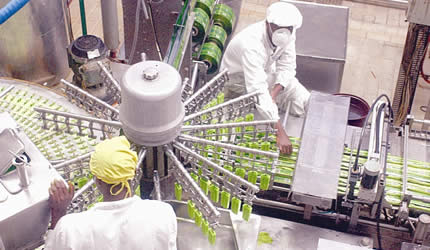
Chipinge.
Dairibord group chief executive Mr Anthony Mandiwanza, speaking after the firm’s annual general meeting yesterday, said the US$10 million earmarked for capital expenditure would come from borrowings and own resources.
“The biggest chunk of our capital investment programme this year is the sterilised milk plant in Chipinge where we are going to completely refurbish the plant because it is important,” he said.
Mr Mandiwanza said the plant, which produces mainly for rural markets, accounts for 18 percent of Dairibord’s volumes. Rehabilitating the Chipinge plant would enable Dairibord to produce sterilised milk at a fairly low cost rate than at present and ensure adequate throughput for the domestic and foreign markets.
“We will be able to produce sterilised milk at a fairly cost-effective rate because when you put in a new plant the cost of doing business comes down, you minimise losses, product spoilage and so on,” he said.
The Chipinge plant will not be mothballed to centralise operations in Harare and Chitungwiza as happened with Bulawayo and Harare to cut costs, but would be retained as it made economic sense to keep it there.
Dairibord has moved Bulawayo and Mutare plants and production operations to Harare and Chitungwiza to reduce their input on the cost structure.
However, distribution and marketing functions were retained there. This was part of extensive rationalisation of operations to cut costs, which also resulted in the downsizing of the firm’s head count by about 200 workers.
It is expected the exercise, set to consume just under US$750 000, will result in savings of US$1 million annually. Also, part of strategic initiatives for 2013 is the heifer importation programme to increase milk supply to Dairibord.
The programme has already brought in 250 beasts expected to increase milk supply by 10 percent this year and enable Dairibord to build volumes.
Last year, Dairibord spent US$6,48 million on plant and equipment. The expenditure went into ice cream plant, condiments (tomato sauce and salads) plant and yoghurt plant, which were commissioned last month.
Due to the impact of the rationalisation programmes Dairibord has undertaken since January this year, there has been little change in volumes and milk intake, but the firm had anticipated this.
Dairibord’s plant and staff rationalisation programmes were completed by April. The twin effect and full benefits of the rationalisation and investment programmes thus far are anticipated in the last half of the year with supply and demand improvement having already been noticed in the financials last month.
Mr Mandiwanza said following the initiatives, Dairibord has undertaken revenues and volumes which would surpass what the dairy processor managed in the first half.
Like many companies in Zimbabwe, Dairibord said it had been affected by erratic power supply, liquidity and low demand while its Malawi operations had suffered from devaluation of the Malawi kwacha, which would be addressed through increasing exports to cover up for hard currency needed for imports.
At the AGM all resolutions, including payment of a US0,45c final dividend were approved by shareholders.


 Online Reporter