Online Reporter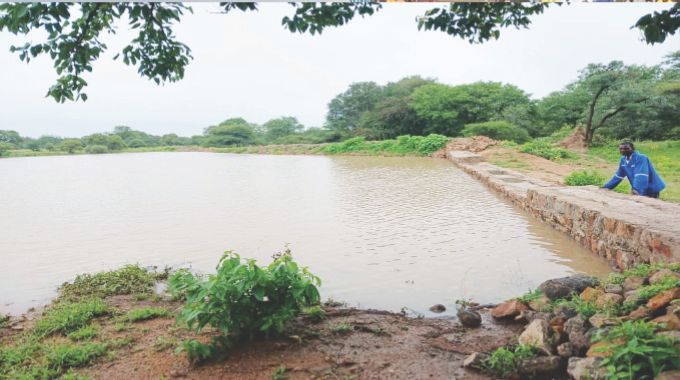
Sukulwenkosi Dube-Matutu
MORE than 160 households and about 3,700 cattle in Ward 11 of Gwanda are benefitting from the rehabilitation of Kgobotwane Dam in Ntalale, a development expected to strengthen livelihoods, improve water security and boost climate resilience in the area.
The community has also benefitted from a solar-powered borehole connected to taps, making access to safe water easier for households, particularly vulnerable groups such as the elderly.
Kgobotwane Dam, which had become heavily silted over the years, was rehabilitated under a project spearheaded by Brethren in Christ Compassionate and Development Services through the Locally Led Indigenous Nature-based Solutions for Climate Change Adaptation in Zimbabwe (LINCZ) project.
The LINCZ initiative, funded by Mennonite Central Committee and the Government of Canada, seeks to address climate change impacts through community-based environmental interventions.
Before silting, the dam had been a major water source for five surrounding villages.

Project chairperson, Ms Sethile Moyo, said the rehabilitation would unlock long-awaited development opportunities.
“We are happy and relieved that our dam has been rehabilitated. This will usher in significant development in our community. We now have water for our livestock, which means that their condition will improve as they won’t be walking long distances as before,” she said.
“We are now seeing wild animals coming to drink at the dam, which is an opportunity in the tourism sector.”
Ms Hangalelwi Ncube said before rehabilitation, the dam could only retain water for two months, limiting livelihood projects and placing livestock under stress.
“With this water, we have managed to embark on horticulture production, which means that we will be able to sustain our families. We will also have access to a balanced diet,” she said.
Mr Enock Moyo said the solar-powered borehole had greatly eased water collection for villagers.
In remarks delivered on her behalf during the commissioning ceremony, Gwanda District Development Co-ordinator Ms Nomathemba Ndlovu, represented by principal director in her office, Ms Sithabile Hlatshwayo, said the project supports national efforts to build climate resilience and biodiversity conservation.
She said reliable water infrastructure is central to rural development, especially in semi-arid provinces such as Matabeleland South.
“Government continues to prioritise rural infrastructure development as a key pillar of national development under the National Development Strategy. This framework emphasises food security, climate resilience, sustainable natural resource management and improved livelihoods for rural communities,” she said.
Ms Ndlovu added that climate change adaptation remains a key cross-cutting development priority under national policy because of its impact on agriculture, water resources, infrastructure and livelihoods.
She urged communities to protect catchment areas, maintain gully reclamation structures and manage gardens responsibly so that the investments continue benefitting future generations.
Brethren in Christ Compassionate and Development Services programme manager Ndabenhle Ncube said improving water access remains central to strengthening adaptation in Gwanda District.
“As part of our initiatives, we also prioritise the conservation of water bodies, including dams, to promote sustainable water management and ecosystem health,” he said.
The project also aligns with Government policy on renewable energy by integrating solar-powered water systems into rural infrastructure, reducing dependence on conventional energy sources while supporting sustainable community development
—@DubeMatutu