Online Reporter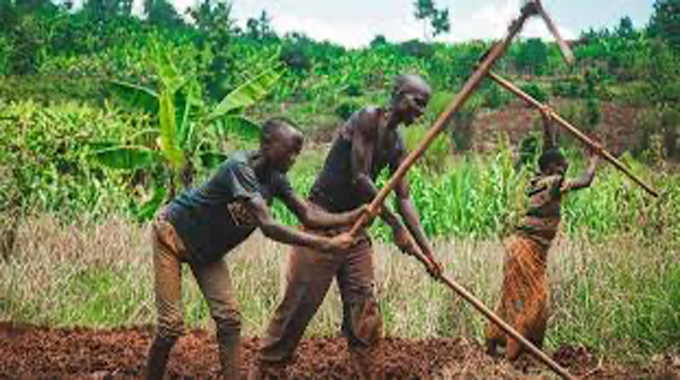
Miriam Tose Majome, [email protected]
Calls to amend the Communal Lands Act to allow private ownership are growing louder. Pundits for selling argue that title deeds would protect villagers from arbitrary dispossession.
But does privatising communal land secure land tenure or does it actually destroy it?
In 2022, the Chilonga community in Chiredzi lost a High Court bid to challenge sections of the Act, contending it was racist as it regards Africans as too unsophisticated to own land in their own rights that it has to be held in trust for them by the President.
They had sought recognition of real rights to their ancestral land.
Some of their fears were founded as they feared dispossession after the Government signalled plans to cede part of it to a private agricultural investor. They wanted to be accorded rights to own their lands and sell them if they wanted to.
Similar pressures loom across the country as mining concessions spread into communal areas, and villagers and investors want to be allowed to buy or sell and cash in because they will have real rights on the land.
Villagers in Uzumba, Hwange, Binga and Marange have faced displacements as a result of various development initiatives. Politicians have also created expectations as they often campaign promising villagers title deeds.
Colonial shadows, contemporary struggles
The Chilonga case touched a raw nerve and opened a can of worms.
The Communal Lands Act descends from colonial laws like the Land Apportionment Act of 1930 and Tribal Trust Lands Act of 1965, which confined black Zimbabweans to marginal areas while reserving the best land for the white minority.
At independence in 1980, communal land remained vested in the President with ownership remaining communal, not private. The principle has survived despite being rooted in a discriminatory past.
But when properly looked at, it is not the worst thing to happen to land rights as has been touted by pundits who support private communal land ownership.
Zimbabwe Lawyers for Human Rights noted the paradox that urban dwellers can own titled property in urban areas but rural dwellers cannot have individual title to their ancestral lands. This observation exposes seeming unfairness and injustice but privatising communal lands raises problems far worse than those it seeks to solve.
Private ownership of communal land appears a safeguard against dispossession and it is if no one is allowed to sell it. However, limitations on title defeat the very essence of private ownership and real rights.
Communal land title holders would want and, indeed, it would be their right to sell their land if they want to.
But the question that would arise would be: Whose land is it really anyway?
Who has the right to sell ancestral land given that it was just inherited and not bought? Does any single individual have the right to decide for the entire clan, and indeed, future generations and dispossess them of their ancestral land?
The reason the land is still there is because of the generations of ancestors who kept it for them. Individual decisions to sell land fracture families, ignite endless disputes, and open the door to sales that leave future generations landless.
In whose name would the title deeds be? Who is more deserving than other family members? Would women and orphans also get title to land and enjoy the same rights? More interestingly, if women did get title, would they be able to sell it or better yet marry that land away to another family?
These questions ignite fires that title deeds cannot quench.
The land debate cannot be reduced to politics or legal technicalities. Communal lands carry more than soil. They hold rivers, forests, hills, and minerals, many of them strategic for national purposes.
Mining concessions illustrate this well. Once land is privatised, concessions become easier to transfer, and entire communities risk being uprooted by deals struck far above their heads. The sobhuku deals already common in rural areas show how quickly land security unravels once transactions are individualised and become opaque.
Homelessness: The hidden threat
More critically, communal land is Zimbabwe’s ultimate social safety net.
For millions of urban workers, who retire without pensions or savings, rural homes remain the fall-back plan.
This is what has kept the scourge of homelessness in check even despite the decades of economic challenges as the majority of breadwinners lost their jobs due to retrenchments and company closures.
Events in major cities and towns across the world in developed countries show what happens without such a cushion.
Were it not for those rural homes, Zimbabwean streets and bridges would long have been overflowing with homeless people. If communal land is privatised, many will sell under pressure of poverty, or for a quick buck, as many are doing now, but face real and possible destitution later.
Without a rural home to retreat to, urban homelessness will explode. Already, the number of street dwellers and pauper burials is rising in Harare and Bulawayo. To tamper with communal land ownership is to dismantle the last line of defence against absolute poverty.
The solution is not private deeds in communal areas. It is installing stronger land security safeguards that protect possession and user rights more transparently. There should be legal safeguards from arbitrary eviction, particularly in areas under mining and agricultural concession pressures.
Community Share Ownership Schemes, if cleansed of corruption and opacity, remain a promising tool. Strengthened traditional and local administration, guided by constitutional principles of equality, can ensure communal benefits without plunging families into endless litigation.
The High Court ruling against the Chilonga villagers was painful in the moment but wise for the future. It reaffirmed that communal land cannot be fragmented into private estates without tearing families and communities apart.
The judgment preserved a principle that has, for all its colonial baggage, kept millions anchored to a place they can always call home. Even if they abandon it, they know it is there when all else fails. We cannot sell the lands of our fathers without selling away the security of our children.
Miriam Tose Majome is a lawyer and a Commissioner with the Zimbabwe Media Commission. She writes in her personal capacity and can be contacted on [email protected]


 Bongani Ndlovu