Online Reporter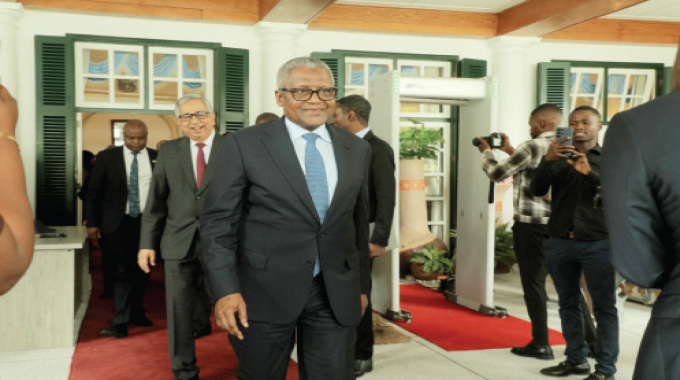
Richard Muponde, Zimpapers Politics Hub
THE visit by Nigerian billionaire Aliko Dangote is far more than a routine business engagement; it is a resounding vote of confidence in President Mnangagwa’s leadership and the economic vision driving the Second Republic.
When one reflects on Zimbabwe’s trajectory since 2017 and juxtaposes it with Mr Dangote’s decision to return now, the symbolism is striking. Here is one of Africa’s foremost industrial investors preparing to commit up to US$1 billion in cement, coal mining and power-generation ventures — after two earlier visits (in 2015 and 2018) that failed to yield concrete deals.
A look back
Mr Dangote’s previous visits were met with optimism but ultimately stalled. Reports point to bureaucratic hurdles, unresolved negotiations over mining licences, investment security concerns and fiscal incentives as key stumbling blocks.
His willingness to return now, at the invitation of President Mnangagwa, signals a shift in Zimbabwe’s investment climate and a clear message from Harare: the country is ready for world-class industrial partnerships.
From isolation to ‘open for business’
Since President Mnangagwa assumed office in November 2017, Zimbabwe has pivoted from economic isolation towards re-engagement. The philosophy “Zimbabwe is Open for Business” is more than a slogan — it encapsulates the nation’s aspiration to achieve upper middle-income status by 2030.
Early in 2018, President Mnangagwa assured global business leaders in Davos that foreign investment was safe and Zimbabwe was no longer an “isolated island.” The official Government portal echoes this optimism:
“The New Dawn, under the leadership of His Excellency the President, E.D. Mnangagwa, has brought renewed confidence, hope and energised our people to work for sustainable development.”
Beyond rhetoric, macroeconomic indicators show traction. The IMF and World Bank project Zimbabwe’s economy to rebound to six percent growth in 2025, up from 1.7 percent in 2024 — driven by strong agriculture, record gold prices and remittance inflows. The IMF has acknowledged reforms such as tighter monetary policy and halting quasi-fiscal RBZ operations, which have stabilised inflation and the exchange rate.
These gains align with the Second Republic’s doctrine: an inward-looking, self-reliant development agenda underpinned by Vision 2030 and the rallying call “Nyika inovakwa nevene vayo / Ilizwe lakhiwa ngabanikazi balo” (a country is built by its own people).
Strategic investment, continental signal
Mr Dangote’s return is both politically and economically significant. Politically, it underscores President Mnangagwa’s personal role in attracting marquee investors. Economically, the proposed investment — reportedly between US$800 million and US$1 billion across cement production, coal mining and power generation — would rank among Zimbabwe’s largest private industrial commitments in decades.
Given Mr Dangote’s continental footprint, his choice of Zimbabwe sends a powerful message to global investors: the country is back in the industrial game. History shows how a single anchor investment can unlock further capital flows and reshape perceptions. Ethiopia’s experience with Dangote Cement is instructive — reducing construction costs, creating supply chains and proving Africa’s capacity for large-scale manufacturing.
Policy validation and the road ahead
This visit validates Zimbabwe’s economic reforms and signals that past obstacles are being addressed. It suggests Government readiness to streamline licensing, secure investor protections and co-ordinate at state level. It also demonstrates that, even under sanctions, Zimbabwe can attract Africa’s most accomplished industrialists.
However, success hinges on regulatory clarity, seamless permit processes, secure land and mining rights and sustained macroeconomic discipline. The ongoing Structured Dialogue Platform with multilateral creditors remains critical to reinforcing reform credibility.
Mr Dangote’s arrival on a US$1 billion investment mission is a potent symbol of Zimbabwe’s economic revival under President Mnangagwa’s stewardship. If executed, the project will deepen Zimbabwe’s manufacturing and mining base, create jobs, expand exports and elevate the country’s global image as an emerging powerhouse.
Credit must go to President Mnangagwa for repositioning Zimbabwe’s narrative and maintaining policy consistency that attracts high-profile investors. In the broader SADC context, Dangote’s presence could spur competitive investment flows, strengthen industrial linkages and help the region climb the value chain.
Zimbabwe may well be back on the world map — not as a fading economy, but as a resurgent hub of opportunity.