Online Reporter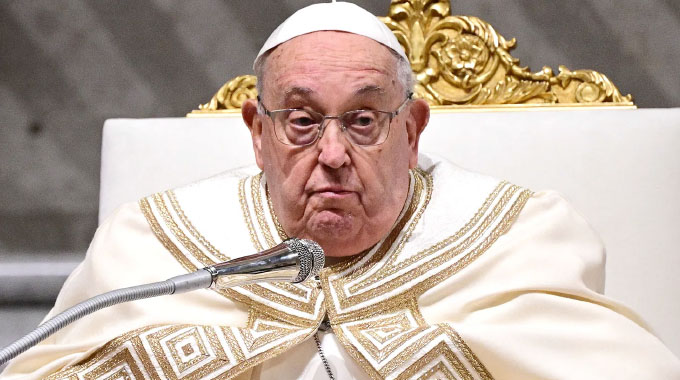
THE conclave to elect the next pope will begin on May 7, the Vatican announced on Monday.
The date was selected during a closed-door meeting of the College of Cardinals and announced at a media briefing at the Vatican.
The death of Pope Francis sets the stage for a battle over the future of the Catholic Church. The cardinals who will gather to elect the next pope must decide whether to continue the late pontiff’s vision of reforming the church to make it more open to the modern world — or to initiate a course correction.
While there are a number of potential front-runners, there is no clear favourite and the race is generally considered to be wide open. The unpredictability of this conclave, as the gathering to elect the pope is known, adds a level of intrigue and suspense to the centuries-old process of picking the successor to St. Peter.
The cardinals are gathering in general congregations, as the meetings are known, to make preparations for the election of a new pontiff.
The meetings are crucial in determining the next pope because they involve frank discussions about the current and future needs of the Catholic Church.
The cardinals met earlier on Monday for the first time since the funeral and burial of Pope Francis on April 26.
More than 180 cardinals attended the morning meeting, said Holy See Press spokesman Matteo Bruni.
The general congregation meetings are open to all cardinals, but not all are eligible to vote for a new pope.
To participate in the conclave, a cardinal must be under the age of 80. There are 135 eligible cardinal electors, 80 percent of whom were elevated by Pope Francis.
Although the dean of the College of Cardinals, Cardinal Giovanni Battista Re, has advised cardinals against speaking to the press, several cardinals have not been shy in expressing their wishes on a future pope.
German Cardinal Reinhard Marx, 71, told the Italian daily Corriere della Sera on April 27, that “everything is open” in the coming conclave and that the next pope will not be predetermined by country, language or culture.
“The essential thing is that he be a person who is courageous, free, credible and deeply rooted in the Gospel,” said Marx. English Cardinal Vincent Nichols, 79, told the BBC that “a conclave is there to choose a successor of St Peter, not solely a successor of Pope Francis.”
“Maybe it’s a successor of Benedict or a successor of St John Paul II,” he added. “Forwards and backwards is not a great analogy. Deeper and more outward-going are better directions to take.”
Retired Cardinal Walter Kasper, 92, told the Italian newspaper La Repubblica that the outpouring of support for Francis, as expressed by the crowds and applause for the late pontiff during his funeral Mass.
“The people of God have already voted at the funerals and called for continuity with Francis,” Kasper said. — BBC