Online Reporter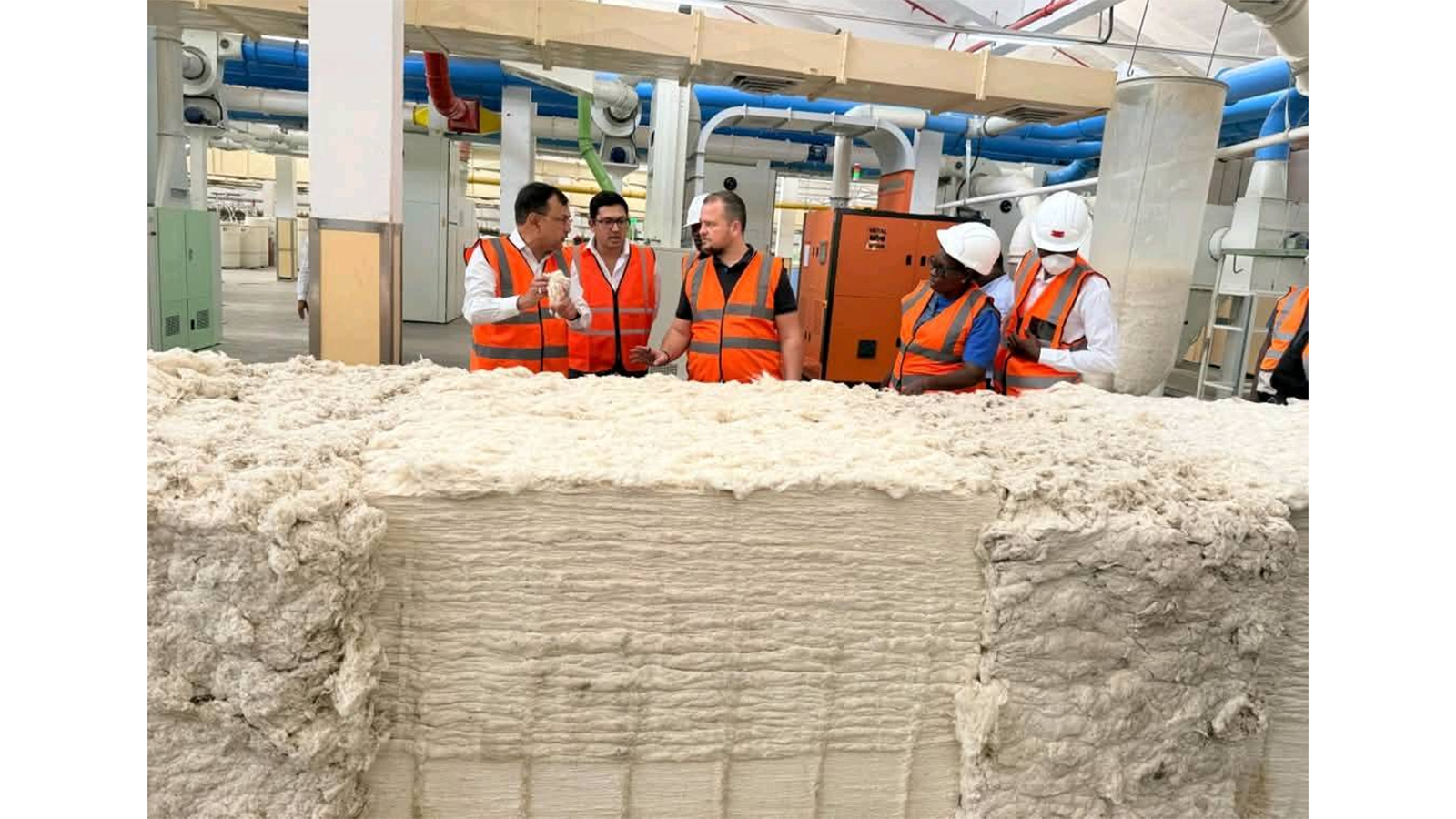
Conrad Mupesa-Mashonaland West Bureau
THE revival and reopening of Kadoma’s textile plant, David Whitehead, has created over 400 jobs, particularly for the youth in the city.
After overcoming a number of legal delaying tactics by a small shareholder in the defunct David Whitehead, Indian investor Agri-Value-Chain (AVCZ) is now moving fast to build a modern cotton textile business opening both the Kadoma and Chegutu plants, with production set to rise quickly in Chegutu.
AVC has so far been active in becoming a major supplier of cooking oils, processing sunflower, soybean, and cotton seed, has built up a large margarine business and has added soya chunks.
Mr Rodreck Musiyiwa, managing director of David Whitehead Textiles, stated that the two plants are currently producing at least 600 tonnes of yarn and over 2,5 million meters of fabric per month.
The company aims to produce more than 10 million meters of fabric and five thousand tonnes of cotton lint annually, with plans to employ more than one thousand people when fully operational.
“We are close to meeting local market demands, averaging around 400 tonnes of yarn and over two million meters of fabric per month. Currently, we have over 400 employees, but that number is set to increase as we complete the revitalisation exercise.
“We appreciate Government support, especially in promoting local investments and value addition. Our major focus is to supply raw materials to local clothing companies and create jobs,” Mr Musiyiwa said.
The injection of US$20 million by AVCZ into David Whitehead Textiles revitalised not only Kadoma and Chegutu but also Bulawayo, home to the stock exchange-listed Edgars Zimbabwe.
The establishment of David Whitehead is completing the cotton value chain, transforming lint into yarn and then into fabric.
According to Mr Musiyiwa, AVCZ is committed to producing high-quality textiles, with operations focused on converting lint into yarn and then a wide range of textile products.
With state-of-the-art machinery imported from India and China, the plant now produces an extensive product line, including 100 percent cotton fabrics, versatile cotton-polyester blends, and durable 100 percent polyester fabrics.
The manufactured cloth and materials are being used by companies like Edgars for clothing production, as well as for uniforms for the Zimbabwean armed forces.
The plant has generated excitement among employees, many of whom expressed gratitude to the Second Republic for creating job opportunities through the “Zimbabwe is Open for Business” initiative.
Mr Robert Kuyerukana, a general worker, stated that he has been able to provide a decent living for his wife and children. He previously worked for the company for six years from 2003 until being retrenched.
Like thousands of other workers, he struggled to make ends meet after the factory’s closure, which also impacted the town’s revenue collection.
“I feel enthusiastic and overjoyed. This is the beginning of a new era, as this large textile plant has been lying idle. The revival means a lot to me and my colleagues,” he said.
Another employee, MMsYollanda Moyo (24), noted that the plant has drawn many youths off the streets, where they had been vulnerable to drug and substance abuse.
Tariro, one of the youths who were initially sceptical about the company’s future, has found renewed hope during her four-month stint at the textile plant.
Mr Thomas Mangozho also expressed optimism about a more promising future.
As production increases and expansion plans for the Kadoma and Chegutu plants progress, hope is renewed for hundreds of workers, including those employed by Edgars in Bulawayo and thousands of its workers across the country.



 Bongani Ndlovu