Online Reporter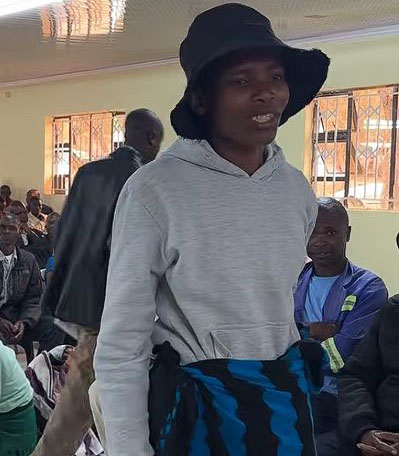
Tendai Gukutikwa
Weekender Reporter
A MUTASA family used clothes and towels belonging to a living child to bury a deceased infant without the mother’s knowledge or consent.
Chief Mutasa condemned the development, describing the practice as contrary to African cultural values.
The matter came before the traditional court after Prettygirl Tore accused members of her former husband’s family of taking her child’s clothing and blankets, and using them during the burial of a baby who died shortly after birth.
Addressing the parties, Chief Mutasa expressed concern over the family’s actions and urged them to seek spiritual guidance.
“What was done by the Mandava family is unAfrican. You should consult faith healers so that we can establish what happened and whether you are spiritually clean,” he said.
The dispute dates back to 2024 when a newborn child belonging to Paul Mandava, who is the uncle of Tore’s former husband, died shortly after birth.
Mandava admitted taking two towels belonging to Tore’s child after failing to find suitable clothing and blankets for the deceased infant.
Tore said she was away attending her aunt’s funeral when the burial took place and only learnt later that her child’s belongings had been used.
“I was attending my aunt’s funeral when I was informed that the baby had died. When I returned, I discovered that my husband’s uncle had taken my child’s clothes and blankets and used them to bury the deceased baby,” she said.
Tore said she initially heard reports of the incident through family discussions.
“At first, it was something being discussed between my husband and my co-wife. He told me he was afraid to tell me what had happened. Eventually, my mother-in-law revealed the truth,” she said.
She said after her brothers confronted her mother-in-law over the matter, relations between her and the family deteriorated.
“When my brothers questioned my mother-in-law about it over the phone, the family’s attitude towards me changed. From that point, they no longer liked me,” she said.
Tore said her greatest concern was that the belongings had been taken from a child who was still alive without her permission.
“They should never have taken my child’s clothes and used them to bury a dead child without consulting me. I do not know what impact this may have on my child. There are cultural practices that should be respected when dealing with the belongings of both the living and the dead,” she said.
She further alleged that several months later, the same uncles ordered her to leave the family homestead while her husband was away at work.
In response, Paul Mandava said he had not intended to violate any cultural norms, but had acted out of desperation following the infant’s death.
“When the child died, I could not find the baby’s clothes and blankets. She was away and my wife was in hospital. I did not know what to do. In the end, I took two towels and used them because I was under pressure,” he said.
Mandava said villagers preparing for the burial were urging him to proceed quickly, warning that delays could attract sanctions from local leadership.
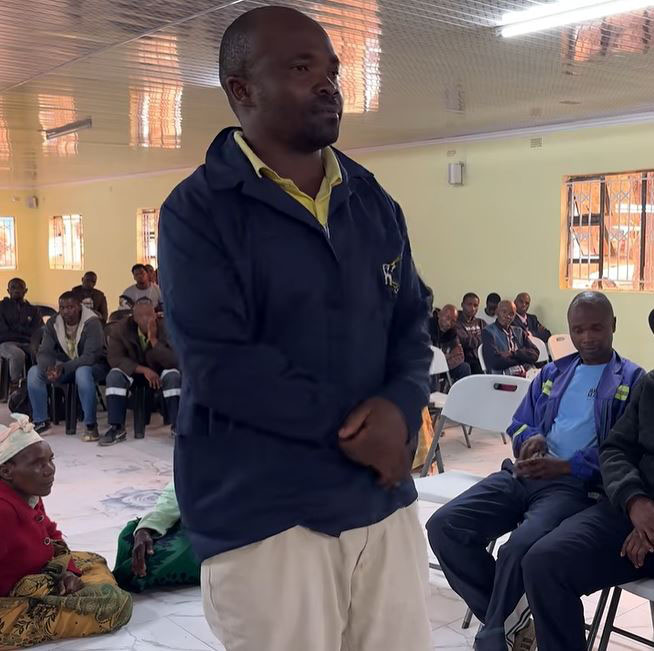
“The people digging the grave were pressuring me, saying I was taking too long and risked being fined by the village head if the burial was delayed. The pressure confused me and I made that decision,” he said.
Another family member, Mazorora Mandava, defended the family’s actions, arguing that a similar situation had occurred previously without negative consequences.
“We did not view it as a problem because, years ago, when my brother lost a child, we also used clothes belonging to my own child for the burial. That child has since grown up and is actually the smartest child in the family. We were therefore surprised that this matter escalated to this level,” he said.
Mazorora further claimed that the clothes in question had originally been gifted to Tore by his daughter and that the family had offered to replace them.
“We asked her if we could buy replacements, but the matter did not end there,” he said.
He also rejected allegations that Tore was later forced to leave the homestead because of the burial dispute.
“She was not chased away because of the clothes. Her husband was raised at this homestead because he is our sister’s child, although we had advised him to establish his own home. She was asked to leave because her husband had told us he no longer loved her and had stopped coming home,” he said.
However, Chief Mutasa maintained that the family’s actions raised serious cultural concerns and warranted further spiritual scrutiny.
“You should consult faith healers so that we can establish what happened and whether you are spiritually clean. What you did was unAfrican. You cannot come before this court and defend such actions,” he said.