admin
admin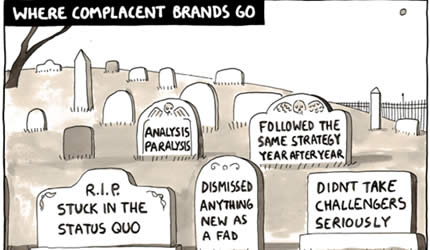
for inspection.
I believe their inability to inspect the voters’ roll boils down to complacency.
This is culture which has developed in our country which has permeated almost every facet including business.
Complacency is that state of affairs which drives you to constantly search for new and intricate ways of explaining defeat.
I have worked with people that always blamed their problems on co-workers in the other department and never themselves.
Rarely does a complacent person notice that they are the main cause of the problem. Some of the noticeable signs of complacency are:
- When you start feeling content with the status quo
- When you simply choose to sit back and cease to look for new opportunities
- When you work at a constant speed even when the circumstances that you find yourselves in call for immediate attention or speed
- When people regularly blame others for problems instead of taking responsibility
- When meetings on key issues end with no decisions about what must happen immediately
- When critical issues are delegated without the involvement of key people
- When people say, “We must act now”, but then fail to act
Complacency in itself is highly contagious. Many people that have joined organisations with high levels of complacency have been known to follow suit, either out of frustration or moving along with the ship.
I recall reading an article on American politics about how Democrats held one Senate seat for 47 years to the extent that they started believing that it is theirs for ever only to lose it in 2010. Complacency has a way of spreading and reducing future successes significantly. Luckily, there are ways of dealing with it depending on the nature of your business.
Like any change programme, look out for complacency. The best bet is change in people’s habits and approaches.
It may be taking too long for one customer to be served. This could be the first stage of complacency and sometimes it could be unnoticeable.
Sometimes little things are taken for granted. Do not let these grow to unmanageable levels.
Studies on complacency point out that it normally occurs after a period of success.
There are times when companies win awards but never take time to celebrate those achievements — take time off to celebrate achievements.
After you do, ensure that people are reminded of the smell of success. This is the time to work people’s emotions to get them to focus on the next achievement.
Also try to set new targets for the team ensuring that you inject more energy and vigour into it. Help people to identify a clear vision and purpose.
As a leader, you must not let yourself become satisfied with average performance. At any point in time, never give less than your best effort.
I have seen many leaders that lose their drive towards the end of their career or just before a major transition in life.
In addition to ending your career or making a major transition in life, complacency can eliminate drive any time you start to become comfortable.
Once you have been in a position for a year or two, you can easily become comfortable and feel like you are in control.
It is okay to be comfortable as long as the comfort does not lead to complacency and a lack of drive.
Imagine if complacency is to creep into the aviation industry. For instance, the maintenance crew that checks aircraft hydraulic oil tend to do the same thing over and over and it is easy to get complacent but they do their job diligently because if they don’t we will have a major disaster on our hands.
It is easy to become satisfied, secure and content and unaware of the potential danger it could bring.
Like the famous American playwright Eugene O’ Neill once said: “A man’s work is in danger of deteriorating when he thinks he has found the one best formula for doing it . . .”
There is no greater policy than following the norm, the standard operating procedures because millions of lives may depend on it.
Till next week, may God richly bless you.
Shelter Chieza is an adviser in management issues. She can be contacted at [email protected]



 Online Reporter