Online Reporter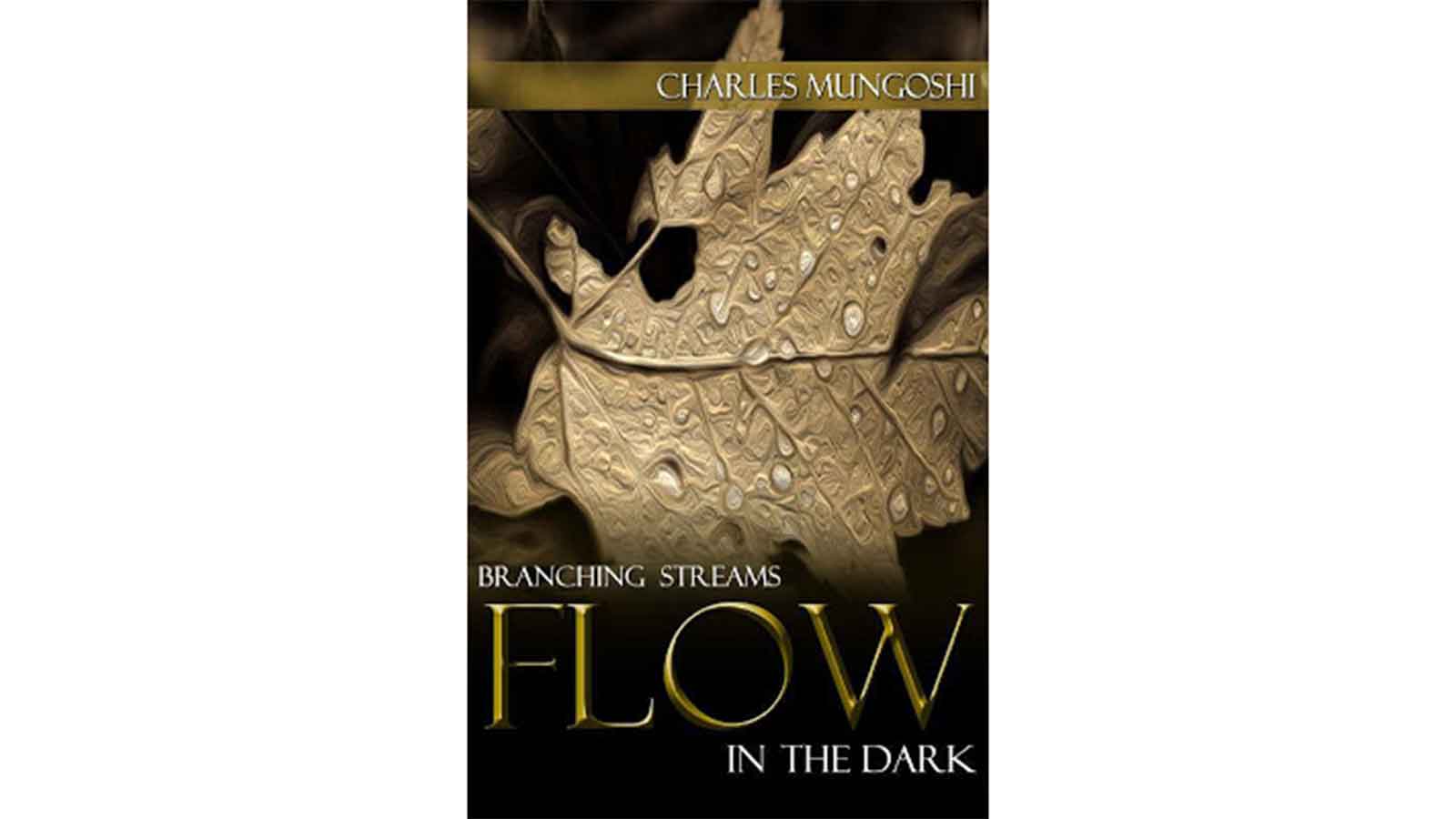
Elliot Ziwira-At the Bookstore
“COWARDS die many times before their deaths; the valiant never taste of death but once… for death, a necessary end, will come when it will come,” so reasons William Shakespeare in “Julius Caesar”.
Marcus Aurelius concurs: “It is not death that a man should fear, but he should fear never beginning to live.” This is so because, as Miguel de Unamuno insists, “a man does not die of love or his liver or even old age; he dies of being a man.”
Death is the stubborn shadow that trails life. It is neither invited nor postponed at whim. Inasmuch as man has no say in his birth and station, he cannot also choose not to die, “for it is possible to provide security against other ills, but as far as death is concerned, we men live in a city without walls,” as Epicurus muses.
Yet, in our part of the world, death rarely comes unaccompanied. Yes, in Africa, it is seldom allowed to be natural. It is either sent, brewed, or whispered into being by an unseen tongue.
In Africa, one cannot just die!
It is either poison, assassination or witchcraft. An invisible hand must always be extended to snatch that which is given once; life. Even where the cause is scribbled in hospital files and printed on death certificates, suspicion hovers like a vulture over a seemingly deserted homestead.
However, this reflex is neither accidental nor entirely primitive. It is born of a cosmology that recognises the material and the spiritual as intertwined. Nevertheless, when superstition eclipses reason and fear silences knowledge, tragedy multiplies.
A perusal through African literature in English and indigenous languages reveals how diseases such as HIV/Aids once unsettled not only the body, but the moral architecture of society.
When the pandemic tightened its grip in the late 20th and early 21st centuries, it did not only decimate families but it exposed the fissures in humanity’s understanding of sex, religion and mortality.
Today, the discourse around HIV has evolved. With antiretroviral therapy, viral suppression campaigns and the Undetectable = Untransmittable (U=U) message, HIV is no longer an automatic death sentence. It is a manageable chronic condition.
Yet stigma lingers like a stubborn ghost. In some communities, a positive diagnosis is still whispered about as divine punishment, ancestral wrath or witchcraft.
Religion, considered balm, sometimes becomes a blade, with pulpits preaching healing without medicine and some prophets promising deliverance without discipline. In the end, faith and science duel, when they should, in truth, dialogue.
It is against this backdrop that the reading of Francis Sifiso Nyathi’s timeless novel, “The Other Presence” (2008) becomes even more urgent in today’s world.
Though written at the height of HIV/Aids hysteria, its message reverberates in our era of pandemics, misinformation and digital superstition.
Nyathi’s narrative interrogates the bane of superstition: that impulse to seek a human culprit for a biological phenomenon. Witchcraft, though universal in concept, assumes a suffocating presence in societies where the supernatural is allowed to trump the empirical.
The advent of HIV/Aids brought its shiploads of emaciated bodies, abattoirs of bleeding hearts, fragmented families and acrimonious distrust.
Sexual intercourse, as the primary mode of transmission, complicates matters in cultures where morality is communal property. Sexual immorality, real or perceived, dragged entire families into disrepute.
Thus, instead of confronting behavioural truths or embracing medical counsel, blame was outsourced to the invisible.
Nyathi’s tale mirrors this tragic choreography. Like Charles Mungoshi’s “Branching Streams Flow in the Dark”, which also grapples with alienation and stigma, “The Other Presence” presents a community caught between knowledge and denial.
At its centre stands Ma Simanga, a 55-year-old widow whose husband and five children die within three years. The last to fall is her son Akapelwa, her lifeline and only surviving offspring. The pattern of illness is unmistakable: weight loss, strange rashes, persistent coughing, repeated hospital visits, then death.
The narrator observes: “All of Ma Simanga’s children underwent a similar process before they bid farewell to this earth. . . Obviously, in many people’s eyes, this was a strange affliction, even stranger when it attacked the same family in the same manner.”
Strange, yes, but only to those who refuse to name the virus.
The community is astounded. The husband’s death in an accident, followed by the rapid succession of the sons’ deaths, demands explanation. In a society allergic to randomness, coincidence becomes suspicious.
Thus, the honed blade of accusation finds elder Sinvula, the brother-in-law, at the receiving end.
At the funeral wake, the air is thick with insinuation. A vulture circles, an owl perches, and two black cats are seen mating, which is considered an abomination. The symbolism is weaponised as the supernatural descends beyond metaphor to become evidence.
Here, Nyathi is not mocking belief but is exposing its misuse. Curiously, the problem is not spirituality per se, but its manipulation as a shield against accountability and as a substitute for knowledge.
Sinvula and Thomas, Chuma’s son who has lived in the United States, understand the medical cause — Aids. They know what the hospital files say. They have heard the doctors’ words, but knowledge isolates them, hence they become traitors to tradition and collaborators with foreign science.
Sinvula’s four-hour walk to the hospital to consult Doctor Castro, an expatriate Cuban physician, is symbolic. It is a pilgrimage from myth to medicine. His history with Castro, forged during political exile, jolts the reader to the fact that solidarity across borders once helped birth African independence.
Africans, then, should embrace solidarity in the fight against disease.
At the burial, Doctor Castro addresses the mourners with words that pierce both superstition and pride: “I want to agree with many… that there is always another presence that is responsible for our deaths.
“However, I also want to tell you that there is also another presence inside our bodies that can kill us. This presence kills indiscriminately. It has neither colour nor race… It conquers all.”
The brilliance of this speech lies in its reframing. Castro does not dismiss belief. He redirects it. Yes, there is another presence — but it is viral, not mystical. Though microscopic, it is not malevolent. It thrives on ignorance.
In today’s context, his plea echoes beyond HIV/Aids. The Covid-19 pandemic exposed how quickly conspiracy theories can metastasise in the digital age. WhatsApp messages replaced owls and vultures as omens. Microchips in vaccines, 5G towers, and engineered plagues; the vocabulary changed, but the instinct remained: death must be caused by an enemy. It cannot just occur naturally.
Social media has become the new village square, where rumour gallops faster than reason. The “other presence” now includes misinformation algorithms and self-styled prophets who monetise fear.
Yet, unlike in the 1990s and early 2000s, we now possess decades of scientific advancement in HIV management. Antiretroviral drugs restore life expectancy and prevention of mother-to-child transmission programmes have saved generations, while pre-exposure prophylaxis (PrEP) offers protection.
The narrative has shifted from inevitable death to sustainable life.
However, Nyathi’s warning persists: when society refuses to talk openly about sex, responsibility and testing, the virus finds refuge. When churches preach abstinence without compassion, or healing without adherence, congregants die quietly. When families hush up diagnoses to protect reputation, they bury more than bodies. They bury the truth.
Religion, in its noblest form, should comfort the bereaved and encourage the sick to seek help. The Christ who healed did not forbid physicians. Faith and medicine are not adversaries, but they are allies in the preservation of life.
Superstition, on the other hand, thrives where knowledge is absent. It is easier to accuse an elder of witchcraft than to admit a son’s reckless choices. It is easier to blame a serpent than to discuss condoms and it is easier to chase a wizard than to visit a clinic.
In “The Other Presence”, the village stands at a crossroads. Doctor Castro’s invitation, “Please, please, please, come to the hospital, and I will test you”, is both a medical and moral plea.
When one opts for HIV testing, one chooses courage. It demands that one confronts reality without the crutch of myth.
“No, in Africa one cannot just die!” the lament goes. But perhaps the greater tragedy is that one cannot just live without suspicion, without stigma, and without the weight of inherited fear.
Nyathi’s novel, though anchored in the HIV/Aids epoch, speaks prophetically to the present. It challenges readers to rethink the narratives they construct around death and asks whether their beliefs liberate or suffocate them.
It invites all of us to see the “other presence” not as a witch in the shadows, but as a virus in the bloodstream and ignorance in the mind.
Certainly, death will come when it will come, Shakespeare was right. But between birth and burial lies the responsibility to live wisely, love honestly, test willingly, and educate relentlessly. In the end, perhaps the true other presence that must be exorcised is denial.
• For an immersive reading experience, visit the Typocrafters (DigiHub) retail shop at Herald House, corner George Silundika Avenue and Sam Nujoma Street in Harare.