

 Online Reporter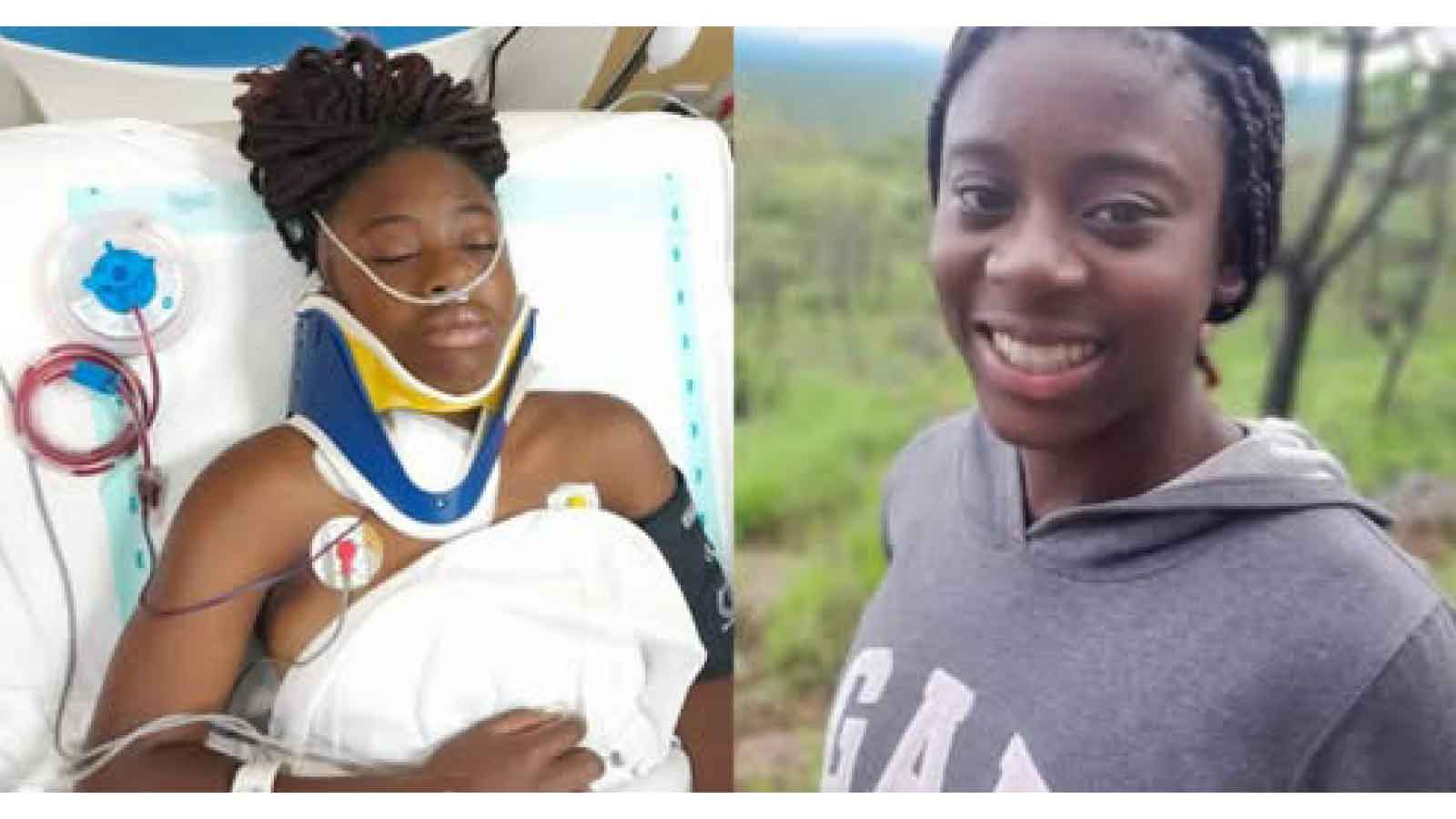
Fidelis Munyoro-Chief Court Reporter
In a resounding victory for justice and accountability, the High Court has delivered a landmark ruling in favour of Rebecca Nezuru Conlon, a young gymnast whose life was irreversibly altered by a tragic accident at Jump Trampoline Park in Harare.
The judgment not only recognised the gross negligence of the Jump Trampoline Park, but also set a precedent for the treatment of cases involving recreational facilities and their duty of care.
Rebecca, once a promising national gymnast with dreams of Olympic glory, suffered a catastrophic fall at the park on January 6, 2023.
The accident left her paralysed and reliant on 24-hour care, marking an end to her athletic aspirations and a dramatic shift in her life.
Justice Siyabona Paul Musithu’s ruling awarded her substantial damages totalling over US$1,6 million, a sum described as “necessary and just” to compensate her for the pain, loss and suffering caused by the Jump Trampoline Park’s failure to uphold safety standards.
“Negligence this severe cannot be excused,” Justice Musithu wrote in his judgment.
“The defendant owed a duty of care to the plaintiff, and it utterly failed to act positively and reasonably to prevent physical harm that was not only foreseeable but preventable.”
These words reverberated not just through the courtroom, but across the country, as families and safety advocates celebrated the outcome as a victory for accountability.
The case exposed shocking lapses in safety at Jump Trampoline Park, which, as Justice Musithu emphasised, is frequented by children and minors who require heightened protection.
Rebecca’s fall occurred when she performed a backflip and landed on an area where the safety net had been inexplicably lowered from the standard 1,9 metres to a mere one metre. She plunged through the gap, striking exposed metal hooks and landing on a concrete floor.
The court heard that, at the time of the accident, there were no adequate warning signs, no visible instructions and no padding on the hooks or floor to mitigate potential injuries.
“The defendant’s own conduct after the accident is telling,” Justice Musithu noted.
“The height of the net was raised immediately following the incident, demonstrating that the defendant was aware of the hazard. Such actions speak volumes about the negligence that preceded this tragedy.”
Medical reports detailed a C4 quadriplegic spinal injury that left Rebecca unable to move her limbs or control basic bodily functions. Her journey since the accident has been marked by intense surgeries, extensive rehabilitation and complete dependence on caregivers for her daily survival.
According to her father, Rebecca spends hours each morning simply being lifted from her bed and prepared for the day.
Jump Trampoline Park attempted to argue that the accident was not its fault, claiming Rebecca’s injuries resulted from her own risky behaviour. However, this line of defence crumbled under scrutiny.
The park’s operations manager, Cheryl Dawe, made damning admissions during cross-examination, conceding that safety protocols were inadequate and that no proper inspections had been conducted before the accident.
Justice Musithu highlighted these “positive acts of neglect” as evidence that Jump Trampoline Park failed to meet even the most basic standards of safety.
In addition to Rebecca’s physical suffering, the court considered her loss of future prospects and quality of life. At just 16 years old, she had already achieved national recognition as a gymnast and was training for the Olympics.
The court noted that her injury not only ended her career but also robbed her of independence, mobility and the ability to pursue higher education. Her father testified about the scholarships and professional opportunities Rebecca had to forfeit — opportunities that would have secured her a bright and prosperous future.
Justice Musithu awarded US$300 000 for pain and suffering, describing Rebecca’s ordeal as a “life sentence of pain, discomfort and mental anguish.” He granted US$200 000 for the loss of current and future amenities, citing her inability to enjoy the simple pleasures of life, from sports to social activities.
An additional US$150 000 was awarded for loss of earning capacity, while US$180 000 was allocated for loss of potential professional earnings.
The judge also recognised the emotional toll of disfigurement, granting US$80 000 to account for the scars, both physical and psychological, that Rebecca will carry for the rest of her life.
She will also be compensated US$200 000 for shortened expectation of life plus another US$170 000 for medical and hospital expenses. Perhaps the most striking part of the ruling was the allocation of US$327 939 for future medical and rehabilitation expenses.
Justice Musithu acknowledged the immense financial burden Rebecca’s family faces, as many of the treatments she requires are unavailable in Zimbabwe.
“She will need to travel to countries like South Africa, India and Switzerland for advanced medical procedures,” the judge wrote.
“This court cannot ignore the reality that the cost of her care is extraordinary, but it is a cost that must be borne if she is to live a longer and fuller life.”
The ruling also raised broader questions about corporate responsibility and safety in recreational facilities. Justice Musithu criticised the defendant’s reliance on indemnity agreements and insufficient warning signs, stating that such measures could not absolve the park of its duty to protect patrons.
“The value of human life is priceless,” the judge concluded.
“In this case, the defendant’s negligence has cost the plaintiff her mobility, her career and her future. No amount of money can truly compensate for such a loss, but the law demands that justice be done.”
The ruling is a bittersweet victory for Rebecca and her family. While the financial award will help cover her medical needs, it cannot restore the life she once knew. Yet, her case has sparked a nationwide debate about safety, negligence and the rights of vulnerable individuals in recreational spaces.
Advocate Thabani Mpofu represented Rebecca while Advocate Tawanda Zhuwarara acted for Jump Trampoline Park.



