


 Vusumuzi Dube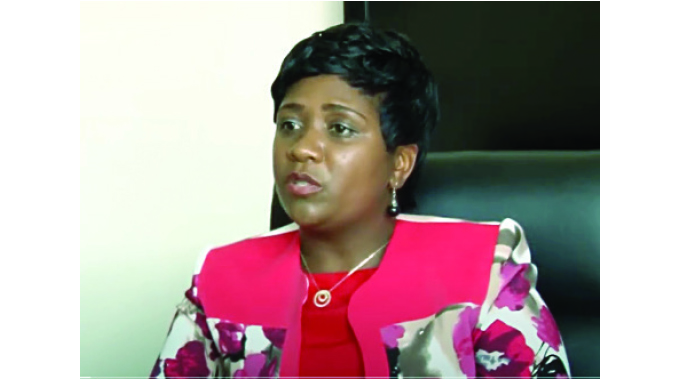
Johnsias Mutonhori, Midlands Correspondent
CONSULTATIONS on the death penalty which are in progress countrywide have shown mixed feelings from participants.
Director in the Ministry of Justice, Legal and Parliamentary Affairs, Mrs Netsai Zvakasikwa who is leading the consultation teams on death sentence across the country said the general sentiment so far points to a balanced reaction by the public towards death penalty.
“The general sentiments of the public concerning the consideration to either abolish or maintain the death penalty is balanced in all the provinces that we have covered so far.
Some people are saying let’s retain the death penalty and others are saying let’s abolish it. Others are also attacking the current Constitution saying it is discriminatory for subjecting only men to the death sentence while leaving out women who committed a similar crime. Some are, however, okay with the current set-up,” she said.

Mrs Sheila Mlanga, a legal practitioner with Legal Resources Foundation called for the abolishment of the death penalty saying it was inhuman in nature.
“Death penalty should be abolished because it is motivated by retribution, that is an eye for an eye, and I think this does not have a place in modern day civilisation.
The sentence is derived from emotional reaction where there is retribution and to me, killing someone is inhuman. Since 2005 the courts have sentenced people to death and no execution has taken place.
To me its torture for someone to live thinking that they can die any day. In most cases the people on death penalty are given solitary confinement and are limited in terms of movement,” she said.
Mrs Mlanga said the death penalty law was draconian and had its roots in the colonial era. She said it was therefore a remnant of Western ideologies which had no place in independent Zimbabwe.
“The law is draconian and foreign and cannot be efficient in Zimbabwe. Above the prison sentence, I think families of the person who commit murder must compensate, and that could bring healing. As a country we are geared towards rehabilitation instead of retribution and we must focus on solutions that can transform criminals into better persons,” she said.
Pastor David Chikore said Zimbabwe was a Christian nation and the decision to kill a human being must be left to God only.
“I don’t think the death sentence can minimise murder cases. We need to focus on the issues that are leading to murder cases but leave the decision to take a human life with God,” he said.
However, Senga resident Mrs Bridget Munyikwa said there should be no consideration to abolish the death sentence as it serves as a lesson to the public that they must not kill.
“I don’t agree with the notion that the death sentence should be abolished. I think the law can serve as a lesson to the public that they should not kill and I am afraid that if the law is to be abolished people will not be afraid to kill,” she said.
The consultation meetings which started last Monday and are expected to end on Tuesday are being conducted by the Ministry of Justice, Legal and Parliamentary Affairs with the support from Centre for Applied Legal Research (CALR) and the Embassy of Switzerland.
The national constitution adopted in 2013 spared death sentences to people below the age of 21 and those above 70 years, and women.



 Bongani Ndlovu
 Online Reporter