Online Reporter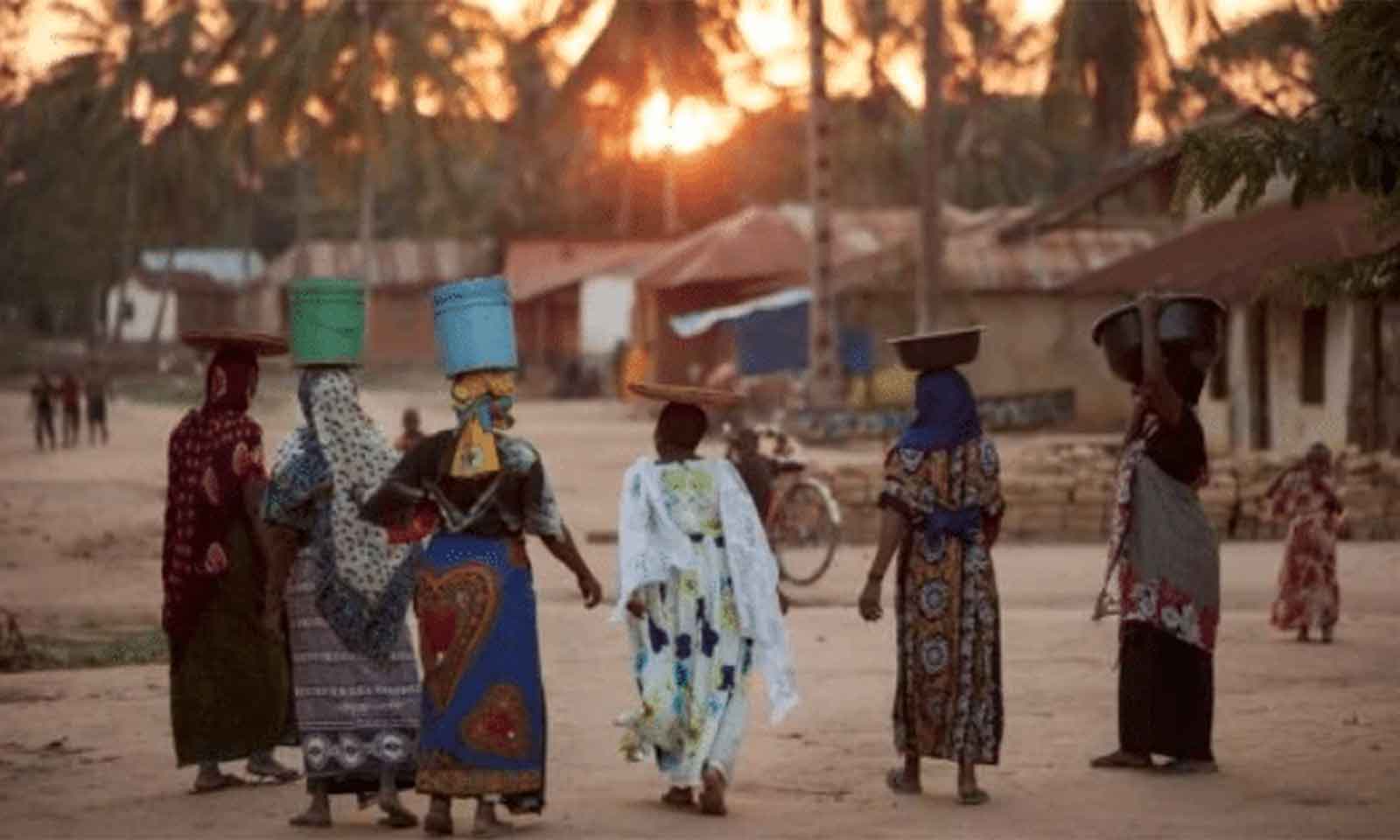
Alice Tagwira
Beyond Boundaries
Across Africa, the rhetoric of “women empowerment” has reached fever pitch in ministerial summits and diplomatic corridors.
From the African Union’s Agenda 2063 to the sustainable development frameworks of individual states, gender equality is touted as the lynchpin of the “African Renaissance”. However, beneath this polished veneer of progress lies a systemic and spatial divide.
While the urban, educated African woman has made significant strides in corporate and political leadership, her rural and peri-urban counterparts — the “invisible majority” — remain tethered to the periphery of development.
If we are to move beyond performative equality, we must confront a harsh reality: our current empowerment models are largely urban-centric, exclusionary and theoretically shallow.
To truly liberate the African woman, advocacy must pivot to a radical grassroots approach that prioritises intersectionality and deconstructs the internalised misogyny embedded in the continent’s socio-cultural fabric.
The contemporary feminist movement in Africa often suffers from what scholars term “proximity bias”. International NGOs and other civil society organisations frequently concentrate their resources in metropolitan hubs like Nairobi, Lagos and Harare.
The reasons are logistical and data-driven: cities offer better infrastructure, easier monitoring and evaluation, and a concentration of “professionalised” activists who speak the language of global development.
However, this creates a hierarchy of victimhood. A 2024 World Bank report on Zimbabwe, for instance, noted that while 29,3 percent of senior management positions are held by women — largely in Harare and Bulawayo — this figure obscures the reality of the 68 percent of Zimbabwean women who reside in rural areas.
For these women, empowerment is not about breaking a “glass ceiling” in a boardroom; it is about the “sticky floor” of subsistence farming, lack of land tenure and exclusion from the digital economy. When empowerment initiatives focus solely on the urban elite, they inadvertently reinforce a class-based patriarchy, where progress for some is mistaken for progress for all.
Perhaps the most insidious barrier to empowerment is not the lack of capital, but the depth of indoctrination.
Marginalised women are frequently the primary custodians of the very patriarchal traditions that oppress them.
In rural African contexts, cultural, social and religious practices are not merely external constraints; they are internalised as moral imperatives.
In many parts of Zimbabwe, for example, the practice of kuzvarira (pledging a girl for marriage in exchange for financial gain) or kuripa ngozi (offering a virgin girl to appease a restless spirit) is often facilitated or accepted by elder women within the family.
This is the ultimate triumph of patriarchy: when the oppressed become the enforcers of their own subjugation.
Religious institutions, particularly certain Apostolic sects in Southern Africa, often provide a divine mandate for this silencing. “Prophetic revelations” are used to justify child marriage and the denial of healthcare, teaching women that their spiritual worth is tied to their submission. This internalised misogyny creates a psychological barrier that a standard “vocational training” session cannot penetrate.
True grassroots empowerment requires a “pedagogy of the oppressed” — a process of consciousness-raising that allows women to unlearn the belief that their subordination is either natural or divinely ordained.
The failure of many continental programmes lies in their “one-size-fits-all” approach.
Advocacy must be intersectional. This framework, coined by Kimberlé Crenshaw and deeply relevant to the African context, posits that a woman’s experience is shaped by overlapping identities: gender, class, age, disability and geography.
Consider the “market woman” in Zimbabwe’s Mbare Musika. Her struggle is not just against “sexism”. It is an intersection of:
- Patriarchal norms that dictate she performs the bulk of unpaid domestic labour.
- The precarity of the informal economy where she lacks social security.
- Some “clean-up” operations that disproportionately target informal traders.
When we ignore these intersections, our solutions remain superficial. We cannot talk about women’s rights in Zimbabwe without talking about land rights; we cannot talk about empowerment in the Sahel without talking about climate-induced displacement.
Despite these challenges, grassroots movements across the continent are providing the blueprint for authentic empowerment:
Self-Help Groups in Shurugwi, Zimbabwe: In rural Zimbabwe, women’s self-help groups (SHGs) have become a radical tool for economic and social survival. These groups move beyond simple microfinance; they act as “safe spaces” where women discuss domestic violence, share agricultural techniques, and collectively lobby traditional leaders for land access.
Musonet (Mali): By training non-literate rural women to use mobile technology to monitor local government budgets, Musonet has turned “marginalised” women into civic auditors, proving that political agency is not the sole domain of the educated elite.
The Rural Women’s Assembly (SADC Region): This coalition of women farmers across Southern Africa has challenged the male-dominated narrative of “food security.” They argue that there is no food security without “food sovereignty”, which requires that rural women — who produce the majority of the continent’s food — actually own the land they till.
For politicians and corporate leaders, the message is clear: the current “trickle-down” model of empowerment is failing the women who need it most. To rectify this, we must:
Direct Funding to the Grassroots: Shift the “overhead-heavy” funding from large international NGOs to community-led collectives like the SHGs in Zimbabwe.
De-professionalise Activism: Empowerment should not require a university degree. We must value the “lived expertise” of the rural woman.
Engage the Custodians of Culture: Rather than dismissing traditional and religious leaders, we must engage them in a critical dialogue to reform customary laws from within. Adopt Intersectional Metrics: Success should not be measured by the number of women in parliament alone, but by the literacy rates, land ownership, and maternal health outcomes of the most remote rural populations.
The empowerment of African women cannot be a project of the elite. It must be a movement that starts in the dust and rises to the corridors of power. When we empower the woman at the bottom of the socio-economic ladder, we do not just lift a person; we lift an entire nation. In the words of the Zimbabwean proverb, “Musha mukadzi” (A home is defined by the woman).
If the home of Africa is to be strong, we must ensure that every woman, regardless of her geography or status, is given the tools to build it.