Online Reporter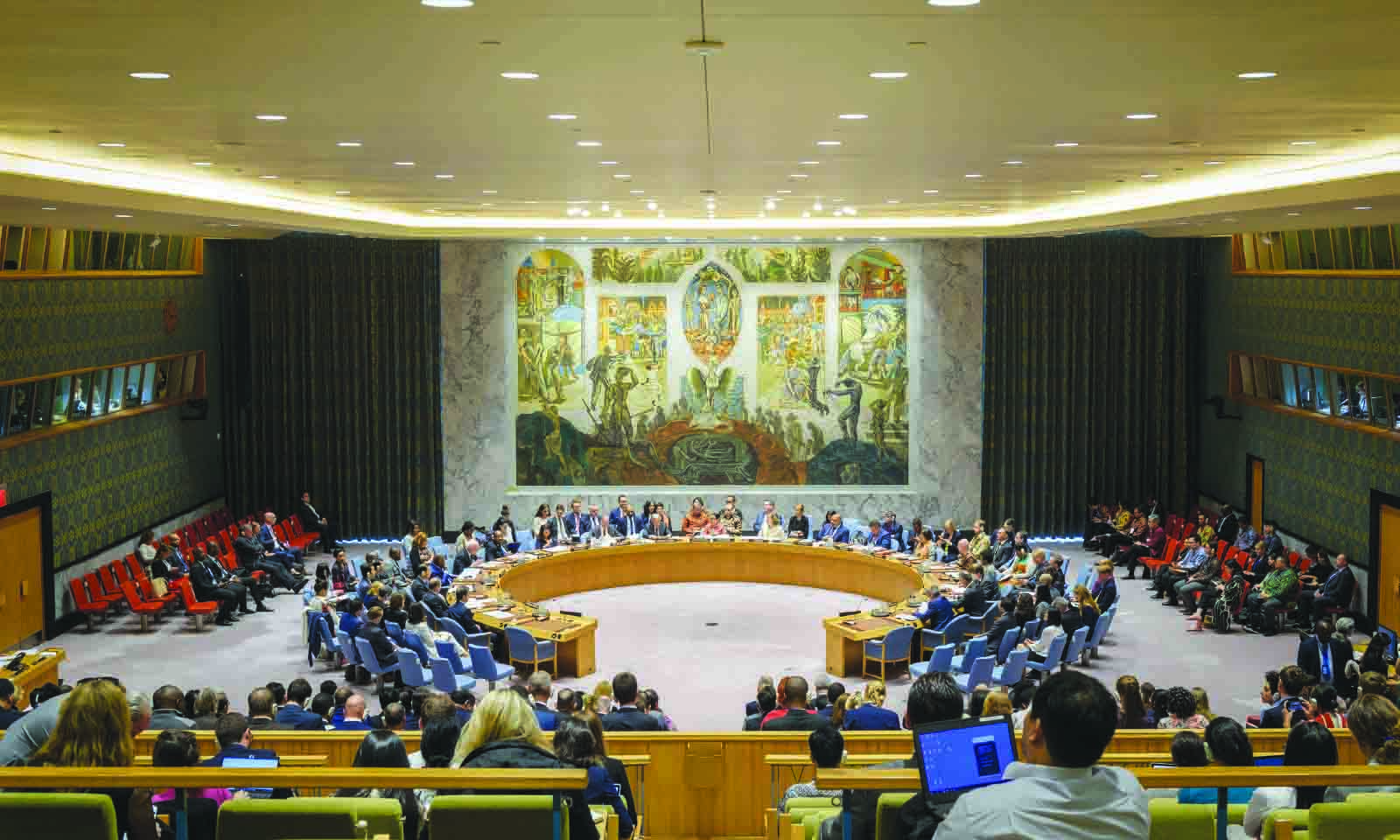
Kuda Bwititi
Politics, Foreign Affairs and Opinions Editor
ON Tuesday, President Mnangagwa officially launched Zimbabwe’s candidacy for a non-permanent seat on the United Nations Security Council (UNSC) for the 2027-2028 term.
In his remarks, he said, “our country is ready to take pride of place as a non-permanent member in the UN Security Council for the period 2027-2028.”
If Zimbabwe were to win, it would mark a resounding diplomatic victory and the pinnacle of statecraft.
To understand Zimbabwe’s ambition, one must first comprehend the power of the body it seeks to join.
The UN Security Council is the UN’s most powerful organ, tasked with maintaining international peace and security. Its decisions can legitimise military action, impose sanctions and mandate peacekeeping missions.
For Zimbabwe, a UNSC seat would be a major triumph, as this is a seat at the World’s Top Table.
This is a high-stakes diplomatic manoeuvre, as it would prove that, despite unjustified Western sanctions, Zimbabwe remains a major player in global diplomacy.
Background
Success would mark Harare’s first return to the Council since 1991-92. In fact, Zimbabwe served on the Council in 1983-84 and 1991-92.
The UNSC has 15 members, with the five permanent members belonging to the United States, the United Kingdom, France, China and Russia (with veto power that can block any resolution).
The other 10 are non-permanent members, elected by the 193-member UN General Assembly (UNGA) for two-year terms.
These seats are distributed by region, with Africa allocated three spots.
For a two-year term, a non-permanent member gets a vote on the world’s most critical security issues, a seat at the table during closed-door consultations where much of the real negotiation happens, and the prestige that comes with helping to steer global affairs.
Competition
Elections for the seat are set for June next year. The path to Zimbabwe’s victory will not be a stroll in the park, as it could be fraught with regional competition and complex international politics.
It’s going to need a stroke of geopolitical genius for Zimbabwe to romp to victory.
Indications are that the 2027-28 African seat will be contested by other African countries, with each nation bringing its own strengths and claims to the role.
To win, a candidate needs a two-thirds majority vote in the UN General Assembly. This makes bloc voting essential. Zimbabwe’s first and most critical hurdle is to secure the formal endorsement of the African union (AU).
This unified regional backing is often decisive in ensuring victory in the General Assembly vote.
So, to win, Zimbabwe needs the numbers. Support from the Southern African Development Community (SADC) and AU members would be vital. In his remarks, President Mnangagwa expressed confidence in getting the support from SADC and the AU.
“To date, we are humbled by the confidence and trust bestowed on us by SADC and AU member states, who have unanimously supported and endorsed our candidature.
“Zimbabwe pledges to use the opportunity to champion Africa’s security priorities as outlined in Agenda 2063 and our Continent’s commitment to ‘Silencing the Guns’,” he said.
Backing from major powers like China and Russia would also be fundamental and Zimbabwe is enjoying excellent relations with these two global titans.
China and Russia can also influence other BRICS and Global South nations to provide the crucial numbers needed for victory.
To date, China, Russia and India have all signalled strong support for Zimbabwe’s bid.
Deconstructing Zim’s pitch
Unveiling the candidacy, President Mnangagwa on Tuesday laid out a narrative built on historical contribution and principled advocacy.
He said Zimbabwe has been a “steadfast advocate of peace, stability and the sovereign equality of nations” since its independence in 1980.
Harare is leaning heavily on its extensive and often overlooked contributions to UN peacekeeping.
The Government’s list is long: from missions in Angola and Somalia in the 1990s to more recent deployments in Sudan, South Sudan and Darfur.
Zimbabwe’s peacekeeping missions have extended beyond Africa, to places such as East Timor and Kosovo, showing that the country is adding value to global peace efforts.
“Our diplomatic legacy speaks for itself,” President Mnangagwa stated. “These contributions underscore our experience, dedication and ability to add value to the work of the Security Council.”
The campaign is framed under the theme “Advancing 21st Century Solutions for Global Peace and Security, through Multilateralism.”
Zimbabwe has pledged to double down on four key areas if elected.
The first plinth is promoting global peace and security, which focuses on addressing the root causes of conflict like poverty and climate-induced threats.
Second is silencing the Guns, touching on championing Africa’s own strategy to end conflict and combat terrorism.
Third is strengthening regional ties through improving cooperation between the UNSC and regional bodies like the African Union.
Under the fourth aspect, Zimbabwe will focus on women, youth, peace and security as the pillars for promoting the role of marginalised groups in security agendas.
Crucially, Zimbabwe is not pitching its bid as a solo endeavour. The bid is being presented as a mission for “Africa, the developing world, and all nations that desire peace, justice, and equality.” It is a direct appeal to the Global South.
The Government has positioned itself as a “friend to all and an enemy to none,” a classic non-aligned stance.
For Zimbabwe, winning the seat would be the ultimate validation of its “engagement and re-engagement” foreign policy and another diplomatic masterstroke by the Second Republic.
The vote is about 10 months away, which is a long time in politics. But Zimbabwe’s early and full-throated campaign launch makes it clear that the race for Africa’s seat at the world’s top table is officially on, and Harare intends to push for it profoundly.